Psalms 128
Isaac Leeser Tanakh · Tap a verse to see its cross-references.
The Blessed Fear of the LORD
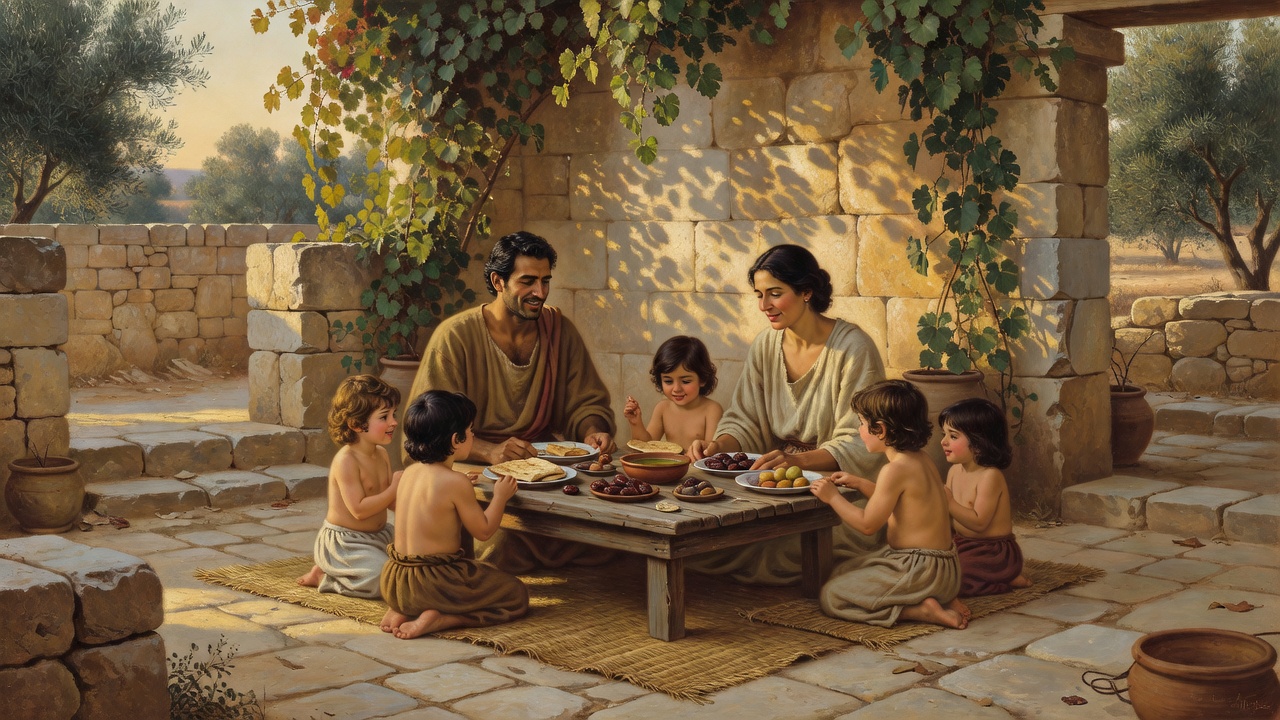
1“A song of the degrees.” Happy is every one that feareth the Lord, that walketh in his ways. 2When thou eatest the labor of thy hands: [then] wilt thou be happy, and it shall be well with thee. 3Thy wife is [then] as a fruitful vine in the recesses of thy house: thy children, like olive-plants round about thy table. 4Behold, truly thus shall be blessed the man that feareth the Lord. 5May the Lord bless thee out of Zion: and see thou the happiness of Jerusalem all the days of thy life. 6And see thou thy children's children: may there be peace upon Israel.
Did you know?
Blessings of Family and the Peace of Jerusalem
- Psalm 128 uses familiar agricultural metaphors to depict domestic abundance, comparing a wife to a fruitful grapevine and children gathered around the table to vigorous olive shoots.Sources: the Bible text itself
- The psalm is designated as a Song of Ascents, connecting the daily labor and domestic happiness of the individual with the collective welfare of Zion and Jerusalem.Sources: the Bible text itself · Zion
- The final blessing for peace upon Israel echoes the traditional meaning of Jerusalem itself, whose name signifies a possession or foundation of peace.Sources: the Bible text itself · Jerusalem
Notes written with AI assistance from open sources (Theographic Bible Metadata, CC BY-SA 4.0; Easton’s Bible Dictionary, public domain) and reviewed before publishing.
Places in this chapter
Only places identified with high confidence are shown (90% or more according to the scholarly sources compiled by OpenBible). Period map: DARE (Digital Atlas of the Roman Empire), CC BY 4.0; modern map: © OpenStreetMap contributors; places: OpenBible.info (CC BY 4.0).
Credits and license for this translation
Isaac Leeser Tanakh
The Isaac Leeser Tanakh (Jewish Bible)
Public Domain
Language: English
Dialect: archaic British
Translation by: Isaac Leeser
2020-10-14
Section headings adapted from the Berean Standard Bible (public domain); they are not part of this translation’s text.
Source: http://ebible.org/englee/ · eBible.org