Deuteronomy 23
Isaac Leeser Tanakh · Tap a verse to see its cross-references.
Exclusion from the Congregation
1(23:2) He that is wounded in the testicles, or hath his privy member cut, shall not enter into the congregation of the Lord. 2(23:3) One born from prohibited connections shall not enter into the congregation of the Lord; even the tenth generation of him shall not enter into the congregation of the Lord. 3(23:4) An 'Ammonite and a Moabite shall not enter into the congregation of the Lord; even the tenth generation of him shall not enter into the congregation of the Lord, for ever; 4(23:5) For the reason, that they met you not with bread and with water on the way, when ye came forth out of Egypt; and because he hired against thee Bil'am the son of Beor of Pethor in Mesopotamia, to curse thee; 5(23:6) But the Lord thy God would not hearken unto Bil'am; and the Lord thy God changed unto thee the curse into a blessing, because the Lord thy God loved thee. 6(23:7) Thou shalt not seek their peace and their welfare all thy days, for ever. 7(23:8) Thou shalt not abhor an Edomite; for he is thy brother; thou shalt not abhor an Egyptian; because thou wast a stranger in his land. 8(23:9) The children that are born unto them in the third generation, may enter of them into the congregation of the Lord.
Uncleanness in the Camp
9(23:10) When thou goest forth into camp against thy enemies, then keep thyself from every evil thing. 10(23:11) If there be among thee any man, that is not clean by reason of an occurrence by night; then shall he go abroad to without the camp, he shall not come within the camp; 11(23:12) But it shall be, that toward evening he shall bathe himself in water; and when the sun goeth down, he may come into the midst of the camp. 12(23:13) And a place shalt thou have without the camp, whither thou shalt go forth abroad: 13(23:14) And a spade shalt thou have with thy weapons: and it shall be, when thou sittest abroad, that thou shalt dig therewith, and shalt afterward cover that which cometh from thee; 14(23:15) For the Lord thy God walketh in the midst of thy camp, to deliver thee and to give up thy enemies before thee; therefore shall thy camp be holy; that he see no unseemly thing in thee, and turn away from thee.
Miscellaneous Laws
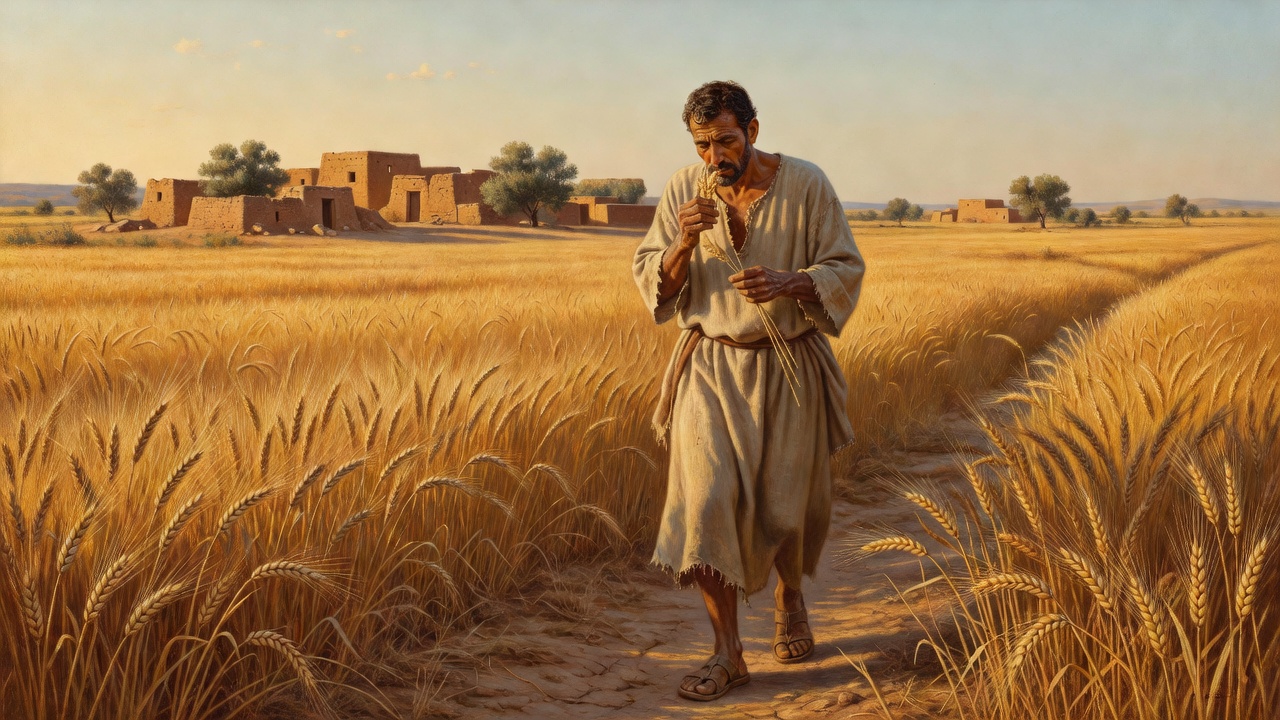
15(23:16) Thou shalt not deliver unto his master the servant who may escape unto thee from his master; 16(23:17) With thee shall he dwell, in the midst of thee, in the place which he may choose in any one of thy gates, where it seemeth best to him: thou shalt not oppress him. 17(23:18) There shall not be a prostitute of the daughters of Israel, and there shall not be a sodomite of the sons of Israel. 18(23:19) Thou shalt not bring the hire of a harlot, or the price of a dog, into the house of the Lord thy God for any vow; for both of these are equally an abomination unto the Lord thy God. 19(23:20) Thou shalt not take interest from thy brother, interest of money, interest of victuals, interest of any thing that is lent upon interest: 20(23:21) From an alien thou mayest take interest; but from thy brother thou shalt not take interest; in order that the Lord thy God may bless thee in all the acquisition of thy hand, in the land whither thou goest to possess it. 21(23:22) When thou makest a vow unto the Lord thy God, thou shalt not delay to pay it; for the Lord thy God will surely require it of thee; and it would be sin in thee. 22(23:23) But if thou forbear to vow, it shall be no sin in thee. 23(23:24) What is gone out of thy lips shalt thou keep and perform, as thou hast vowed unto the Lord thy God voluntarily, as thou hast spoken with thy mouth. 24(23:25) When thou comest into thy neighbor's vineyard, thou mayest eat grapes at thy own pleasure, till thou have enough; but into thy vessel shalt thou not put any. 25(23:26) When thou comest into the standing corn of thy neighbor, thou mayest pluck ears with thy hand; but a sickle shall thou not move over thy neighbor's standing corn.
Did you know?
Community Purity and Social Laws
- Ammonites and Moabites were excluded from the assembly because they withheld food and water and hired Balaam son of Beor against Israel. Balaam came from Pethor in Aram-naharaim (Mesopotamia), a region between the Tigris and Euphrates rivers where Pethor is identified with the ancient site of Pitru.Sources: the Bible text itself · Balaam · Pethor · Mesopotamia
- In contrast to the exclusion of Ammon and Moab, Israelites were instructed not to despise Edomites, whom they regarded as kin, or Egyptians, among whom they had lived as foreigners. Descendants of the third generation from both groups were permitted to enter the assembly of the Lord.Sources: the Bible text itself · Egypt
- The chapter outlines distinct social and military protections, including granting refuge to runaway foreign slaves rather than returning them to their masters. It also permitted hungry travelers to eat grapes or pluck grain by hand in a neighbor's field, provided they did not gather surplus into containers or use a sickle.Sources: the Bible text itself
Notes written with AI assistance from open sources (Theographic Bible Metadata, CC BY-SA 4.0; Easton’s Bible Dictionary, public domain) and reviewed before publishing.
Places in this chapter
- Egypt · 30.129, 31.308 · verse 4
- Mesopotamia · Today: Aram-naharaim · 36.864, 39.033 · verse 4
- Pethor · Today: Til Barsip · 36.701, 38.087 · verse 4
Only places identified with high confidence are shown (90% or more according to the scholarly sources compiled by OpenBible). Period map: DARE (Digital Atlas of the Roman Empire), CC BY 4.0; modern map: © OpenStreetMap contributors; places: OpenBible.info (CC BY 4.0).
Credits and license for this translation
Isaac Leeser Tanakh
The Isaac Leeser Tanakh (Jewish Bible)
Public Domain
Language: English
Dialect: archaic British
Translation by: Isaac Leeser
2020-10-14
Section headings adapted from the Berean Standard Bible (public domain); they are not part of this translation’s text.
Source: http://ebible.org/englee/ · eBible.org