Psalms 42
JPS TaNaKH 1917 · Tap a verse to see its cross-references.
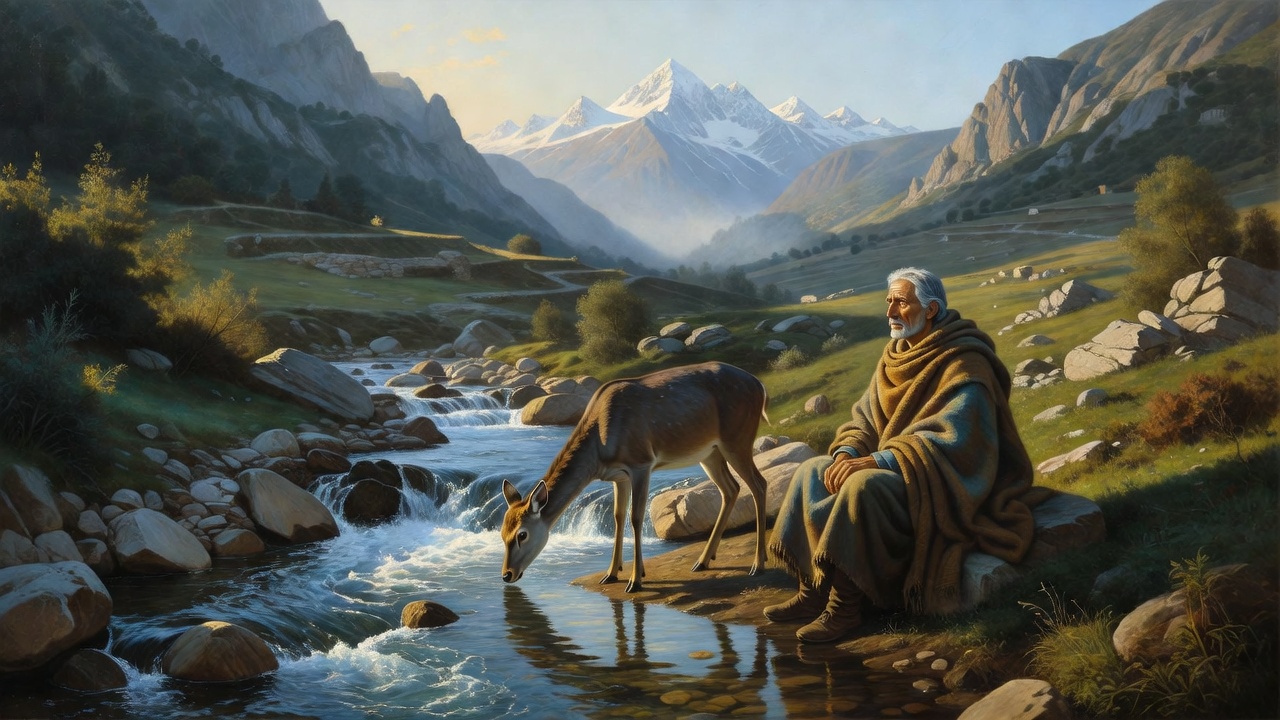
As the Deer Pants for the Water
1BOOK II (42-1) For the Leader; Maschil of the sons of Korah. (42-2) As the hart panteth after the water brooks, so panteth my soul after Thee, O God. 2(42-3) My soul thirsteth for God, for the living God: 'When shall I come and appear before God?' 3(42-4) My tears have been my food day and night, while they say unto me all the day: 'Where is Thy God?' 4(42-5) These things I remember, and pour out my soul within me, how I passed on with the throng, and led them to the house of God, with the voice of joy and praise, a multitude keeping holyday. 5(42-6) Why art thou cast down, O my soul? and why moanest thou within me? Hope thou in God; for I shall yet praise Him for the salvation of His countenance. 6(42-7) O my God, my soul is cast down within me; therefore do I remember Thee from the land of Jordan, and the Hermons, from the hill Mizar. 7(42-8) Deep calleth unto deep at the voice of Thy cataracts; all Thy waves and Thy billows are gone over me. 8(42-9) By day the LORD will command His lovingkindness, and in the night His song shall be with me, even a prayer unto the God of my life. 9(42-10) I will say unto God my Rock: 'Why hast Thou forgotten me? Why go I mourning under the oppression of the enemy?' 10(42-11) As with a crushing in my bones, mine adversaries taunt me; while they say unto me all the day: 'Where is Thy God?' 11(42-12) Why art thou cast down, O my soul? and why moanest thou within me? Hope thou in God; for I shall yet praise Him, the salvation of my countenance, and my God.
Did you know?
Thirsting for God Far from Home
- The psalm is introduced as a song of the sons of Korah, a Levitical family descended from the Levite Korah who took part in temple music and worship.Sources: the Bible text itself · Korah (Levite)
- The speaker longs for God from the northern borderlands, mentioning the Jordan, Mount Hermon, and Mount Mizar. Hermon is a towering range with multiple peaks reaching over 9,000 feet, while Mizar (meaning 'smallness') represents a lesser neighboring summit.Sources: the Bible text itself · Hermon · Hill Mizar
- The poem uses vivid water metaphors, moving from a thirsty deer longing for mountain streams to roaring waterfalls and crashing waves that symbolize overwhelming emotional distress.Sources: the Bible text itself
Notes written with AI assistance from open sources (Theographic Bible Metadata, CC BY-SA 4.0; Easton’s Bible Dictionary, public domain) and reviewed before publishing.
Places in this chapter
Only places identified with high confidence are shown (90% or more according to the scholarly sources compiled by OpenBible). Period map: DARE (Digital Atlas of the Roman Empire), CC BY 4.0; modern map: © OpenStreetMap contributors; places: OpenBible.info (CC BY 4.0).
Credits and license for this translation
JPS TaNaKH 1917
The Jewish Bible (Old Testament) in English, published by the Jewish Publication Society in 1917
Public Domain
Language: English
Dialect: American
Translation by: Jewish Publication Society
This copy of the Old JPS TaNaKH by the Jewish Publication Society is brought to you courtesy of eBible.org . For the new JPS TaNaKH (1972, 1978, 1980), please see jps.org .
2023-09-19
Section headings adapted from the Berean Standard Bible (public domain); they are not part of this translation’s text.
Source: http://ebible.org/engjps/ · eBible.org