Numbers 6
JPS TaNaKH 1917 · Tap a verse to see its cross-references.
The Nazirite Vow
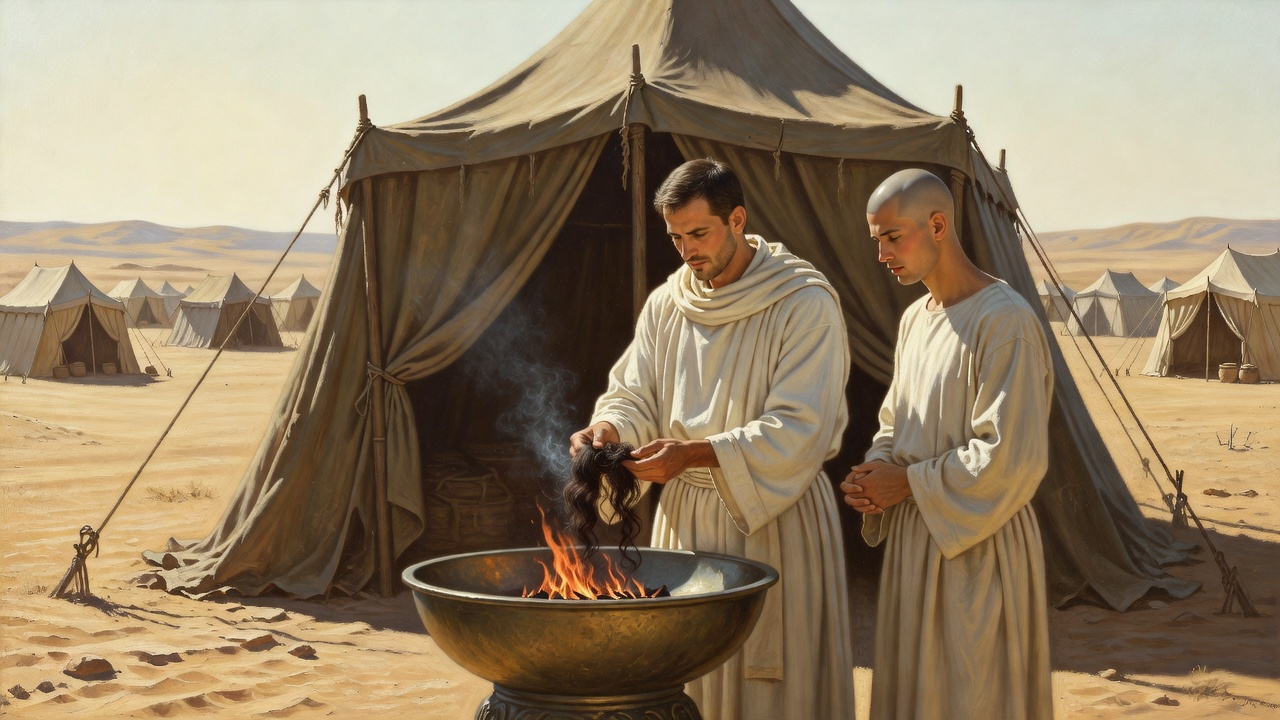
1And the LORD spoke unto Moses, saying: 2Speak unto the children of Israel, and say unto them: When either man or woman shall clearly utter a vow, the vow of a Nazirite, to consecrate himself unto the LORD, 3he shall abstain from wine and strong drink: he shall drink no vinegar of wine, or vinegar of strong drink, neither shall he drink any liquor of grapes, nor eat fresh grapes or dried. 4All the days of his Naziriteship shall he eat nothing that is made of the grape-vine, from the pressed grapes even to the grapestone. 5All the days of his vow of Naziriteship there shall no razor come upon his head; until the days be fulfilled, in which he consecrateth himself unto the LORD, he shall be holy, he shall let the locks of the hair of his head grow long. 6All the days that he consecrateth himself unto the LORD he shall not come near to a dead body. 7He shall not make himself unclean for his father, or for his mother, for his brother, or for his sister, when they die; because his consecration unto God is upon his head. 8All the days of his Naziriteship he is holy unto the LORD. 9And if any man die very suddenly beside him, and he defile his consecrated head, then he shall shave his head in the day of his cleansing, on the seventh day shall he shave it. 10And on the eighth day he shall bring two turtledoves, or two young pigeons, to the priest, to the door of the tent of meeting. 11And the priest shall prepare one for a sin-offering, and the other for a burnt-offering, and make atonement for him, for that he sinned by reason of the dead; and he shall hallow his head that same day. 12And he shall consecrate unto the LORD the days of his Naziriteship, and shall bring a he-lamb of the first year for a guilt-offering; but the former days shall be void, because his consecration was defiled. 13And this is the law of the Nazirite, when the days of his consecration are fulfilled: he shall bring it unto the door of the tent of meeting; 14and he shall present his offering unto the LORD, one he-lamb of the first year without blemish for a burnt-offering, and one ewe-lamb of the first year without blemish for a sin-offering, and one ram without blemish for peace-offerings, 15and a basket of unleavened bread, cakes of fine flour mingled with oil, and unleavened wafers spread with oil, and their meal-offering, and their drink-offerings. 16And the priest shall bring them before the LORD, and shall offer his sin-offering, and his burnt-offering. 17And he shall offer the ram for a sacrifice of peace-offerings unto the LORD, with the basket of unleavened bread; the priest shall offer also the meal-offering thereof, and the drink-offering thereof. 18And the Nazirite shall shave his consecrated head at the door of the tent of meeting, and shall take the hair of his consecrated head, and put it on the fire which is under the sacrifice of peace-offerings. 19And the priest shall take the shoulder of the ram when it is sodden, and one unleavened cake out of the basket, and one unleavened wafer, and shall put them upon the hands of the Nazirite, after he hath shaven his consecrated head. 20And the priest shall wave them for a wave-offering before the LORD; this is holy for the priest, together with the breast of waving and the thigh of heaving; and after that the Nazirite may drink wine. 21This is the law of the Nazirite who voweth, and of his offering unto the LORD for his Naziriteship, beside that for which his means suffice; according to his vow which he voweth, so he must do after the law of his Naziriteship.
Aaron’s Blessing
22And the LORD spoke unto Moses, saying: 23'Speak unto Aaron and unto his sons, saying: On this wise ye shall bless the children of Israel; ye shall say unto them: 24The LORD bless thee, and keep thee; 25The LORD make His face to shine upon thee, and be gracious unto thee; 26The LORD lift up His countenance upon thee, and give thee peace. 27So shall they put My name upon the children of Israel, and I will bless them.'
Did you know?
The Nazirite Vow and the Priestly Blessing
- The Nazirite vow was a voluntary period of special consecration to God available to both men and women. During this time, the person had to abstain completely from grape products and fermented drinks, leave their hair uncut, and avoid ritual defilement from any dead body, even that of an immediate family member.Sources: the Bible text itself
- When the period of separation ended, the Nazirite brought sacrifices to the entrance of the Tent of Meeting, shaved their head of hair, and burned the hair in the fire beneath the peace offering sacrifice. After the priest offered the required portions before God, the vow concluded and the person was allowed to drink wine again.Sources: the Bible text itself
- The chapter concludes with the priestly blessing that God instructed Moses to give to Aaron and his sons. By invoking God's protection, shining face, grace, and peace, the priests placed the divine name upon the people of Israel.Sources: the Bible text itself · Moses · Aaron
Notes written with AI assistance from open sources (Theographic Bible Metadata, CC BY-SA 4.0; Easton’s Bible Dictionary, public domain) and reviewed before publishing.
Credits and license for this translation
JPS TaNaKH 1917
The Jewish Bible (Old Testament) in English, published by the Jewish Publication Society in 1917
Public Domain
Language: English
Dialect: American
Translation by: Jewish Publication Society
This copy of the Old JPS TaNaKH by the Jewish Publication Society is brought to you courtesy of eBible.org . For the new JPS TaNaKH (1972, 1978, 1980), please see jps.org .
2023-09-19
Section headings adapted from the Berean Standard Bible (public domain); they are not part of this translation’s text.
Source: http://ebible.org/engjps/ · eBible.org