Leviticus 17
Geneva Bible 1599 · Tap a verse to see its cross-references.
The Place of Sacrifice
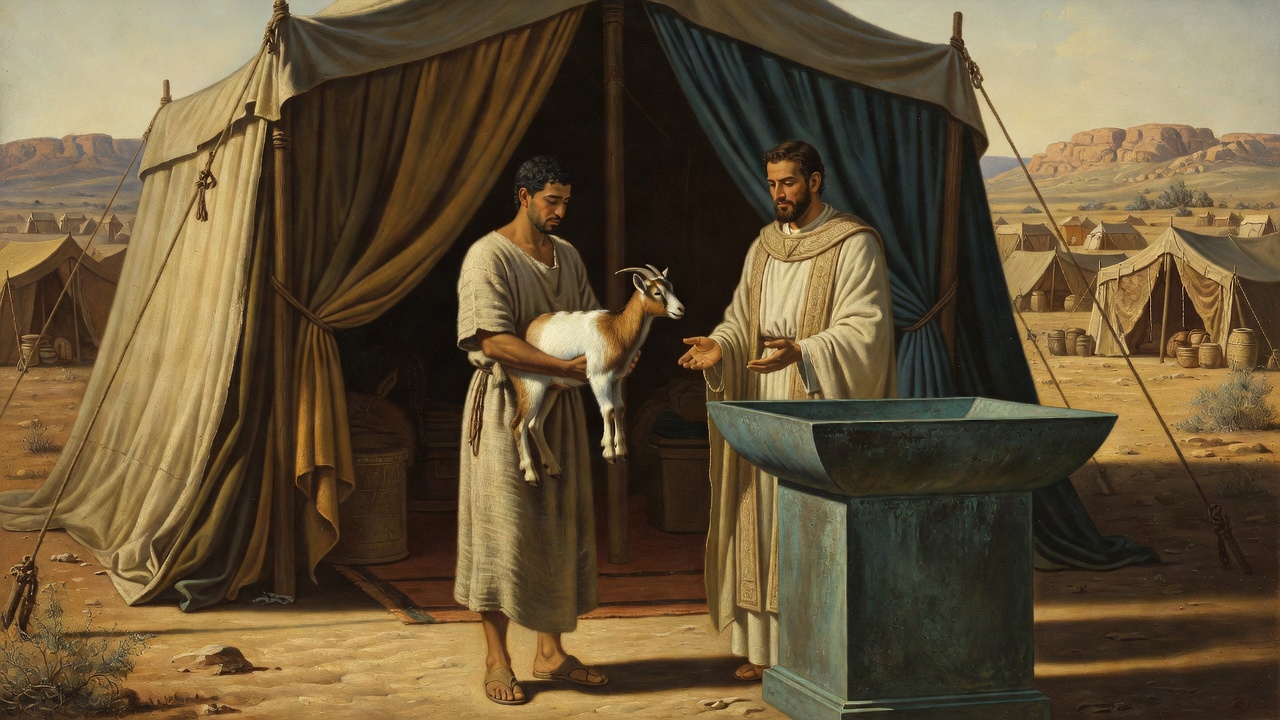
1And the Lord spake vnto Moses, saying, 2Speake vnto Aaron, and to his sonnes, and to all the children of Israel, and say vnto them, This is the thing which the Lord hath commanded, saying, 3Whosoeuer he be of the house of Israel that killeth a bullocke, or lambe, or goate in the hoste, or that killeth it out of the hoste, 4And bringeth it not vnto the doore of the Tabernacle of the Congregation to offer an offring vnto the Lord before the Tabernacle of the Lord, blood shalbe imputed vnto that man: he hath shed blood, wherefore that man shall be cut off from among his people. 5Therefore the children of Israel shall bring their offrings, which they would offer abroad in the fielde, and present the vnto ye Lord at the doore of the Tabernacle of ye Congregation by ye Priest, and offer them for peace offrings vnto the Lord. 6Then the Priest shall sprinkle the blood vpon the Altar of the Lord before the doore of the Tabernacle of the Congregation, and burne the fat for a sweete sauour vnto the Lord. 7And they shall no more offer their offerings vnto deuils, after whom they haue gone a whoring: this shalbe an ordinance for euer vnto them in their generations. 8Also thou shalt say vnto them, whosoeuer he be of the house of Israel, or of the strangers which soiourne among them, that offreth a burnt offring or sacrifice, 9And bringeth it not vnto ye doore of the Tabernacle of the Congregation to offer it vnto the Lord, euen that man shall be cut off from his people.
Laws against Eating Blood
10Likewise whosoeuer he be of the house of Israel, or of the strangers that soiourne among them, that eateth any blood, I will euen set my face against that person that eateth blood, and will cut him off from among his people. 11For the life of the flesh is in the blood, and I haue giuen it vnto you to offer vpon the altar, to make an atonement for your soules: for this blood shall make an atonement for the soule. 12Therefore I saide vnto ye children of Israel, None of you shall eate blood: neither the stranger that soiourneth among you, shall eate blood. 13Moreouer whosoeuer he be of the children of Israel, or of the strangers that soiourne among the, which by hunting taketh any beast or foule that may be eaten, he shall powre out the blood thereof, and couer it with dust: 14For ye life of all flesh is his blood, it is ioyned with his life: therefore I sayd vnto the children of Israel, Ye shall eate the blood of no flesh: for the life of al flesh is the blood thereof: whosoeuer eateth it, shalbe cut off. 15And euery person that eateth it which dyeth alone, or that which is torne with beastes, whether it be one of the same countrey or a stranger, he shall both wash his clothes, and wash himselfe in water, and be vncleane vnto the euen: after he shalbe cleane. 16But if he wash them not, nor wash his flesh, then he shall beare his iniquitie.
Did you know?
Sacrificial Slaughter and the Sacredness of Blood
- Leviticus mandates that domestic animals such as oxen, lambs, and goats be brought directly to the entrance of the Tent of Meeting rather than slaughtered in open fields. This rule ensured sacrifices were presented exclusively as peace offerings to the LORD and halted illicit sacrifices to goat demons.Sources: the Bible text itself
- Both native Israelites and resident foreigners were strictly prohibited from eating blood, on penalty of being cut off from the community. The text grounds this law in the theological principle that the life of the flesh is in the blood, which God appointed specifically for making atonement upon the altar.Sources: the Bible text itself
- When Israelites or resident aliens hunted wild animals or birds that were clean for food, they were commanded to drain the blood upon the ground and cover it with dirt. This instruction reinforced that life belongs to God and preserved the sanctity of blood outside the sacrificial sanctuary.Sources: the Bible text itself
Notes written with AI assistance from open sources (Theographic Bible Metadata, CC BY-SA 4.0; Easton’s Bible Dictionary, public domain) and reviewed before publishing.
Credits and license for this translation
Geneva Bible 1599
The Geneva Bible in Old English of 1599
Public Domain
Language: English
Dialect: Old
This digital copy is freely available world-wide, with no copyright restrictions, courtesy of eBible.org and many others. Note that the spelling used is the original spelling, which is not modern English.
2024-03-16
Section headings adapted from the Berean Standard Bible (public domain); they are not part of this translation’s text.
Source: http://ebible.org/enggnv/ · eBible.org