Job 31
Geneva Bible 1599 · Tap a verse to see its cross-references.
Job’s Final Appeal
1I made a couenant with mine eyes: why then should I thinke on a mayde? 2For what portion should I haue of God from aboue? and what inheritance of the Almightie from on hie? 3Is not destruction to the wicked and strange punishment to the workers of iniquitie? 4Doeth not he beholde my wayes and tell all my steps? 5If I haue walked in vanitie, or if my foote hath made haste to deceite, 6Let God weigh me in the iust balance, and he shall know mine vprightnes. 7If my steppe hath turned out of the way, or mine heart hath walked after mine eye, or if any blot hath cleaued to mine handes, 8Let me sowe, and let another eate: yea, let my plantes be rooted out. 9If mine heart hath bene deceiued by a woman, or if I haue layde wayte at the doore of my neighbour, 10Let my wife grinde vnto another man, and let other men bow downe vpon her: 11For this is a wickednes, and iniquitie to bee condemned: 12Yea, this is a fire that shall deuoure to destruction, and which shall roote out al mine increase, 13If I did contemne the iudgement of my seruant, and of my mayde, when they did contend with me, 14What then shall I do when God standeth vp? and when he shall visit me, what shall I answere? 15He that hath made me in the wombe, hath he not made him? hath not he alone facioned vs in the wombe? 16If I restrained the poore of their desire, or haue caused the eyes of the widow to faile, 17Or haue eaten my morsels alone, and the fatherles hath not eaten thereof, 18(For from my youth hee hath growen vp with me as with a father, and from my mothers wombe I haue bene a guide vnto her) 19If I haue seene any perish for want of clothing, or any poore without couering, 20If his loynes haue not blessed me, because he was warmed with the fleece of my sheepe, 21If I haue lift vp mine hande against the fatherlesse, when I saw that I might helpe him in the gate, 22Let mine arme fal from my shoulder, and mine arme be broken from the bone. 23For Gods punishment was fearefull vnto me, and I could not be deliuered from his highnes. 24If I made gold mine hope, or haue sayd to the wedge of golde, Thou art my confidence, 25If I reioyced because my substance was great, or because mine hand had gotten much, 26If I did behold the sunne, when it shined, or the moone, walking in her brightnes, 27If mine heart did flatter me in secrete, or if my mouth did kisse mine hand, 28(This also had bene an iniquitie to be condemned: for I had denied the God aboue) 29If I reioyced at his destruction that hated me, or was mooued to ioye when euill came vpon him, 30Neither haue I suffred my mouth to sinne, by wishing a curse vnto his soule. 31Did not the men of my Tabernacle say, Who shall giue vs of his flesh? we can not bee satisfied. 32The stranger did not lodge in the streete, but I opened my doores vnto him, that went by the way. 33If I haue hid my sinne, as Adam, concealing mine iniquitie in my bosome, 34Though I could haue made afraid a great multitude, yet the most contemptible of the families did feare me: so I kept silence, and went not out of the doore. 35Oh that I had some to heare me! beholde my signe that the Almightie will witnesse for me: though mine aduersary should write a booke against me, 36Woulde not I take it vpon my shoulder, and binde it as a crowne vnto me? 37I will tell him the nomber of my goings, and goe vnto him as to a prince. 38If my lande cry against me, or the furrowes thereof complayne together, 39If I haue eaten the fruites thereof without siluer: or if I haue grieued the soules of the masters thereof, 40Let thistles growe in steade of wheate, and cockle in the stead of Barley. The wordes of Iob are ended.
Did you know?
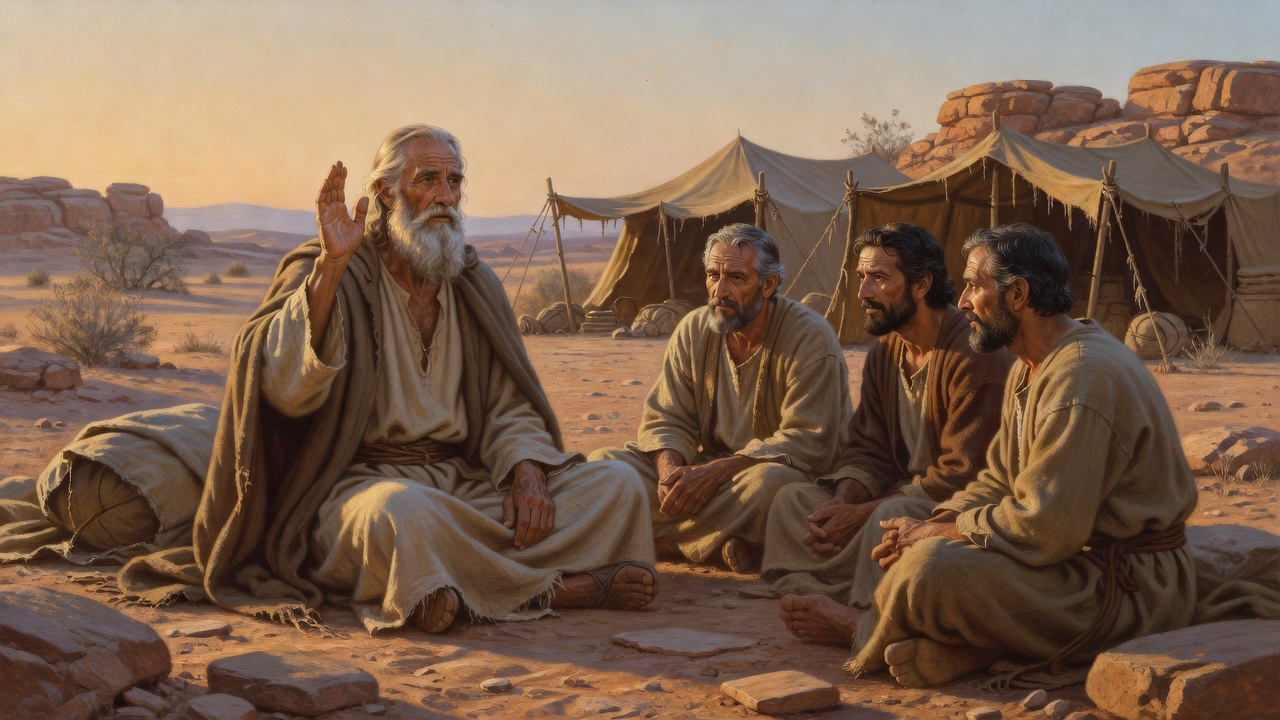
Job's Final Oath of Innocence
- Job frames his defense using a series of conditional self-curses, swearing that if he has committed specific moral or social sins, severe punishments should fall upon him. His ethical code extends beyond external deeds to internal motives, demanding fairness even for his servants because both master and slave were formed by the same God in the womb.Sources: the Bible text itself
- Job disavows the ancient practice of throwing a kiss with his hand toward the radiant sun or the moon in splendor. In the ancient Near East, kissing one's hand toward celestial bodies was a widespread form of astral worship, which Job regards as an offense that denies God on high.Sources: the Bible text itself
- The chapter marks the conclusion of Job's speeches with a formal legal appeal. He presents his written mark or signature, asking the Almighty to answer him and declaring that he would proudly carry any formal indictment on his shoulder like a crown, approaching God with the dignity of a prince.Sources: the Bible text itself · Job
Notes written with AI assistance from open sources (Theographic Bible Metadata, CC BY-SA 4.0; Easton’s Bible Dictionary, public domain) and reviewed before publishing.
Credits and license for this translation
Geneva Bible 1599
The Geneva Bible in Old English of 1599
Public Domain
Language: English
Dialect: Old
This digital copy is freely available world-wide, with no copyright restrictions, courtesy of eBible.org and many others. Note that the spelling used is the original spelling, which is not modern English.
2024-03-16
Section headings adapted from the Berean Standard Bible (public domain); they are not part of this translation’s text.
Source: http://ebible.org/enggnv/ · eBible.org