Jeremiah 24
Geneva Bible 1599 · Tap a verse to see its cross-references.
The Good and Bad Figs
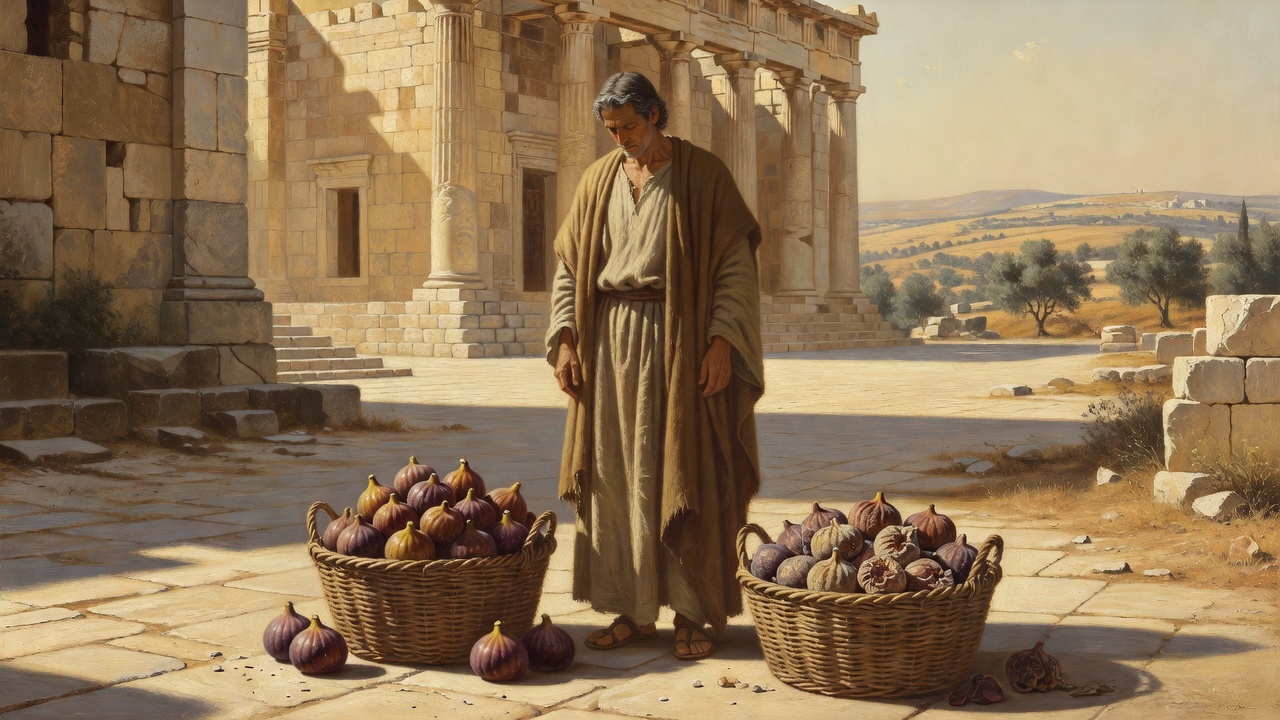
1The Lord shewed me, and beholde, two baskets of figges were set before the Temple of the Lord, after that Nebuchad-nezzar King of Babel had caryed away captiue Ieconiah ye sonne of Iehoiakim King of Iudah, and the princes of Iudah with the workemen, and cunning men of Ierusalem, and had brought them to Babel. 2One basket had verie good figges, euen like the figges that are first ripe: and the other basket had verie naughtie figges, which could not be eaten, they were so euill. 3Then saide the Lord vnto mee, What seest thou, Ieremiah? And I said, Figges: ye good figges verie good, and the naughtie verie naughtie, which cannot be eaten, they are so euill. 4Againe the worde of the Lord came vnto me, saying, 5Thus sayeth the Lord, the God of Israel, Like these good figges, so will I knowe them that are caryed away captiue of Iudah to bee good, whome I haue sent out of this place, into the land of the Caldeans. 6For I wil set mine eyes vpon them for good, and I will bring them againe to this lande, and I will build them, and not destroy them, and I will plant them, and not roote them out, 7And I will giue them an heart to knowe me, that I am the Lord, and they shalbe my people, and I wil be their God: for they shall returne vnto mee with their whole heart. 8And as the naughtie figges which can not bee eaten, they are so euill (surely thus saith the Lord) so wil I giue Zedekiah the King of Iudah, and his princes, and the residue of Ierusalem, that remaine in this lande, and them that dwell in the lande of Egypt: 9I will euen giue them for a terrible plague to all the kingdomes of the earth, and for a reproche, and for a prouerbe, for a common talke, and for a curse, in all places where I shall cast them. 10And I will sende the sworde, the famine, and the pestilence among them, till they bee consumed out of the land, that I gaue vnto them and to their fathers.
Did you know?
The Two Baskets of Figs
- Jeremiah received this vision after King Nebuchadnezzar of Babylon deported King Jeconiah (also called Jehoiachin), along with the officials, craftsmen, and metalsmiths of Jerusalem. Nebuchadnezzar subsequently installed Zedekiah as king over the remaining population in Judah.Sources: the Bible text itself · Jehoiachin · Zedekiah · Nebuchadnezzar
- In the vision set before the temple, the basket of prime, early-ripening figs symbolizes the exiles carried off to Babylon. The Lord promises to preserve them, give them a heart to know him, and restore them to their land.Sources: the Bible text itself
- In contrast, the basket of rotten, inedible figs symbolizes King Zedekiah, his leaders, and the remnant staying in Judah or fleeing to Egypt. Instead of finding security, they are warned of disaster, famine, disease, and derision among the nations.Sources: the Bible text itself · Zedekiah · Egypt
Notes written with AI assistance from open sources (Theographic Bible Metadata, CC BY-SA 4.0; Easton’s Bible Dictionary, public domain) and reviewed before publishing.
Places in this chapter
- Babylon · 32.543, 44.422 · verse 1
- Jerusalem · 31.777, 35.234 · verses 1, 8
- Chaldea · 30.962, 46.104 · verse 5
- Egypt · 30.129, 31.308 · verse 8
Only places identified with high confidence are shown (90% or more according to the scholarly sources compiled by OpenBible). Period map: DARE (Digital Atlas of the Roman Empire), CC BY 4.0; modern map: © OpenStreetMap contributors; places: OpenBible.info (CC BY 4.0).
Credits and license for this translation
Geneva Bible 1599
The Geneva Bible in Old English of 1599
Public Domain
Language: English
Dialect: Old
This digital copy is freely available world-wide, with no copyright restrictions, courtesy of eBible.org and many others. Note that the spelling used is the original spelling, which is not modern English.
2024-03-16
Section headings adapted from the Berean Standard Bible (public domain); they are not part of this translation’s text.
Source: http://ebible.org/enggnv/ · eBible.org