Jeremiah 2
Geneva Bible 1599 · Tap a verse to see its cross-references.
Israel Has Forsaken God
1Moreover, the woorde of the Lord came vnto me, saying, 2Goe, and crie in the eares of Ierusalem, saying, Thus sayeth the Lord, I remember thee, with the kindenes of thy youth and the loue of thy marriage, when thou wentest after me in the wildernes in a lande that was not sowen. 3Israel was as a thing halowed vnto the Lord, and his first fruits: all they that eat it, shall offend: euil shall come vpon them, saith the Lord. 4Heare ye the word of the Lord, O house of Iaakob, and all the families of the house of Israel. 5Thus sayeth the Lord, What iniquitie haue your fathers founde in mee, that they are gone farre from mee, and haue walked after vanitie, and are become vaine? 6For they saide not, Where is the Lord that brought vs vp out of the lande of Egypt? that led vs through the wildernesse, through a desert, and waste land, through a drie land, and by the shadow of death, by a land that no man passed through, and where no man dwelt? 7And I brought you into a plentifull countrey, to eat the fruit thereof, and the commodities of the same: but when yee entred, yee defiled my land, and made mine heritage an abomination. 8The priests said not, Where is the Lord? and they that should minister the Lawe, knewe me not: the pastours also offended against me, and the Prophets prophesied in Baal, and went after things that did not profite. 9Wherefore I wil yet plead with you, saith the Lord, and I will pleade with your childrens children. 10For goe ye to the yles of Chittim, and beholde, and sende vnto Kedar. and take diligent heede, and see whether there be such things. 11Hath any nation changed their gods, which yet are no gods? but my people haue chaged their glorie, for that which doeth not profite. 12O yee heauens, be astonied at this: bee afraid and vtterly confounded, sayeth the Lord. 13For my people haue committed two euils: they haue forsaken mee the fountaine of liuing waters, to digge them pittes, euen broken pittes, that can holde no water.
The Consequence of Israel’s Sin
14Is Israel a seruaunt, or is hee borne in the house? why then is he spoiled? 15The lions roared vpon him and yelled, and they haue made his land waste: his cities are burnt without an inhabitant. 16Also the children of Noph and Tahapanes haue broken thine head. 17Hast not thou procured this vnto thy selfe, because thou hast forsaken the Lord thy God, when he led thee by the way? 18And what hast thou now to do in the way of Egypt? to drinke the water of Nilus? or what makest thou in the way of Asshur? to drinke the water of the Riuer? 19Thine owne wickednes shall correct thee, and thy turnings backe shall reprooue thee: know therefore and beholde, that it is an euil thing, and bitter, that thou hast forsaken the Lord thy God, and that my feare is not in thee, sayeth the Lord God of hostes. 20For of olde time I haue broken thy yoke, and burst thy bondes, and thou saidest, I will no more transgresse, but like an harlot thou runnest about vpon al hie hilles, and vnder all greene trees. 21Yet I had planted thee, a noble vine, whose plants were all natural: howe then art thou turned vnto me into the plants of a strange vine? 22Though thou wash thee with nitre, and take thee much sope, yet thine iniquitie is marked before me, sayeth the Lord God.
Israel’s Unfaithfulness
23Howe canst thou say, I am not polluted, neither haue I followed Baalim? beholde thy waies in the valley, and know, what thou hast done: thou art like a swift dromedarie, that runneth by his waies. 24And as a wilde asse, vsed to the wildernesse, that snuffeth vp the winde by occasion at her pleasure: who can turne her backe? all they that seeke her, will not wearie themselues, but wil finde her in her moneth. 25Keepe thou thy feete from barenes, and thy throte from thirst: but thou saidest desperately, No, for I haue loued strangers, and them will I follow. 26As the theefe is ashamed, when he is foud, so is the house of Israel ashamed, they, their kings, their princes and their Priests, and their Prophets, 27Saying to a tree, Thou art my father, and to a stone, Thou hast begotten me: for they haue turned their back vnto me, and not their face: but in ye time of their troble they wil say, Arise, and help vs. 28But where are thy gods, that thou hast made thee? let them arise, if they can helpe thee in the time of thy trouble: for according to the nomber of thy cities, are thy gods, O Iudah. 29Wherefore wil ye pleade with me? ye all haue rebelled against me, sayeth the Lord. 30I haue smitten your children in vaine, they receiued no correction: your owne sworde hath deuoured your Prophets like a destroying lyon. 31O generation, take heede to the worde of the Lord: haue I bene as a wildernesse vnto Israel? or a lande of darkenesse? Wherefore sayeth my people then, We are lordes, we will come no more vnto thee? 32Can a maid forget her ornament, or a bride her attire? yet my people haue forgotten me, daies without number. 33Why doest thou prepare thy way, to seeke amitie? euen therefore will I teach thee, that thy waies are wickednesse. 34Also in thy wings is founde the bloud of the soules of ye poore innocents: I haue not found it in holes, but vpon all these places. 35Yet thou saiest, Because I am giltles, surely his wrath shall turne from mee: beholde, I will enter with thee into iudgement, because thou saiest, I haue not sinned. 36Why runnest thou about so much to change thy waies? for thou shalt be confounded of Egypt, as thou art confounded of Asshur. 37For thou shalt goe foorth from thence, and thine hands vpon thine head, because the Lord hath reiected thy confidence, and thou shalt not prosper thereby.
Did you know?
Israel's Forgotten Devotion
- In Jeremiah 2:10, the prophet contrasts Cyprus (Chittim) in the western Mediterranean with Kedar, representing the nomadic Arab tribes to the east in the Arabian desert. By referencing these opposite geographic horizons, the text emphasizes that not even surrounding pagan nations exchanged their traditional deities.Sources: the Bible text itself · Cyprus · Kedar
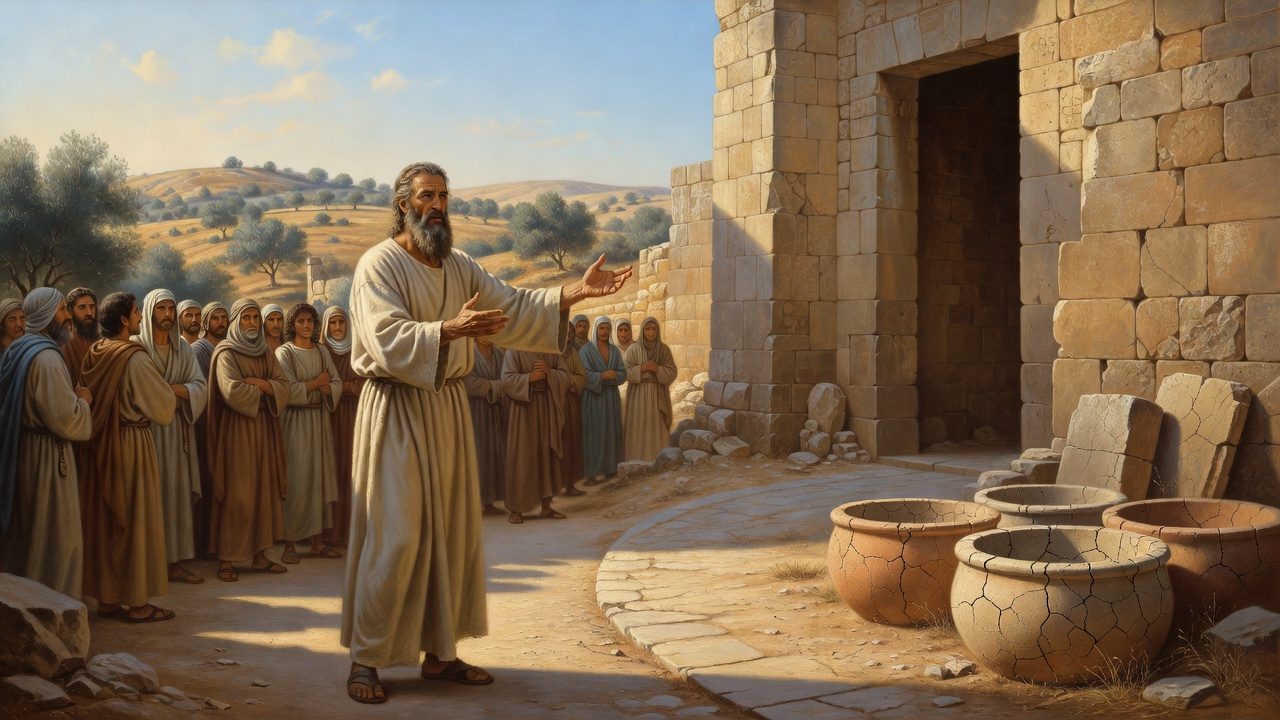
- The references to Memphis (Noph) and drinking the waters of the Nile and Euphrates highlight Judah's unstable political reliance on Egypt and Assyria. Jeremiah compares trusting foreign military powers to abandoning a fountain of fresh water in order to dig cracked, leaky cisterns.Sources: the Bible text itself · Memphis · Egypt · Assyria
- The rebuke against running after the 'Baals' uses the plural form for local cults of Baal, the chief male deity of the Phoenicians. The worship of Baal had repeatedly infiltrated Israel and Judah, frequently taking place on high hills and in sacred groves.Sources: the Bible text itself · Baal
Notes written with AI assistance from open sources (Theographic Bible Metadata, CC BY-SA 4.0; Easton’s Bible Dictionary, public domain) and reviewed before publishing.
Places in this chapter
- Jerusalem · 31.777, 35.234 · verse 2
- Egypt · 30.129, 31.308 · verses 6, 18, 36, 37
- Cyprus · 35.000, 33.000 · verse 10
- Kedar · 29.811, 39.868 · verse 10
- Memphis · 29.849, 31.253 · verse 16
- Tahpanhes · Today: Tell Defenneh · 30.861, 32.171 · verse 16
- Assyria · 36.359, 43.153 · verses 18, 36
- Euphrates · Today: Euphrates River · 31.004, 47.442 · verse 18
- Nile · Today: Nile River · 31.465, 30.367 · verse 18
- Valley of Hinnom · Today: Hinnom Valley · 31.769, 35.228 · verse 23
Only places identified with high confidence are shown (90% or more according to the scholarly sources compiled by OpenBible). Period map: DARE (Digital Atlas of the Roman Empire), CC BY 4.0; modern map: © OpenStreetMap contributors; places: OpenBible.info (CC BY 4.0).
Credits and license for this translation
Geneva Bible 1599
The Geneva Bible in Old English of 1599
Public Domain
Language: English
Dialect: Old
This digital copy is freely available world-wide, with no copyright restrictions, courtesy of eBible.org and many others. Note that the spelling used is the original spelling, which is not modern English.
2024-03-16
Section headings adapted from the Berean Standard Bible (public domain); they are not part of this translation’s text.
Source: http://ebible.org/enggnv/ · eBible.org