Psalms 84
Free Bible Version · Tap a verse to see its cross-references.
For the music director. A psalm of the descendants of Korah. On the gittith.
Better Is One Day in Your Courts
1How wonderful is the place where you live, Lord Almighty!
2I long, I ache, to be in the courts of the Lord. My mind and my body sing for joy to the living God.
3Even a sparrow finds a home there, and a swallow builds a nest for herself where she can raise her chicks near to your altars, Lord Almighty, my king and my God.
4How happy are those who live in your house—they are always praising you! Selah.
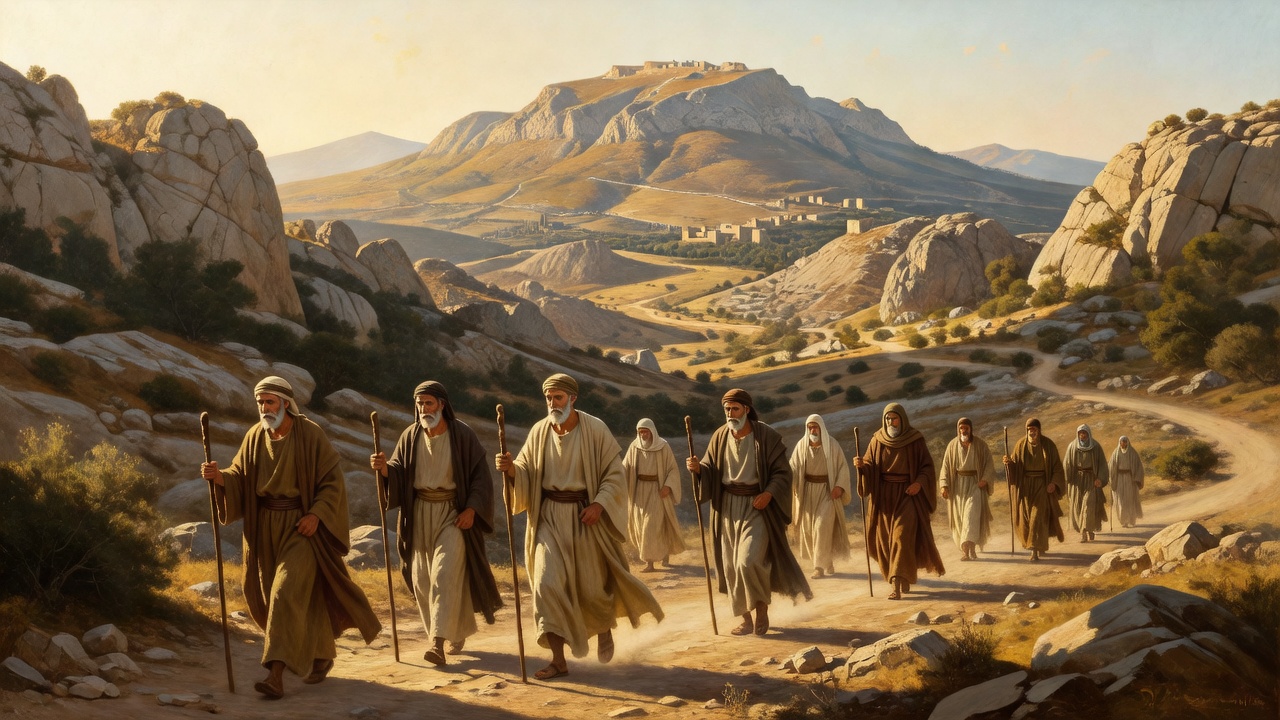
5How happy are those whose strength is in you, those who are determined to make a pilgrimage.
6As they walk through the Valley of Tears it becomes a spring of water; autumn rains cover it with pools.
7They go from strength to strength, and each one will appear before God in Jerusalem.
8Lord God Almighty, please hear my prayer; please listen, God of Jacob. Selah.
9Please God, look at our defender, look at the face of your anointed one.
10One day in your courts is better than a thousand anywhere else. I'd rather stand as a doorkeeper in the house of my God than live comfortably in the homes of the wicked.
11For the Lord God is our sun and shield, and he gives us grace and honor. The Lord doesn't hold back anything good from those who do right.
12Lord Almighty, how happy are those who trust in you.
Did you know?
Longing for the House of God
- The "Valley of Baca" mentioned in verse 6 translates literally or figuratively as a "valley of weeping" or balsam trees. It likely describes an arid valley through which pilgrims traveled on their journey toward the sanctuary in Jerusalem.Sources: Valley of Baca · the Bible text itself
- Mount Zion was a prominent hill of Jerusalem surrounded by deep valleys, where the city of David and the sanctuary were established. The psalm celebrates pilgrims traveling from strength to strength until they appear before God on Zion.Sources: Zion · the Bible text itself
- The psalmist vividly expresses longing for the temple, noting how even small birds like sparrows and swallows find nesting places near the altars. Standing at the threshold or serving as a doorkeeper in God's house is considered far better than dwelling among the wicked.Sources: the Bible text itself
Notes written with AI assistance from open sources (Theographic Bible Metadata, CC BY-SA 4.0; Easton’s Bible Dictionary, public domain) and reviewed before publishing.
Places in this chapter
Only places identified with high confidence are shown (90% or more according to the scholarly sources compiled by OpenBible). Period map: DARE (Digital Atlas of the Roman Empire), CC BY 4.0; modern map: © OpenStreetMap contributors; places: OpenBible.info (CC BY 4.0).
Credits and license for this translation
Free Bible Version
The New Testament and Psalms in the Free Bible Version translation in American English
Copyright © 2018 Dr. Jonathan Gallagher
Language: English
Dialect: American
Translation by: Dr. Jonathan Gallagher
This translation is made available to you under the terms of the
Creative Commons Attribution Share-Alike license 4.0.
You have permission to share and redistribute this Bible translation in any format and to make reasonable revisions and adaptations of this translation, provided that:
You include the above copyright and source information.
If you make any changes to the text, you must indicate that you did so in a way that makes it clear that the original licensor is not necessarily endorsing your changes.
If you redistribute this text, you must distribute your contributions under the same license as the original.
Pictures included with Scriptures and other documents on this site are licensed just for use with those Scriptures and documents.
For other uses, please contact the respective copyright owners.
Note that in addition to the rules above, revising and adapting God's Word involves a great responsibility to be true to God's Word. See Revelation 22:18-19.
2026-10-02
Section headings adapted from the Berean Standard Bible (public domain); they are not part of this translation’s text.
Source: http://ebible.org/engfbv/ · eBible.org