Job 8
Free Bible Version · Tap a verse to see its cross-references.
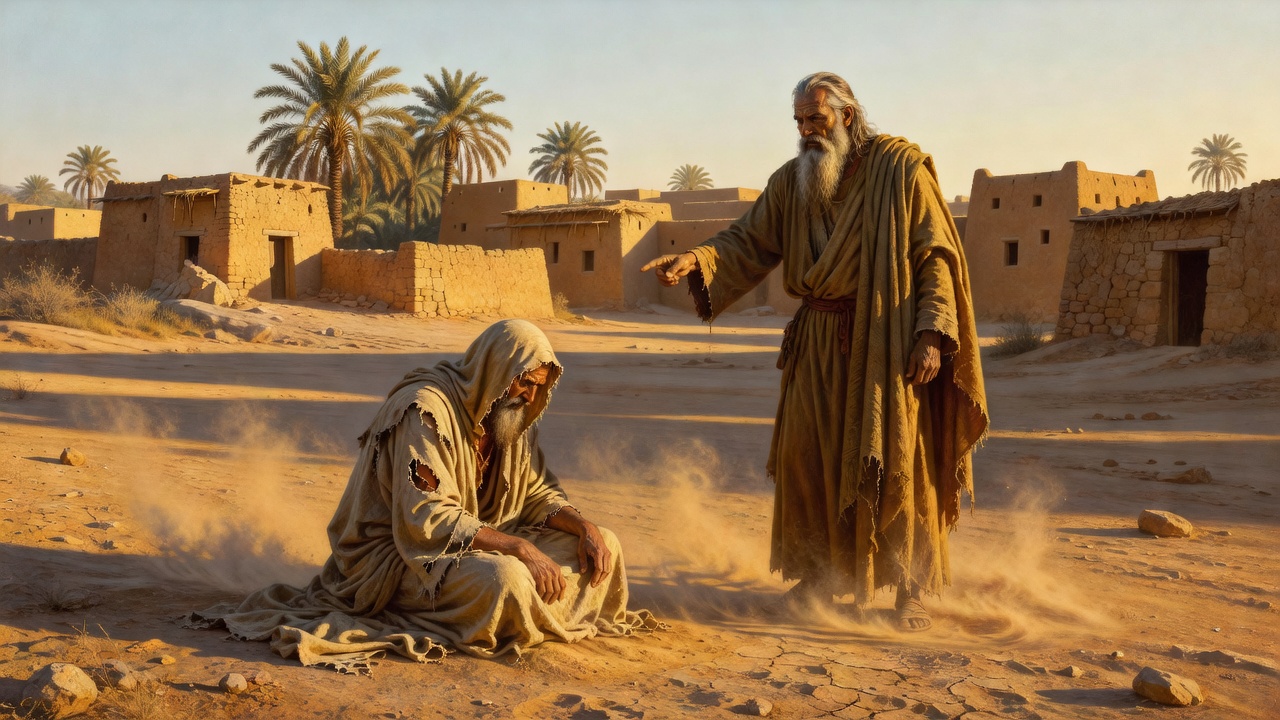
Bildad: Job Should Repent
1Then Bildad the Shuhite spoke up and said, 2“How much longer will you go on talking like this? The words coming out of your mouth are a lot of hot air! 3Does God pervert justice? Does the Almighty pervert what is right? 4Your children must have sinned against him, and so they deserved the punishment he inflicted on them. 5But if you pray to God and ask for his help, 6if you live a clean life and do what is right, then he would act to make things right for you in your home. 7Though you began with next to nothing, you will end up with so much!
8Why don't you ask what previous generations discovered, examine what our ancestors found out? We were born yesterday and don't know anything! 9Our days on earth fade as quickly as a passing shadow. 10Won't they teach you and explain what they know? 11Can papyrus grow where there is no marsh? Can reeds grow without water? 12Even without being cut, while they are still flowering, they wither faster than grass. 13This is what happens to everyone who forgets God. The hopes of those who live without God come to nothing. 14Their confidence is like holding on to a flimsy spider's web. 15They look to their home to provide security, but it provides no support. They try to hang onto it, but it doesn't last. 16Those who live without God are like a luxuriant plant growing in the sun, spreading its shoots all over the garden. 17It twists its roots down through the stones, and holds on to rock. 18But when it's cut down, the place where it was disowns it, saying, ‘I never even saw you.’ 19Its life is over, and others spring up from the earth to take its place.
20Look, God doesn't reject someone who is innocent, and he doesn't support those who are guilty. 21He can make you laugh with happiness again and shout for joy. 22Those who hate you will be put to shame, and the place where the wicked live will be destroyed.”
Did you know?
Bildad’s Appeal to Ancient Wisdom
- Bildad is identified as a Shuhite, which likely associates him with Shuah, an Arabian region settled by the descendants of Abraham and Keturah. In this chapter, he delivers the first of his three stern speeches to Job, maintaining that divine justice is absolute and unwavering.Sources: Bildad · the Bible text itself
- Rather than relying on personal experience, Bildad appeals to the accumulated knowledge of ancestral generations, describing human life as brief as a shadow. To argue that the wicked inevitably fall, he uses natural metaphors of marsh reeds withering without water and the fragility of a spider's web.Sources: the Bible text itself
Notes written with AI assistance from open sources (Theographic Bible Metadata, CC BY-SA 4.0; Easton’s Bible Dictionary, public domain) and reviewed before publishing.
Credits and license for this translation
Free Bible Version
The New Testament and Psalms in the Free Bible Version translation in American English
Copyright © 2018 Dr. Jonathan Gallagher
Language: English
Dialect: American
Translation by: Dr. Jonathan Gallagher
This translation is made available to you under the terms of the
Creative Commons Attribution Share-Alike license 4.0.
You have permission to share and redistribute this Bible translation in any format and to make reasonable revisions and adaptations of this translation, provided that:
You include the above copyright and source information.
If you make any changes to the text, you must indicate that you did so in a way that makes it clear that the original licensor is not necessarily endorsing your changes.
If you redistribute this text, you must distribute your contributions under the same license as the original.
Pictures included with Scriptures and other documents on this site are licensed just for use with those Scriptures and documents.
For other uses, please contact the respective copyright owners.
Note that in addition to the rules above, revising and adapting God's Word involves a great responsibility to be true to God's Word. See Revelation 22:18-19.
2026-10-02
Section headings adapted from the Berean Standard Bible (public domain); they are not part of this translation’s text.
Source: http://ebible.org/engfbv/ · eBible.org