Zechariah 1
Berean Standard Bible · Tap a verse to see its cross-references.
About this book
About Zechariah
- Easton's Bible Dictionary (1897) presents Zechariah as a prophet of Judah, the eleventh of the twelve minor prophets, and, like Ezekiel, of priestly descent. He calls himself the son of Berechiah, while Ezra calls him the son of Iddo, whom Easton identifies as his grandfather. Easton dates the start of his prophetic work to the second year of Darius, 520 B.C., about sixteen years after the first company returned from exile, and notes that he was a contemporary of Haggai.Sources: Easton: Zechariah · Zechariah
- Zechariah addressed people who had returned from exile. Zerubbabel, also known by the Persian name Sheshbazzar, led the first returning company and, in the second year after the return, built an altar and laid the temple foundation on the ruins of the house destroyed by Nebuchadnezzar. Joshua, son of Jozadak, was high priest under Zerubbabel, and Easton says the night visions were meant to console these returned exiles and stir up hope.Sources: Easton: Zechariah · Zerubbabel · Joshua
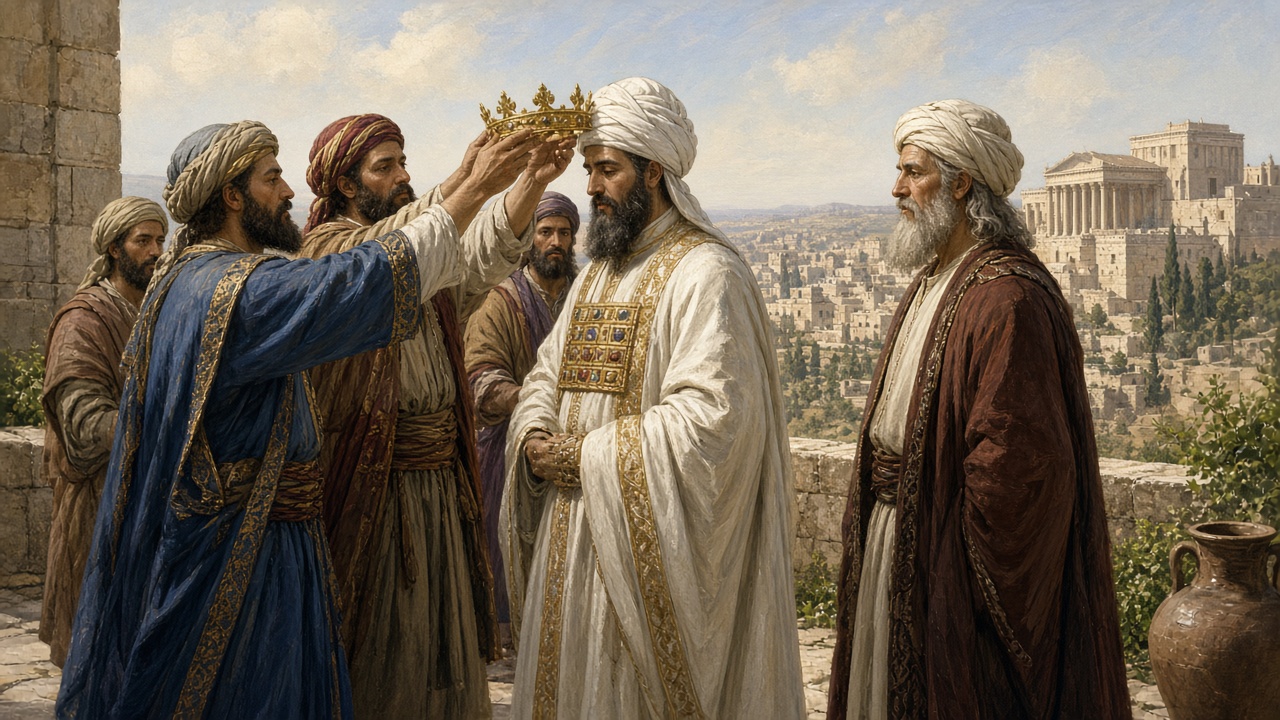
- Easton divides the book into two parts, chapters 1-8 and chapters 9-14. The first opens with a preface recalling the nation's past as a solemn warning, then eight visions in a single night and the symbolic crowning of Joshua; chapters 7 and 8, given two years later, answer whether mourning for the city's destruction should continue and encourage the people with the assurance of God's presence and blessing. The second part bears no date. Easton thinks a considerable interval separates it from the first and describes its two burdens as God's dealings down to the Advent and as glory, final conflict, and triumph in what he calls the latter day.Sources: Easton: Zechariah
- Easton explains the name Zechariah as meaning that Jehovah is renowned or remembered. A notable scene is the symbolic crowning of Joshua; Easton reads it as showing how the kingdoms of the world become the kingdom of God's Christ. Helem, named in Zechariah 6:10, is identified as one who returned from Babylon.Sources: Easton: Zechariah · Helem · Joshua
Notes written with AI assistance from open sources (Theographic Bible Metadata, CC BY-SA 4.0; Easton’s Bible Dictionary, public domain) and reviewed before publishing.
A Call to Repentance
1In the eighth month of the second year of Darius, the word of the LORD came to the prophet Zechariah son of Berechiah, the son of Iddo, saying:
2“The LORD was very angry with your fathers. 3So tell the people that this is what the LORD of Hosts says: ‘Return to Me, declares the LORD of Hosts, and I will return to you, says the LORD of Hosts.’
4Do not be like your fathers, to whom the former prophets proclaimed that this is what the LORD of Hosts says: ‘Turn now from your evil ways and deeds.’
But they did not listen or pay attention to Me, declares the LORD.
5Where are your fathers now? And the prophets, do they live forever? 6But did not My words and My statutes, which I commanded My servants the prophets, overtake your fathers? They repented and said, ‘Just as the LORD of Hosts purposed to do to us according to our ways and deeds, so He has done to us.’”
The Vision of the Horses
7On the twenty-fourth day of the eleventh month, the month of Shebat, in the second year of Darius, the word of the LORD came to the prophet Zechariah son of Berechiah, the son of Iddo.
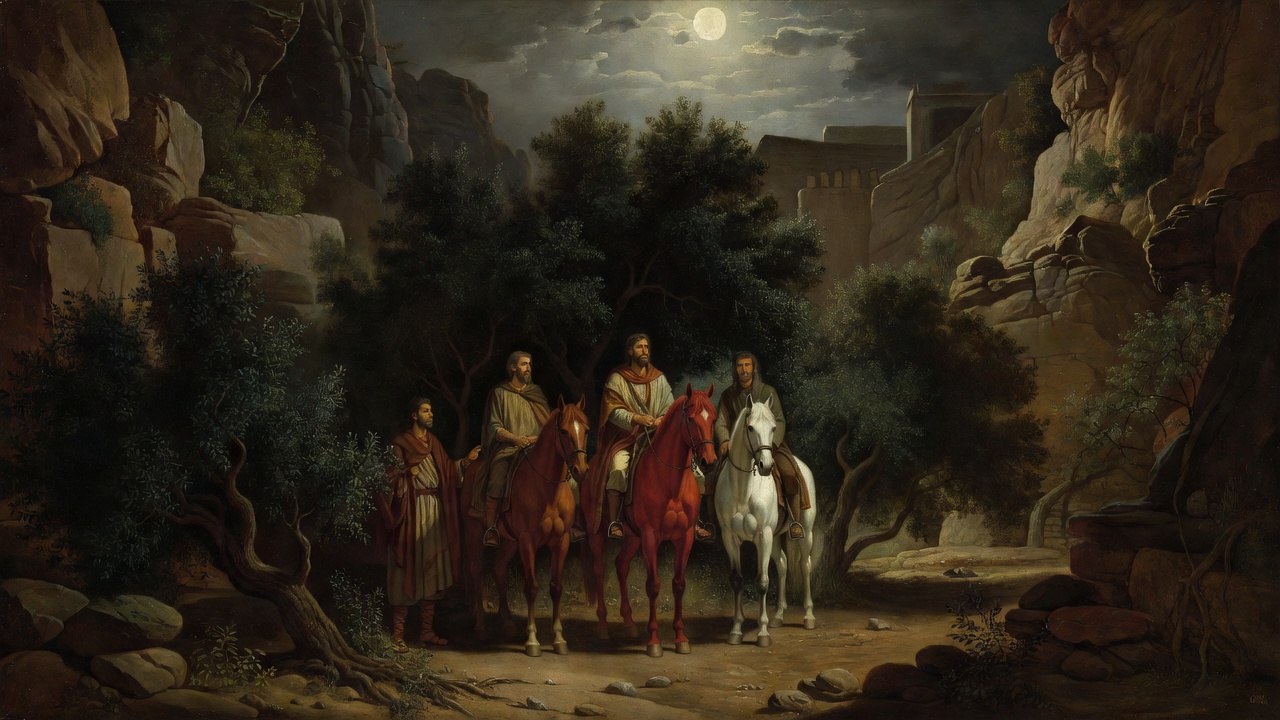
8I looked out into the night and saw a man riding on a red horse. He was standing among the myrtle trees in the hollow, and behind him were red, sorrel, and white horses.
9“What are these, my lord?” I asked.
And the angel who was speaking with me replied, “I will show you what they are.”
10Then the man standing among the myrtle trees explained, “They are the ones the LORD has sent to patrol the earth.”
11And the riders answered the angel of the LORD who was standing among the myrtle trees, “We have patrolled the earth, and behold, all the earth is at rest and tranquil.”
12Then the angel of the LORD said, “How long, O LORD of Hosts, will You withhold mercy from Jerusalem and the cities of Judah, with which You have been angry these seventy years?”
13So the LORD spoke kind and comforting words to the angel who was speaking with me.
14Then the angel who was speaking with me said, “Proclaim this word: This is what the LORD of Hosts says: ‘I am very jealous for Jerusalem and Zion, 15but I am fiercely angry with the nations that are at ease. For I was a little angry, but they have added to the calamity.’
16Therefore this is what the LORD says: ‘I will return to Jerusalem with mercy, and there My house will be rebuilt, declares the LORD of Hosts, and a measuring line will be stretched out over Jerusalem.’
17Proclaim further that this is what the LORD of Hosts says: ‘My cities will again overflow with prosperity; the LORD will again comfort Zion and choose Jerusalem.’”
The Vision of the Horns and the Craftsmen
18Then I looked up and saw four horns. 19So I asked the angel who was speaking with me, “What are these?”
And he told me, “These are the horns that have scattered Judah, Israel, and Jerusalem.”
20Then the LORD showed me four craftsmen.
21“What are these coming to do?” I asked.
And He replied, “These are the horns that scattered Judah so that no one could raise his head; but the craftsmen have come to terrify them and throw down these horns of the nations that have lifted up their horns against the land of Judah to scatter it.”
Did you know?
Zechariah's Call to Repentance and Night Visions
- Zechariah's prophetic ministry began in the second year of King Darius (520 BC), about sixteen years after the first company of exiles returned. Although described as the son of Berechiah, biblical records also associate him with his grandfather Iddo, reflecting his priestly lineage.Sources: Zechariah · the Bible text itself
- In his night vision among the myrtle trees, an angel asks about the seventy years of indignation against Jerusalem and Judah. The LORD responds with comforting words, promising that mercy will return, the temple will be rebuilt, and Jerusalem will be chosen once again.Sources: Jerusalem · the Bible text itself
- The chapter concludes with a vision of four horns that scattered Judah, Israel, and Jerusalem, followed by four craftsmen sent to terrify and cast down these hostile foreign powers.Sources: the Bible text itself
Notes written with AI assistance from open sources (Theographic Bible Metadata, CC BY-SA 4.0; Easton’s Bible Dictionary, public domain) and reviewed before publishing.
Places in this chapter
- Jerusalem · 31.777, 35.234 · verses 12, 14, 16, 17, 19
- Zion · Today: Jerusalem · 31.777, 35.234 · verses 14, 17
Only places identified with high confidence are shown (90% or more according to the scholarly sources compiled by OpenBible). Period map: DARE (Digital Atlas of the Roman Empire), CC BY 4.0; modern map: © OpenStreetMap contributors; places: OpenBible.info (CC BY 4.0).
Credits and license for this translation
Berean Standard Bible
The Holy Bible in English: Berean Standard Bible
Public Domain
Language: English
Contributor: BSB Publishing, LLC
2026-10-02
Source: http://ebible.org/engbsb/ · eBible.org