Romans 9
Berean Standard Bible · Tap a verse to see its cross-references.
Paul’s Concern for the Jews
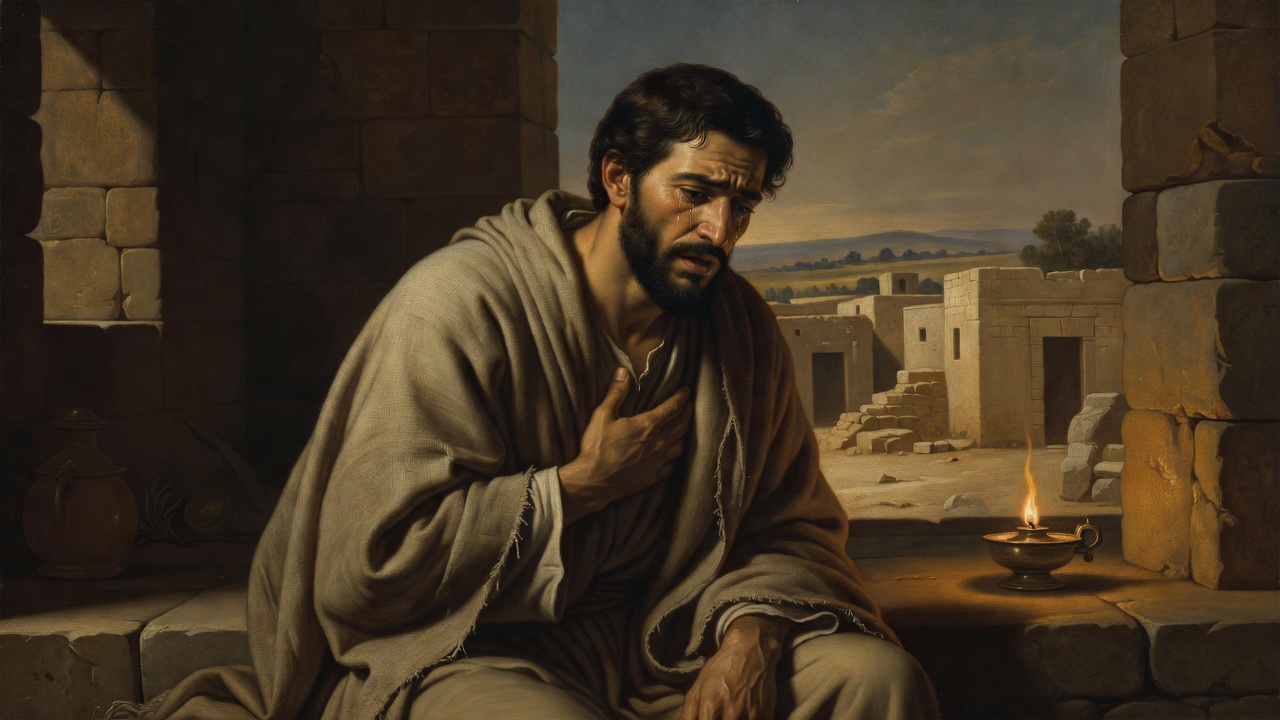
1I speak the truth in Christ; I am not lying, as confirmed by my conscience in the Holy Spirit. 2I have deep sorrow and unceasing anguish in my heart. 3For I could wish that I myself were cursed and cut off from Christ for the sake of my brothers, my own flesh and blood, 4the people of Israel. Theirs is the adoption as sons; theirs the divine glory and the covenants; theirs the giving of the law, the temple worship, and the promises. 5Theirs are the patriarchs, and from them proceeds the human descent of Christ, who is God over all, forever worthy of praise! Amen.
God’s Sovereign Choice
6It is not as though God’s word has failed. For not all who are descended from Israel are Israel. 7Nor because they are Abraham’s descendants are they all his children. On the contrary, “Through Isaac your offspring will be reckoned.” 8So it is not the children of the flesh who are God’s children, but it is the children of the promise who are regarded as offspring. 9For this is what the promise stated: “At the appointed time I will return, and Sarah will have a son.”
10Not only that, but Rebecca’s children were conceived by one man, our father Isaac. 11Yet before the twins were born or had done anything good or bad, in order that God’s plan of election might stand, 12not by works but by Him who calls, she was told, “The older will serve the younger.” 13So it is written: “Jacob I loved, but Esau I hated.”
14What then shall we say? Is God unjust? Certainly not! 15For He says to Moses:
“I will have mercy on whom I have mercy,
and I will have compassion on whom I have compassion.”
16So then, it does not depend on man’s desire or effort, but on God’s mercy. 17For the Scripture says to Pharaoh: “I raised you up for this very purpose, that I might display My power in you, and that My name might be proclaimed in all the earth.” 18Therefore God has mercy on whom He wants to have mercy, and He hardens whom He wants to harden.
19One of you will say to me, “Then why does God still find fault? For who can resist His will?” 20But who are you, O man, to talk back to God? Shall what is formed say to Him who formed it, “Why did You make me like this?” 21Does not the potter have the right to make from the same lump of clay one vessel for special occasions and another for common use?
22What if God, intending to show His wrath and make His power known, bore with great patience the vessels of His wrath, prepared for destruction? 23What if He did this to make the riches of His glory known to the vessels of His mercy, whom He prepared in advance for glory— 24including us, whom He has called not only from the Jews, but also from the Gentiles? 25As He says in Hosea:
“I will call them ‘My People’ who are not My people,
and I will call her ‘My Beloved’ who is not My beloved,”
26and,
“It will happen that in the very place where it was said to them,
‘You are not My people,’
they will be called
‘sons of the living God.’”
27Isaiah cries out concerning Israel:
“Though the number of the Israelites is like the sand of the sea,
only the remnant will be saved.
28For the Lord will carry out His sentence on the earth
thoroughly and decisively.”
29It is just as Isaiah foretold:
“Unless the Lord of Hosts had left us descendants,
we would have become like Sodom,
we would have resembled Gomorrah.”
Israel’s Unbelief
30What then will we say? That the Gentiles, who did not pursue righteousness, have obtained it, a righteousness that is by faith; 31but Israel, who pursued a law of righteousness, has not attained it. 32Why not? Because their pursuit was not by faith, but as if it were by works. They stumbled over the stumbling stone, 33as it is written:
“See, I lay in Zion a stone of stumbling
and a rock of offense;
and the one who believes in Him
will never be put to shame.”
Did you know?
Israel and the Children of the Promise
- These verses argue that God's word has not failed: not all who are descended from Israel are Israel, and not all of Abraham's descendants are his children. Isaac was Abraham's only son by Sarah, and the promise quoted here follows that line: offspring would be reckoned through Isaac, and at the appointed time Sarah would have a son. The name Sarah, meaning princess, was given when it was announced that she would be the mother of the promised child.Sources: the Bible text itself · Isaac · Sarah
- The argument then turns to Rebecca's twins, conceived by one man, Isaac. Esau, the first-born, was also called Edom, "red," from the red lentil pottage for which he sold his birthright; Jacob, the younger, bears a name meaning one who follows on another's heels, or supplanter. Before the twins were born or had done anything good or bad, Rebecca was told that the older would serve the younger, and it is written, "Jacob I loved, but Esau I hated."Sources: the Bible text itself · Esau (Edom) · Jacob (Israel)
- Isaiah, the son of Amoz, is quoted about a remnant: though the Israelites were like the sand of the sea, only the remnant would be saved, and without descendants left by the Lord of Hosts they would have become like Sodom and resembled Gomorrah. Sodom, a city in the vale of Siddim, was destroyed by fire from heaven, a destruction this chapter recalls, and no trace of it or of the other cities of the plain has been found. The chapter ends with a stumbling stone laid in Zion, the south-eastern hill of Jerusalem, which David took from the Jebusites, where he built a citadel and a palace, and which became the city of David.Sources: the Bible text itself · Isaiah · Sodom · Zion
Notes written with AI assistance from open sources (Theographic Bible Metadata, CC BY-SA 4.0; Easton’s Bible Dictionary, public domain) and reviewed before publishing.
Places in this chapter
- Zion · Today: Jerusalem · 31.777, 35.234 · verse 33
Only places identified with high confidence are shown (90% or more according to the scholarly sources compiled by OpenBible). Period map: DARE (Digital Atlas of the Roman Empire), CC BY 4.0; modern map: © OpenStreetMap contributors; places: OpenBible.info (CC BY 4.0).
Credits and license for this translation
Berean Standard Bible
The Holy Bible in English: Berean Standard Bible
Public Domain
Language: English
Contributor: BSB Publishing, LLC
2026-10-02
Source: http://ebible.org/engbsb/ · eBible.org