Leviticus 17
Berean Standard Bible · Tap a verse to see its cross-references.
The Place of Sacrifice
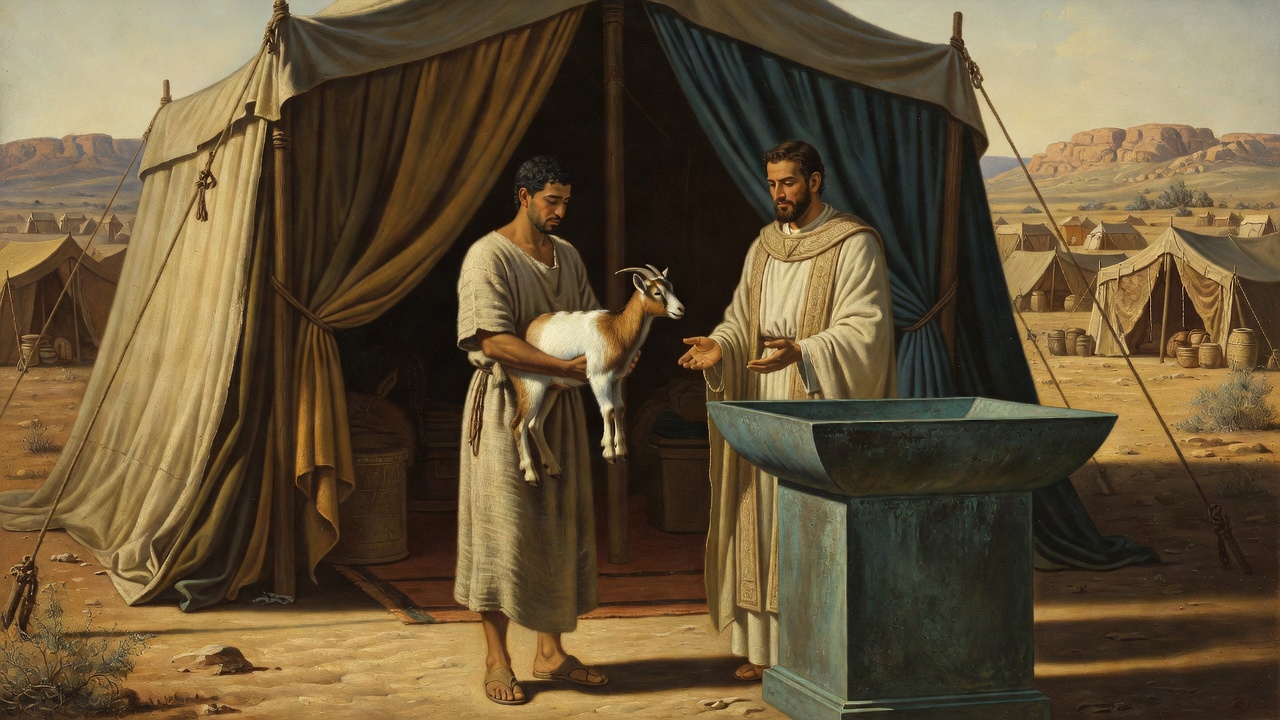
1Then the LORD said to Moses, 2“Speak to Aaron, his sons, and all the Israelites and tell them this is what the LORD has commanded: 3‘Anyone from the house of Israel who slaughters an ox, a lamb, or a goat in the camp or outside of it 4instead of bringing it to the entrance to the Tent of Meeting to present it as an offering to the LORD before His tabernacle—that man shall incur bloodguilt. He has shed blood and must be cut off from among his people.
5For this reason the Israelites will bring to the LORD the sacrifices they have been offering in the open fields. They are to bring them to the priest at the entrance to the Tent of Meeting and offer them as sacrifices of peace to the LORD. 6The priest will then sprinkle the blood on the altar of the LORD at the entrance to the Tent of Meeting and burn the fat as a pleasing aroma to the LORD.
7They must no longer offer their sacrifices to the goat demons to which they have prostituted themselves. This will be a permanent statute for them for the generations to come.’
8Tell them that if anyone from the house of Israel or any foreigner living among them offers a burnt offering or a sacrifice 9but does not bring it to the entrance to the Tent of Meeting to sacrifice it to the LORD, that man must be cut off from his people.
Laws against Eating Blood
10If anyone from the house of Israel or a foreigner living among them eats any blood, I will set My face against that person and cut him off from among his people. 11For the life of the flesh is in the blood, and I have given it to you to make atonement for your souls upon the altar; for it is the blood that makes atonement for the soul. 12Therefore I say to the Israelites, ‘None of you may eat blood, nor may any foreigner living among you eat blood.’
13And if any Israelite or foreigner living among them hunts down a wild animal or bird that may be eaten, he must drain its blood and cover it with dirt. 14For the life of all flesh is its blood. Therefore I have told the Israelites, ‘You must not eat the blood of any living thing, because the life of all flesh is its blood; whoever eats it must be cut off.’
15And any person, whether native or foreigner, who eats anything found dead or mauled by wild beasts must wash his clothes and bathe with water, and he will be unclean until evening; then he will be clean. 16But if he does not wash his clothes and bathe himself, then he shall bear his iniquity.”
Did you know?
Sacrificial Slaughter and the Sacredness of Blood
- Leviticus mandates that domestic animals such as oxen, lambs, and goats be brought directly to the entrance of the Tent of Meeting rather than slaughtered in open fields. This rule ensured sacrifices were presented exclusively as peace offerings to the LORD and halted illicit sacrifices to goat demons.Sources: the Bible text itself
- Both native Israelites and resident foreigners were strictly prohibited from eating blood, on penalty of being cut off from the community. The text grounds this law in the theological principle that the life of the flesh is in the blood, which God appointed specifically for making atonement upon the altar.Sources: the Bible text itself
- When Israelites or resident aliens hunted wild animals or birds that were clean for food, they were commanded to drain the blood upon the ground and cover it with dirt. This instruction reinforced that life belongs to God and preserved the sanctity of blood outside the sacrificial sanctuary.Sources: the Bible text itself
Notes written with AI assistance from open sources (Theographic Bible Metadata, CC BY-SA 4.0; Easton’s Bible Dictionary, public domain) and reviewed before publishing.
Credits and license for this translation
Berean Standard Bible
The Holy Bible in English: Berean Standard Bible
Public Domain
Language: English
Contributor: BSB Publishing, LLC
2026-10-02
Source: http://ebible.org/engbsb/ · eBible.org