Joel 1
Berean Standard Bible · Tap a verse to see its cross-references.
About this book
About Joel
- The dictionary lists Joel as the second of the twelve minor prophets. He was the son of Pethuel, a name explained there as Vision of God, and his personal history is known only from his book.Sources: Joel · Pethuel
- Easton's Bible Dictionary (1897) says Joel was probably a resident of Judah, since his commission was to that people, and that he often mentions Judah and Jerusalem. It also says he probably flourished in the reign of Uzziah, about 800 B.C., and was a contemporary of Amos and Isaiah.Sources: Easton: Joel, Book of
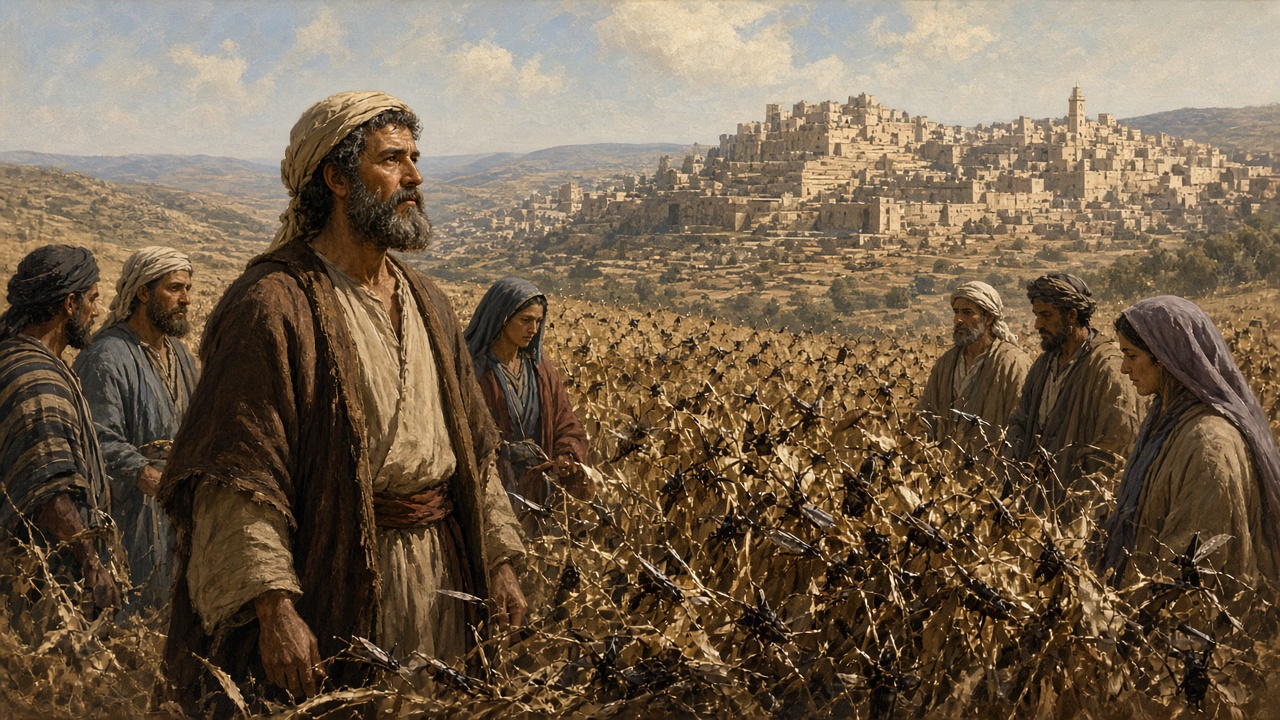
- Jerusalem, which the book names often, is described as a mountain city built on heights that include Zion, the southeastern hill that became the city of David. The opening prophecy warns of a great public calamity then impending over the land: want of water and an extraordinary plague of locusts.Sources: Easton: Joel, Book of · Jerusalem · Zion
- Easton's Bible Dictionary (1897) says that the prophet then calls his countrymen to repent and turn to God, assures them of God's readiness to forgive, and foretells the restoration of the land to its accustomed fruitfulness. The same entry next describes a prophecy it calls Messianic, which it says Peter quotes, and ends with portents and judgments destined to fall on the enemies of God.Sources: Easton: Joel, Book of
- One notable detail is the chapter numbering at the end of the book. Easton's Bible Dictionary (1897) presents the closing section as chapter 3, while noting that in the Hebrew text it is chapter 4.Sources: Easton: Joel, Book of
Notes written with AI assistance from open sources (Theographic Bible Metadata, CC BY-SA 4.0; Easton’s Bible Dictionary, public domain) and reviewed before publishing.
The Invasion of Locusts
1This is the word of the LORD that came to Joel son of Pethuel:
2Hear this, O elders;
and give ear, all who dwell in the land.
Has anything like this ever happened in your days
or in the days of your fathers?
3Tell it to your children;
let your children tell it to their children,
and their children to the next generation.
4What the devouring locust has left,
the swarming locust has eaten;
what the swarming locust has left,
the young locust has eaten;
and what the young locust has left,
the destroying locust has eaten.
5Wake up, you drunkards, and weep;
wail, all you drinkers of wine,
because of the sweet wine,
for it has been cut off from your mouth.
6For a nation has invaded My land,
powerful and without number;
its teeth are the teeth of a lion,
and its fangs are the fangs of a lioness.
7It has laid waste My grapevine
and splintered My fig tree.
It has stripped off the bark and thrown it away;
the branches have turned white.
A Call to Mourning
8Wail like a virgin dressed in sackcloth,
grieving for the husband of her youth.
9Grain and drink offerings have been cut off
from the house of the LORD;
the priests are in mourning,
those who minister before the LORD.
10The field is ruined;
the land mourns.
For the grain is destroyed,
the new wine is dried up, and the oil fails.
11Be dismayed, O farmers,
wail, O vinedressers,
over the wheat and barley,
because the harvest of the field has perished.
12The grapevine is dried up,
and the fig tree is withered;
the pomegranate, palm, and apple—
all the trees of the orchard—are withered.
Surely the joy of mankind has dried up.
A Call to Repentance
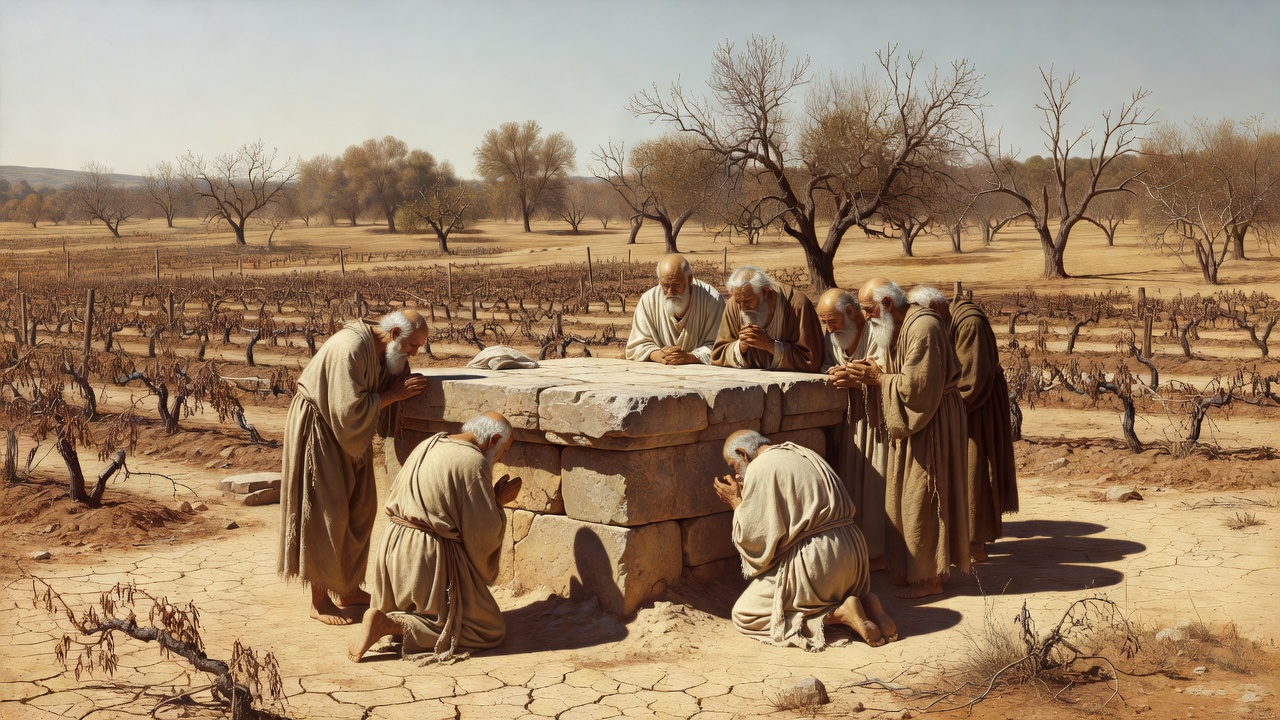
13Put on sackcloth and lament, O priests;
wail, O ministers of the altar.
Come, spend the night in sackcloth,
O ministers of my God,
because the grain and drink offerings
are withheld from the house of your God.
14Consecrate a fast;
proclaim a solemn assembly!
Gather the elders
and all the residents of the land
to the house of the LORD your God,
and cry out to the LORD.
15Alas for the day!
For the Day of the LORD is near,
and it will come
as destruction from the Almighty.
16Has not the food been cut off
before our very eyes—
joy and gladness
from the house of our God?
17The seeds lie shriveled beneath the clods;
the storehouses are in ruins;
the granaries are broken down,
for the grain has withered away.
18How the cattle groan!
The herds wander in confusion
because they have no pasture.
Even the flocks of sheep are suffering.
19To You, O LORD, I call,
for fire has consumed the open pastures
and flames have scorched all the trees of the field.
20Even the beasts of the field pant for You,
for the streams of water have dried up,
and fire has consumed the open pastures.
Did you know?
A Plague of Locusts and National Mourning
- Joel is listed as the second of the twelve Minor Prophets, identified only as the son of Pethuel, with no further details preserved about his personal life outside his prophetic book.Sources: Joel · Pethuel · the Bible text itself
- The chapter details an unprecedented agricultural crisis caused by successive waves of swarming locusts and severe drought, which stripped the bark off fig trees and devastated staple crops like wheat, barley, grapes, and olives.Sources: the Bible text itself
- Because the ruined harvest cut off the grain and drink offerings needed for regular worship at the temple, the prophet urged priests and community leaders to put on sackcloth, proclaim a public fast, and gather the people in prayer before the approaching Day of the LORD.Sources: the Bible text itself
Notes written with AI assistance from open sources (Theographic Bible Metadata, CC BY-SA 4.0; Easton’s Bible Dictionary, public domain) and reviewed before publishing.
Credits and license for this translation
Berean Standard Bible
The Holy Bible in English: Berean Standard Bible
Public Domain
Language: English
Contributor: BSB Publishing, LLC
2026-10-02
Source: http://ebible.org/engbsb/ · eBible.org