Hosea 6
Berean Standard Bible · Tap a verse to see its cross-references.
The Unrepentance of Israel and Judah
1Come, let us return to the LORD.
For He has torn us to pieces,
but He will heal us;
He has wounded us,
but He will bind up our wounds.
2After two days He will revive us;
on the third day He will raise us up,
that we may live in His presence.
3So let us know—
let us press on to know the LORD.
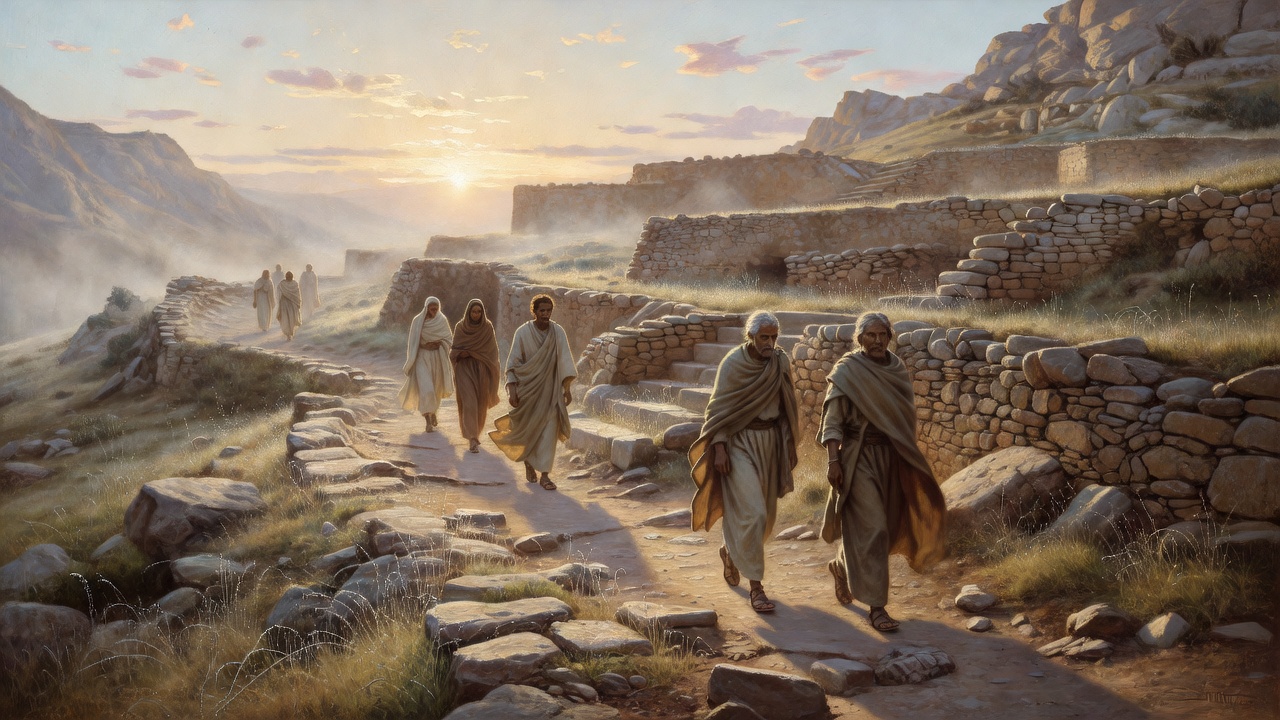
As surely as the sun rises,
He will appear;
He will come to us like the rain,
like the spring showers that water the earth.
4What shall I do with you, O Ephraim ?
What shall I do with you, O Judah?
For your loyalty is like a morning mist,
like the early dew that vanishes.
5Therefore I have hewn them by the prophets;
I have slain them by the words of My mouth,
and My judgments go forth like lightning.
6For I desire mercy, not sacrifice,
and the knowledge of God
rather than burnt offerings.
7But they, like Adam, have transgressed the covenant;
there they were unfaithful to Me.
8Gilead is a city of evildoers,
tracked with footprints of blood.
9Like raiders who lie in ambush,
so does a band of priests;
they murder on the way to Shechem;
surely they have committed atrocities.
10In the house of Israel
I have seen a horrible thing:
Ephraim practices prostitution there,
and Israel is defiled.
11Also for you, O Judah,
a harvest is appointed,
when I restore
My people from captivity.
Did you know?
Fleeting Loyalty and True Devotion
- In Hosea 6:6, the prophet proclaims that God values mercy and the knowledge of God above ritual animal sacrifices and burnt offerings, emphasizing heartfelt covenant faithfulness over mere religious formalities.Sources: the Bible text itself
- The prophetic text compares the loyalty of Ephraim and Judah to morning mist and vanishing dew; Ephraim, originally named after Joseph's son for double fruitfulness, is frequently used in the book to address the northern kingdom of Israel.Sources: the Bible text itself · Ephraim
- The chapter condemns lawlessness in Gilead, a mountainous region located east of the Jordan River, and accuses corrupt bands of priests of committing violent ambushes on travelers along the road toward Shechem.Sources: the Bible text itself · Gilead
Notes written with AI assistance from open sources (Theographic Bible Metadata, CC BY-SA 4.0; Easton’s Bible Dictionary, public domain) and reviewed before publishing.
Places in this chapter
- Shechem · Today: Tell Balatah · 32.214, 35.282 · verse 9
Only places identified with high confidence are shown (90% or more according to the scholarly sources compiled by OpenBible). Period map: DARE (Digital Atlas of the Roman Empire), CC BY 4.0; modern map: © OpenStreetMap contributors; places: OpenBible.info (CC BY 4.0).
Credits and license for this translation
Berean Standard Bible
The Holy Bible in English: Berean Standard Bible
Public Domain
Language: English
Contributor: BSB Publishing, LLC
2026-10-02
Source: http://ebible.org/engbsb/ · eBible.org