Exodus 9
Berean Standard Bible · Tap a verse to see its cross-references.
The Fifth Plague: Livestock
1Then the LORD said to Moses, “Go to Pharaoh and tell him that this is what the LORD, the God of the Hebrews, says: ‘Let My people go, so that they may worship Me. 2But if you continue to restrain them and refuse to let them go, 3then the hand of the LORD will bring a severe plague on your livestock in the field—on your horses, donkeys, camels, herds, and flocks. 4But the LORD will make a distinction between the livestock of Israel and the livestock of Egypt, so that no animal belonging to the Israelites will die.’”
5The LORD set a time, saying, “Tomorrow the LORD will do this in the land.” 6And the next day the LORD did just that. All the livestock of the Egyptians died, but not one animal belonging to the Israelites died. 7Pharaoh sent officials and found that none of the livestock of the Israelites had died. But Pharaoh’s heart was hardened, and he would not let the people go.
The Sixth Plague: Boils
8Then the LORD said to Moses and Aaron, “Take handfuls of soot from the furnace; in the sight of Pharaoh, Moses is to toss it into the air. 9It will become fine dust over all the land of Egypt, and festering boils will break out on man and beast throughout the land.”
10So they took soot from the furnace and stood before Pharaoh. Moses tossed it into the air, and festering boils broke out on man and beast. 11The magicians could not stand before Moses, because the boils had broken out on them and on all the Egyptians.
12But the LORD hardened Pharaoh’s heart, and he would not listen to them, just as the LORD had said to Moses.
The Seventh Plague: Hail
13Then the LORD said to Moses, “Get up early in the morning, stand before Pharaoh, and tell him that this is what the LORD, the God of the Hebrews, says: ‘Let My people go, so that they may worship Me. 14Otherwise, I will send all My plagues against you and your officials and your people, so you may know that there is no one like Me in all the earth.
15For by this time I could have stretched out My hand and struck you and your people with a plague to wipe you off the earth. 16But I have raised you up for this very purpose, that I might display My power to you, and that My name might be proclaimed in all the earth. 17Still, you lord it over My people and do not allow them to go.
18Behold, at this time tomorrow I will rain down the worst hail that has ever fallen on Egypt, from the day it was founded until now. 19So give orders now to shelter your livestock and everything you have in the field. Every man or beast that remains in the field and is not brought inside will die when the hail comes down upon them.’”
20Those among Pharaoh’s officials who feared the word of the LORD hurried to bring their servants and livestock to shelter, 21but those who disregarded the word of the LORD left their servants and livestock in the field.
22Then the LORD said to Moses, “Stretch out your hand toward heaven, so that hail may fall on all the land of Egypt—on man and beast and every plant of the field throughout the land of Egypt.”
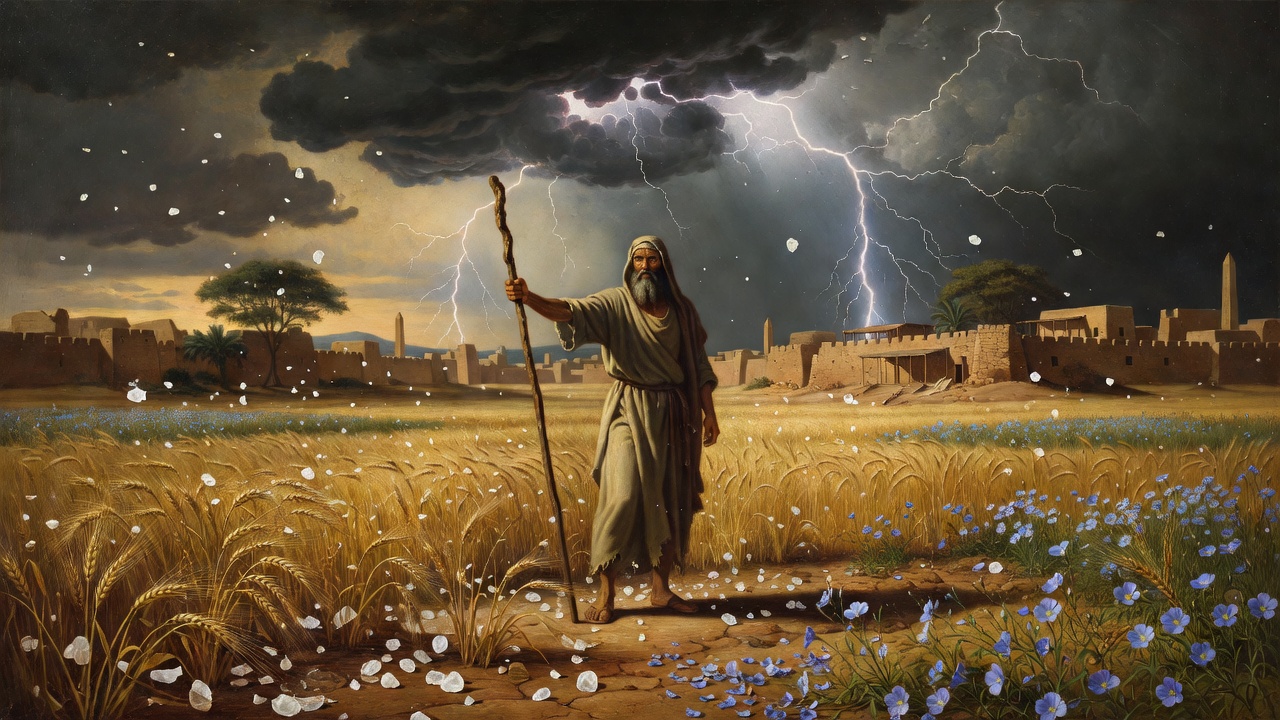
23So Moses stretched out his staff toward heaven, and the LORD sent thunder and hail, and lightning struck the earth. So the LORD rained down hail upon the land of Egypt. 24The hail fell and the lightning continued flashing through it. The hail was so severe that nothing like it had ever been seen in all the land of Egypt from the time it became a nation.
25Throughout the land of Egypt, the hail struck down everything in the field, both man and beast; it beat down every plant of the field and stripped every tree. 26The only place where it did not hail was in the land of Goshen, where the Israelites lived.
27Then Pharaoh summoned Moses and Aaron. “This time I have sinned,” he said. “The LORD is righteous, and I and my people are wicked. 28Pray to the LORD, for there has been enough of God’s thunder and hail. I will let you go; you do not need to stay any longer.”
29Moses said to him, “When I have left the city, I will spread out my hands to the LORD. The thunder will cease, and there will be no more hail, so that you may know that the earth is the LORD’s. 30But as for you and your officials, I know that you still do not fear the LORD our God.”
31(Now the flax and barley were destroyed, since the barley was ripe and the flax was in bloom; 32but the wheat and spelt were not destroyed, because they are late crops.)
33Then Moses departed from Pharaoh, went out of the city, and spread out his hands to the LORD. The thunder and hail ceased, and the rain no longer poured down on the land.
34When Pharaoh saw that the rain and hail and thunder had ceased, he sinned again and hardened his heart—he and his officials. 35So Pharaoh’s heart was hardened, and he would not let the Israelites go, just as the LORD had said through Moses.
Did you know?
Livestock, Boils, and Hail
- This chapter draws a sharp line between Egypt and the Israelites: all the livestock of the Egyptians die, but not one animal belonging to the Israelites dies, and the hail falls on all the land of Egypt except Goshen, where the Israelites lived. Goshen, also called the land of Rameses, lay east of the Nile and apparently not far from the royal residence, and it had been assigned to Jacob’s family as the best of the land.Sources: the Bible text itself · Goshen · Moses
- The Pharaoh whom Moses and Aaron confront is not named in the chapter. Easton's Bible Dictionary (1897) identifies him as probably Menephtah I, a son of Rameses II, who lived at Zoan, where his interviews with Moses and Aaron took place, and notes that some instead favor Seti II. After the hail, Moses leaves the city and spreads out his hands to the LORD until the thunder and hail cease.Sources: the Bible text itself · Pharaoh (of the Exodus)
- The hail destroyed the flax and the barley, but not the wheat and the spelt. The narrative explains the difference: the barley was already ripe and the flax was in bloom, while the wheat and spelt were late crops.Sources: the Bible text itself
Notes written with AI assistance from open sources (Theographic Bible Metadata, CC BY-SA 4.0; Easton’s Bible Dictionary, public domain) and reviewed before publishing.
Places in this chapter
- Egypt · 30.129, 31.308 · verses 4, 6, 9, 18, 22, 23, 24, 25
- Goshen · Today: Goshen 1 · 30.799, 31.834 · verse 26
Only places identified with high confidence are shown (90% or more according to the scholarly sources compiled by OpenBible). Period map: DARE (Digital Atlas of the Roman Empire), CC BY 4.0; modern map: © OpenStreetMap contributors; places: OpenBible.info (CC BY 4.0).
Credits and license for this translation
Berean Standard Bible
The Holy Bible in English: Berean Standard Bible
Public Domain
Language: English
Contributor: BSB Publishing, LLC
2026-10-02
Source: http://ebible.org/engbsb/ · eBible.org