Ecclesiastes 7
Berean Standard Bible · Tap a verse to see its cross-references.
The Value of Wisdom
1A good name is better than fine perfume,
and one’s day of death is better than his day of birth.
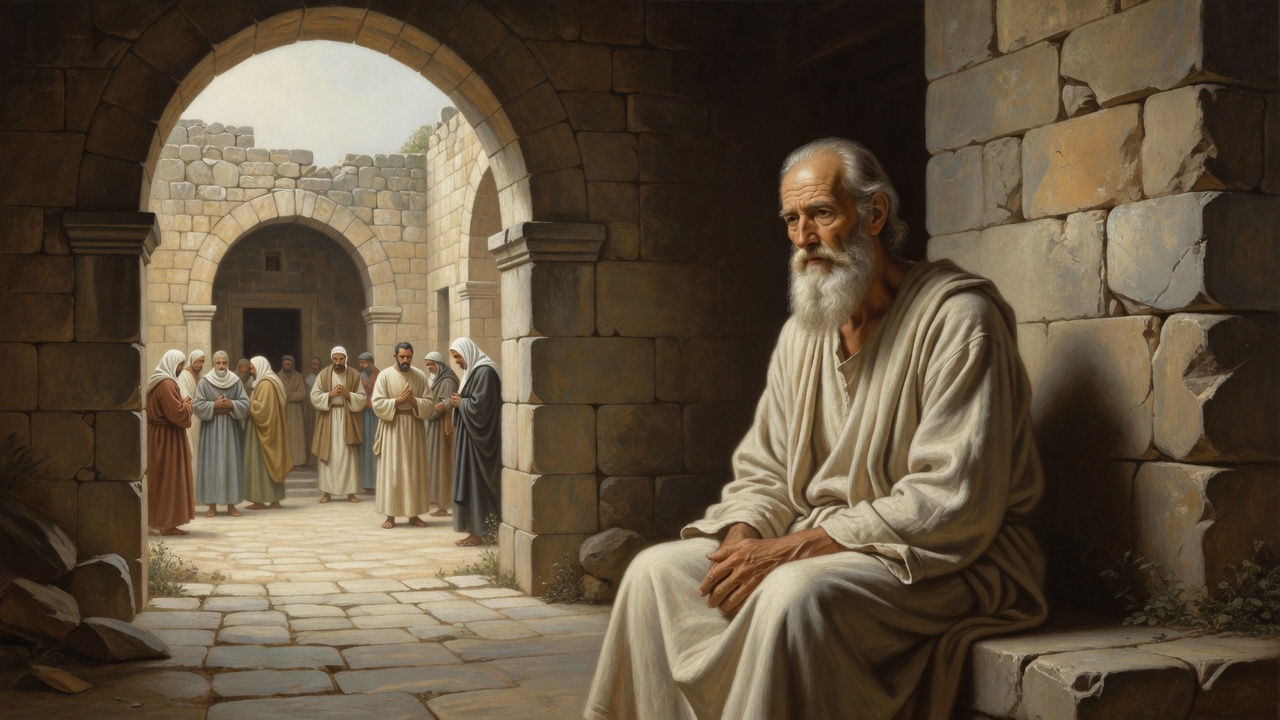
2It is better to enter a house of mourning
than a house of feasting,
since death is the end of every man,
and the living should take this to heart.
3Sorrow is better than laughter,
for a sad countenance is good for the heart.
4The heart of the wise is in the house of mourning,
but the heart of fools is in the house of pleasure.
5It is better to heed a wise man’s rebuke
than to listen to the song of fools.
6For like the crackling of thorns under the pot,
so is the laughter of the fool. This too is futile.
7Surely extortion turns a wise man into a fool,
and a bribe corrupts the heart.
8The end of a matter is better than the beginning,
and a patient spirit is better than a proud one.
9Do not be quickly provoked in your spirit,
for anger settles in the lap of a fool.
10Do not say, “Why were the old days better than these?”
For it is unwise of you to ask about this.
11Wisdom, like an inheritance, is good,
and it benefits those who see the sun.
12For wisdom, like money, is a shelter,
and the advantage of knowledge
is that wisdom preserves the life of its owner.
13Consider the work of God:
Who can straighten what He has bent?
14In the day of prosperity, be joyful,
but in the day of adversity, consider this:
God has made one of these along with the other,
so that a man cannot discover
anything that will come after him.
The Limits of Human Wisdom
15In my futile life I have seen both of these:
A righteous man perishing in his righteousness,
and a wicked man living long in his wickedness.
16Do not be overly righteous, and do not make yourself too wise. Why should you destroy yourself? 17Do not be excessively wicked, and do not be a fool. Why should you die before your time? 18It is good to grasp the one and not let the other slip from your hand. For he who fears God will follow both warnings.
19Wisdom makes the wise man
stronger than ten rulers in a city.
20Surely there is no righteous man on earth
who does good and never sins.
21Do not pay attention to every word that is spoken, or you may hear your servant cursing you. 22For you know in your heart that many times you yourself have cursed others.
23All this I tested by wisdom, saying, “I resolve to be wise.” But it was beyond me. 24What exists is out of reach and very deep. Who can fathom it?
25I directed my mind to understand, to explore, to search out wisdom and explanations, and to understand the stupidity of wickedness and the folly of madness. 26And I find more bitter than death the woman who is a snare, whose heart is a net, and whose hands are chains. The man who pleases God escapes her, but the sinner is ensnared.
27“Behold,” says the Teacher, “I have discovered this by adding one thing to another to find an explanation. 28While my soul was still searching but not finding, among a thousand I have found one upright man, but among all these I have not found one such woman. 29Only this have I found: I have discovered that God made men upright, but they have sought out many schemes.”
Did you know?
Wisdom, Mortality, and the Limits of Understanding
- Ecclesiastes 7 begins with a series of comparative proverbs arguing that moments of solemn reflection, such as visiting a house of mourning or facing sorrow, provide greater insight into life than superficial laughter and feast houses.Sources: the Bible text itself
- The Teacher reflects on the reality of human experience, noting that God has appointed both prosperous and adverse days so that humans cannot foresee their future, and that righteous people sometimes perish while the wicked live long.Sources: the Bible text itself
- The chapter highlights the universal limitation of human goodness, observing that there is no one on earth who does good and never sins, and concluding that while God created humanity upright, people pursue many complex schemes.Sources: the Bible text itself
Notes written with AI assistance from open sources (Theographic Bible Metadata, CC BY-SA 4.0; Easton’s Bible Dictionary, public domain) and reviewed before publishing.
Credits and license for this translation
Berean Standard Bible
The Holy Bible in English: Berean Standard Bible
Public Domain
Language: English
Contributor: BSB Publishing, LLC
2026-10-02
Source: http://ebible.org/engbsb/ · eBible.org