Deuteronomy 16
Berean Standard Bible · Tap a verse to see its cross-references.
Passover and the Feast of Unleavened Bread
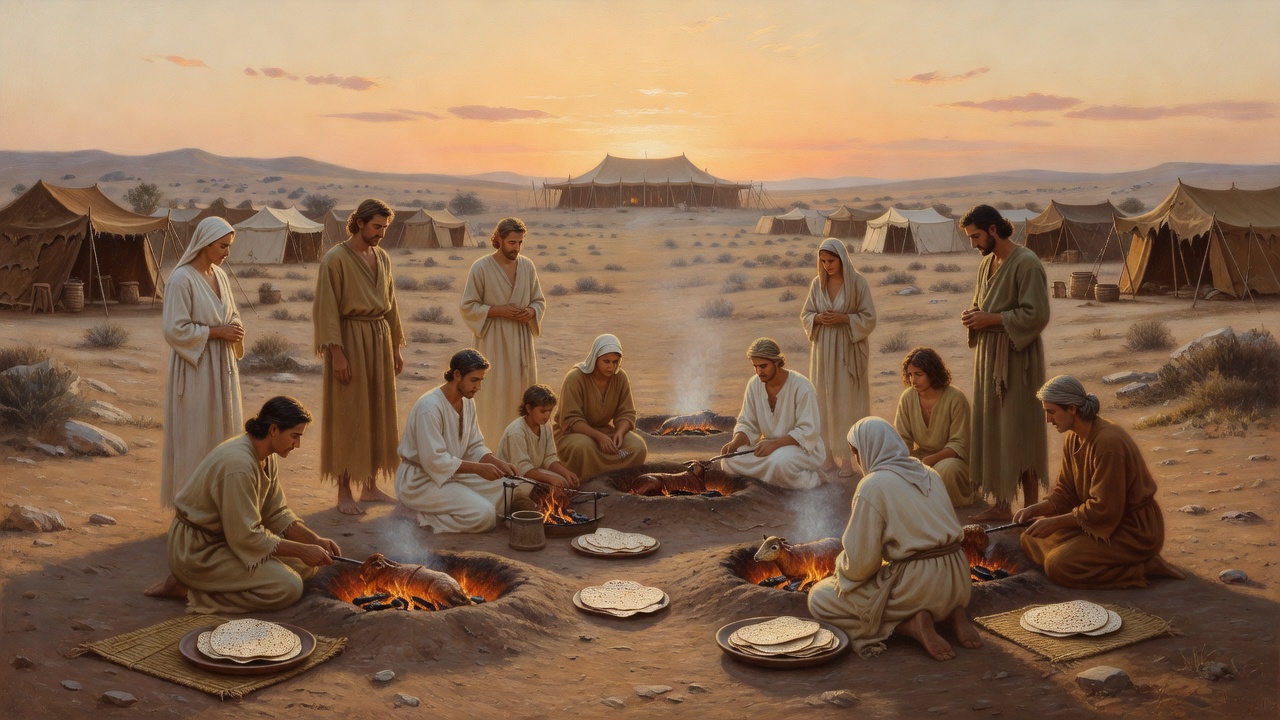
1Observe the month of Abib and celebrate the Passover to the LORD your God, because in the month of Abib the LORD your God brought you out of Egypt by night.
2You are to offer to the LORD your God the Passover sacrifice from the herd or flock in the place the LORD will choose as a dwelling for His Name. 3You must not eat leavened bread with it; for seven days you are to eat with it unleavened bread, the bread of affliction, because you left the land of Egypt in haste—so that you may remember for the rest of your life the day you left the land of Egypt.
4No leaven is to be found in all your land for seven days, and none of the meat you sacrifice in the evening of the first day shall remain until morning.
5You are not to sacrifice the Passover animal in any of the towns that the LORD your God is giving you. 6You must only offer the Passover sacrifice at the place the LORD your God will choose as a dwelling for His Name. Do this in the evening as the sun sets, at the same time you departed from Egypt. 7And you shall roast it and eat it in the place the LORD your God will choose, and in the morning you shall return to your tents.
8For six days you must eat unleavened bread, and on the seventh day you shall hold a solemn assembly to the LORD your God, and you must not do any work.
The Feast of Weeks
9You are to count off seven weeks from the time you first put the sickle to the standing grain. 10And you shall celebrate the Feast of Weeks to the LORD your God with a freewill offering that you give in proportion to how the LORD your God has blessed you, 11and you shall rejoice before the LORD your God in the place He will choose as a dwelling for His Name—you, your sons and daughters, your menservants and maidservants, and the Levite within your gates, as well as the foreigner, the fatherless, and the widows among you.
12Remember that you were slaves in Egypt, and carefully follow these statutes.
The Feast of Tabernacles
13You are to celebrate the Feast of Tabernacles for seven days after you have gathered the produce of your threshing floor and your winepress. 14And you shall rejoice in your feast—you, your sons and daughters, your menservants and maidservants, and the Levite, as well as the foreigner, the fatherless, and the widows among you.
15For seven days you shall celebrate a feast to the LORD your God in the place He will choose, because the LORD your God will bless you in all your produce and in all the work of your hands, so that your joy will be complete.
16Three times a year all your men are to appear before the LORD your God in the place He will choose: at the Feast of Unleavened Bread, the Feast of Weeks, and the Feast of Tabernacles. No one should appear before the LORD empty-handed. 17Everyone must appear with a gift as he is able, according to the blessing the LORD your God has given you.
Judges and Justice
18You are to appoint judges and officials for your tribes in every town that the LORD your God is giving you. They are to judge the people with righteous judgment.
19Do not deny justice or show partiality. Do not accept a bribe, for a bribe blinds the eyes of the wise and twists the words of the righteous.
20Pursue justice, and justice alone, so that you may live, and you may possess the land that the LORD your God is giving you.
Forbidden Forms of Worship
21Do not set up any wooden Asherah pole next to the altar you will build for the LORD your God, 22and do not set up for yourselves a sacred pillar, which the LORD your God hates.
Did you know?
Appointed Feasts and Righteous Justice
- Deuteronomy mandates three annual pilgrimage festivals—the Feast of Unleavened Bread (Passover), the Feast of Weeks, and the Feast of Tabernacles. For these occasions, the men of Israel were required to travel and appear before God not in their local towns, but at the specific central location chosen as a dwelling for His Name.Sources: the Bible text itself
- The celebrations of the Feast of Weeks and the Feast of Tabernacles explicitly included vulnerable members of society, such as servants, Levites, foreigners, orphans, and widows. These communal rejoicings were tied to the memory of Israel's liberation from slavery in Egypt.Sources: the Bible text itself
- In addition to religious assemblies, the text commands the appointment of local judges and officials across every town. They were forbidden from taking bribes or showing partiality, establishing the standard to pursue justice alone throughout the land.Sources: the Bible text itself
Notes written with AI assistance from open sources (Theographic Bible Metadata, CC BY-SA 4.0; Easton’s Bible Dictionary, public domain) and reviewed before publishing.
Places in this chapter
Only places identified with high confidence are shown (90% or more according to the scholarly sources compiled by OpenBible). Period map: DARE (Digital Atlas of the Roman Empire), CC BY 4.0; modern map: © OpenStreetMap contributors; places: OpenBible.info (CC BY 4.0).
Credits and license for this translation
Berean Standard Bible
The Holy Bible in English: Berean Standard Bible
Public Domain
Language: English
Contributor: BSB Publishing, LLC
2026-10-02
Source: http://ebible.org/engbsb/ · eBible.org