1 Thessalonians 1
Berean Standard Bible · Tap a verse to see its cross-references.
About this book
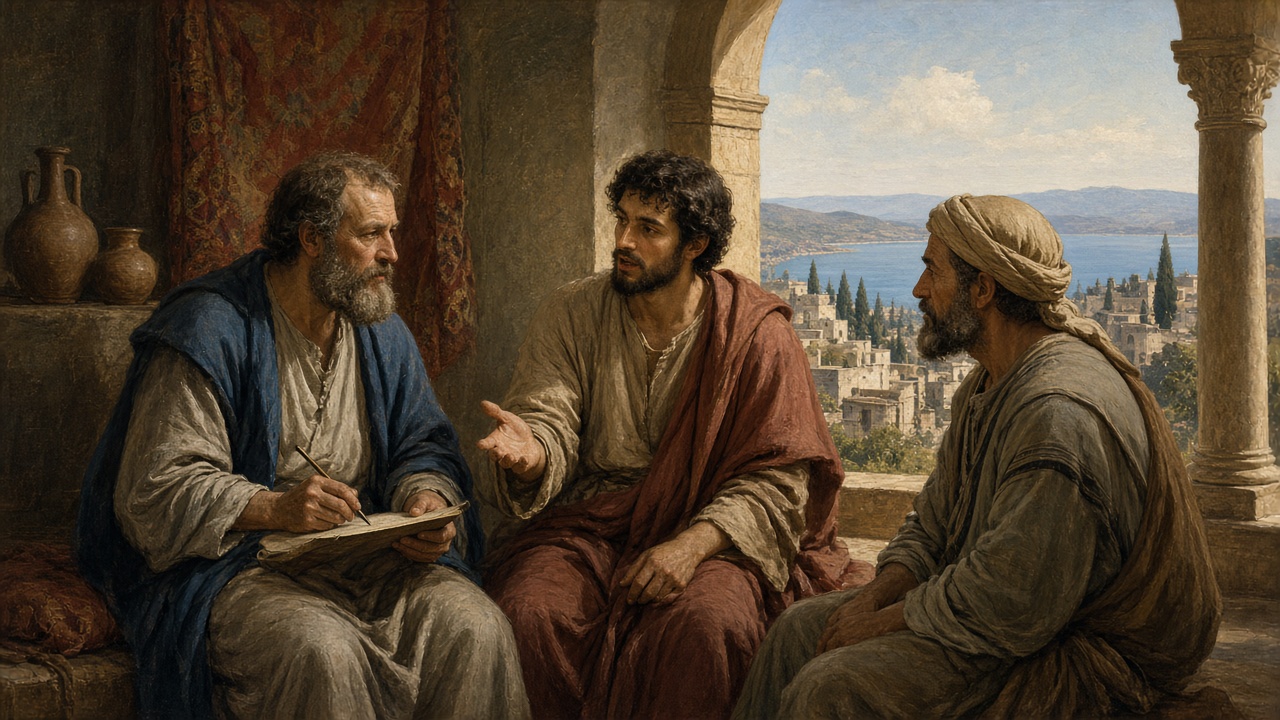
About 1 Thessalonians
- Easton's Bible Dictionary (1897) presents the First Letter to the Thessalonians as the earliest of all Paul's letters. It says the letter was in all probability written from Corinth, early in the long stay recorded in Acts, about the end of A.D. 52.Sources: Easton: Thessalonians, Epistles to the
- The letter was prompted by the return of Timothy, a young disciple and companion of Paul, bringing news from Macedonia about the church in Thessalonica. Macedonia was a Roman province north of Greece, where a vision of a Macedonian man had called Paul to preach, and Timothy's report was encouraging on the whole, though misunderstandings of Paul's teaching had appeared. Silas, also called Silvanus, a prominent member of the church in Jerusalem and Paul's companion on that journey, is named in the letter's opening.Sources: Easton: Thessalonians, Epistles to the · Timotheus · Silas · Macedonia
- According to Easton's Bible Dictionary (1897), Paul wrote to correct errors and misunderstandings of his teaching that had entered the church, and especially to urge purity of life. He reminded them that sanctification was the great end God desired for them.Sources: Easton: Thessalonians, Epistles to the
- A subscription, a note attached to the letter, wrongly says that it was written from Athens. Easton's Bible Dictionary (1897) calls that note erroneous. Paul had visited Athens on his second journey, but the dictionary places the writing in Corinth rather than there.Sources: Easton: Thessalonians, Epistles to the · Athens
Notes written with AI assistance from open sources (Theographic Bible Metadata, CC BY-SA 4.0; Easton’s Bible Dictionary, public domain) and reviewed before publishing.
Greetings to the Thessalonians
1Paul, Silvanus, and Timothy,
To the church of the Thessalonians in God the Father and the Lord Jesus Christ:
Grace and peace to you.
2We always thank God for all of you, remembering you in our prayers 3and continually recalling before our God and Father your work of faith, your labor of love, and your enduring hope in our Lord Jesus Christ.
4Brothers who are beloved by God, we know that He has chosen you, 5because our gospel came to you not only in word, but also in power, in the Holy Spirit, and with great conviction—just as you know we lived among you for your sake. 6And you became imitators of us and of the Lord when you welcomed the message with the joy of the Holy Spirit, in spite of your great suffering.
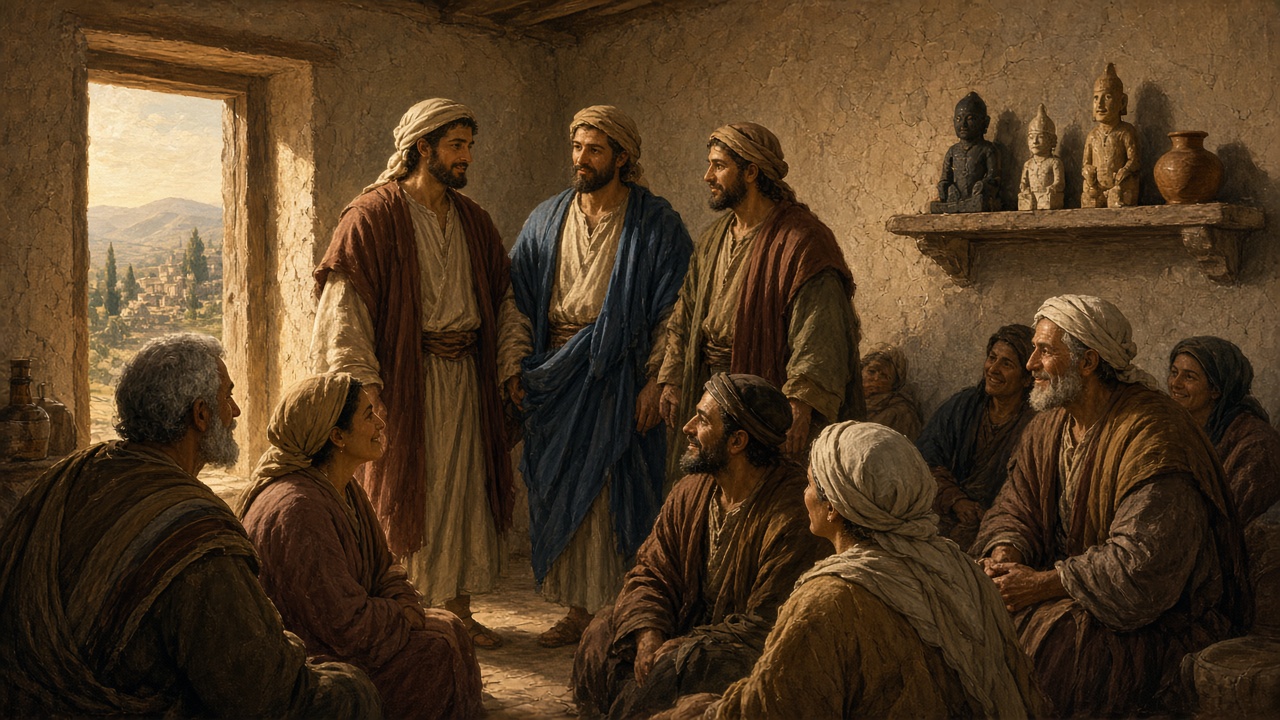
7As a result, you have become an example to all the believers in Macedonia and Achaia. 8For not only did the message of the Lord ring out from you to Macedonia and Achaia, but your faith in God has gone out to every place, so that we have no need to say anything more. 9For they themselves report what kind of welcome you gave us, and how you turned to God from idols to serve the living and true God 10and to await His Son from heaven, whom He raised from the dead—Jesus our deliverer from the coming wrath.
Did you know?
An example across Macedonia and Achaia
- The greeting names Paul together with Silvanus and Timothy. A Bible dictionary identifies Silvanus with Silas, a prominent member of the church in Jerusalem who, with Judas, surnamed Barsabas, carried the council's decree to Antioch and was later chosen by Paul as his companion on the second missionary journey; the epistles, including this letter, call him Silvanus. Timothy, whose name Timotheus means honouring God, was a young companion whose father was a Greek; his mother, Eunice, and grandmother, Lois, are mentioned as eminent for their piety.Sources: Silas · Timotheus · the Bible text itself
- In New Testament times Macedonia was a Roman province north of Greece, governed by a propraetor with the title of proconsul, and Paul was summoned there by a vision of the man of Macedonia to preach the gospel. Achaia, originally a narrow strip on the northwest of the Peloponnesus, was the name the Romans gave to the whole Peloponnesus and the south of Greece, one of the two provinces into which they divided the country, Macedonia being the other. This chapter says the Thessalonians became an example to all the believers in Macedonia and Achaia, that the message of the Lord rang out from them to those regions, and that their faith in God had gone out to every place.Sources: Macedonia · Achaia · the Bible text itself
Notes written with AI assistance from open sources (Theographic Bible Metadata, CC BY-SA 4.0; Easton’s Bible Dictionary, public domain) and reviewed before publishing.
Places in this chapter
- Thessalonica · Today: Thessaloniki · 40.638, 22.946 · verse 1
- Achaia · 38.720, 22.540 · verses 7, 8
- Greece · 37.972, 23.727 · verse 7
- Macedonia · 41.600, 22.540 · verses 7, 8
Only places identified with high confidence are shown (90% or more according to the scholarly sources compiled by OpenBible). Period map: DARE (Digital Atlas of the Roman Empire), CC BY 4.0; modern map: © OpenStreetMap contributors; places: OpenBible.info (CC BY 4.0).
Credits and license for this translation
Berean Standard Bible
The Holy Bible in English: Berean Standard Bible
Public Domain
Language: English
Contributor: BSB Publishing, LLC
2026-10-02
Source: http://ebible.org/engbsb/ · eBible.org