1 Corinthians 9
Berean Standard Bible · Tap a verse to see its cross-references.
The Rights of an Apostle
1Am I not free? Am I not an apostle? Have I not seen Jesus our Lord? Are you yourselves not my workmanship in the Lord? 2Even if I am not an apostle to others, surely I am to you. For you are the seal of my apostleship in the Lord.
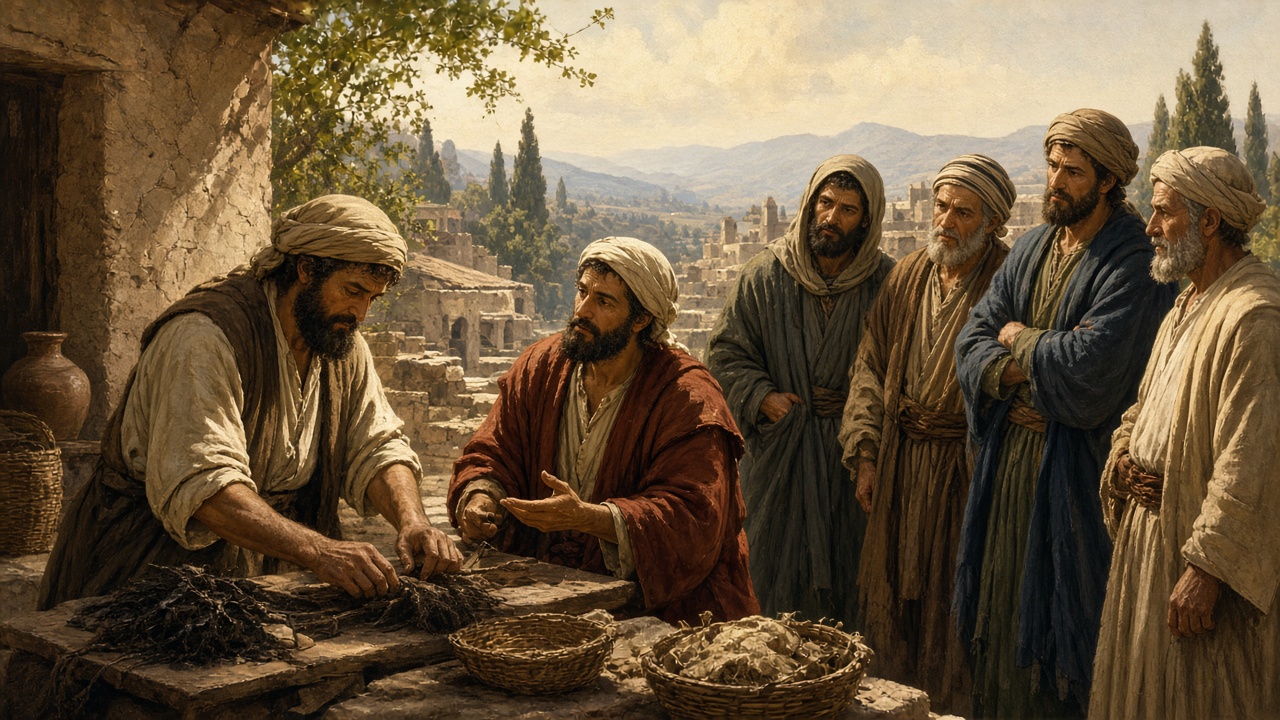
3This is my defense to those who scrutinize me: 4Have we no right to food and to drink? 5Have we no right to take along a believing wife, as do the other apostles and the Lord’s brothers and Cephas? 6Or are Barnabas and I the only apostles who must work for a living?
7Who serves as a soldier at his own expense? Who plants a vineyard and does not eat of its fruit? Who tends a flock and does not drink of its milk?
8Do I say this from a human perspective? Doesn’t the Law say the same thing? 9For it is written in the Law of Moses: “Do not muzzle an ox while it is treading out the grain.” Is it about oxen that God is concerned? 10Isn’t He actually speaking on our behalf? Indeed, this was written for us, because when the plowman plows and the thresher threshes, they should also expect to share in the harvest.
11If we have sown spiritual seed among you, is it too much for us to reap a material harvest from you? 12If others have this right to your support, shouldn’t we have it all the more? But we did not exercise this right. Instead, we put up with anything rather than hinder the gospel of Christ.
13Do you not know that those who work in the temple eat of its food, and those who serve at the altar partake of its offerings? 14In the same way, the Lord has prescribed that those who preach the gospel should receive their living from the gospel. 15But I have not used any of these rights. And I am not writing this to suggest that something be done for me. Indeed, I would rather die than let anyone nullify my boast.
16Yet when I preach the gospel, I have no reason to boast, because I am obligated to preach. Woe to me if I do not preach the gospel! 17If my preaching is voluntary, I have a reward. But if it is not voluntary, I am still entrusted with a responsibility. 18What then is my reward? That in preaching the gospel I may offer it free of charge, and so not use up my rights in preaching it.
Paul the Servant to All
19Though I am free of obligation to anyone, I make myself a slave to everyone, to win as many as possible. 20To the Jews I became like a Jew, to win the Jews. To those under the law I became like one under the law (though I myself am not under the law), to win those under the law. 21To those without the law I became like one without the law (though I am not outside the law of God but am under the law of Christ), to win those without the law. 22To the weak I became weak, to win the weak. I have become all things to all people so that by all possible means I might save some.
23I do all this for the sake of the gospel, so that I may share in its blessings.
Run Your Race to Win
24Do you not know that in a race all the runners run, but only one receives the prize? Run in such a way as to take the prize. 25Everyone who competes in the games trains with strict discipline. They do it for a crown that is perishable, but we do it for a crown that is imperishable. 26Therefore I do not run aimlessly; I do not fight like I am beating the air. 27No, I discipline my body and make it my slave, so that after I have preached to others, I myself will not be disqualified.
Did you know?
An Apostle Who Refuses Support
- Church tradition attributes this chapter to Paul, who defends his apostleship before people who scrutinize him, calls his readers the seal of his apostleship in the Lord, and claims a right to food and drink and to a believing wife, as do the other apostles, the Lord's brothers, and Cephas. He says he has not used that right, preferring to offer the gospel free of charge rather than hinder it.Sources: the Bible text itself
- He asks whether he and Barnabas are the only ones who must work for a living instead of being supported by the gospel. Barnabas, "son of consolation," was the surname of Joses, a Levite and a native of Cyprus, who sold land he owned there; Easton's Bible Dictionary (1897) also says that Barnabas introduced Paul to the apostles when Paul returned to Jerusalem after his conversion.Sources: the Bible text itself · Barnabas
- To support a worker's share in the harvest, he quotes the Law of Moses, "Do not muzzle an ox while it is treading out the grain," and says the plowman and the thresher should expect to share in the harvest. He adds that temple workers eat of the temple's food and those who serve at the altar partake of its offerings, and that the Lord has prescribed the same kind of support for those who preach the gospel.Sources: the Bible text itself
Notes written with AI assistance from open sources (Theographic Bible Metadata, CC BY-SA 4.0; Easton’s Bible Dictionary, public domain) and reviewed before publishing.
Credits and license for this translation
Berean Standard Bible
The Holy Bible in English: Berean Standard Bible
Public Domain
Language: English
Contributor: BSB Publishing, LLC
2026-10-02
Source: http://ebible.org/engbsb/ · eBible.org