Psalms 32
American Standard Version Byzantine Text · Tap a verse to see its cross-references.
A Psalm of David. Maskil.
The Joy of Forgiveness
1Blessed is he whose transgression is forgiven,
Whose sin is covered.
2Blessed is the man unto whom Jehovah imputeth not iniquity,
And in whose spirit there is no guile.
3When I kept silence, my bones wasted away
Through my groaning all the day long.
4For day and night thy hand was heavy upon me:
My moisture was changed as with the drought of summer. Selah
5I acknowledged my sin unto thee,
And mine iniquity did I not hide:
I said, I will confess my transgressions unto Jehovah;
And thou forgavest the iniquity of my sin. Selah
6For this let everyone that is godly pray unto thee in a time when thou mayest be found:
Surely when the great waters overflow they shall not reach unto him.
7Thou art my hiding place; thou wilt preserve me from trouble;
Thou wilt compass me about with songs of deliverance. Selah
8I will instruct thee and teach thee in the way which thou shalt go:
I will counsel thee with mine eye upon thee.
9Be ye not as the horse, or as the mule, which have no understanding;
Whose trappings must be bit and bridle to hold them in,
Else they will not come near unto thee.
10Many sorrows shall be to the wicked;
But he that trusteth in Jehovah, lovingkindness shall compass him about.
11Be glad in Jehovah, and rejoice, ye righteous;
And shout for joy, all ye that are upright in heart.
Did you know?
The Joy of Forgiveness and Guidance
- The psalm opens with the title designating it as a Maskil of David, a term traditionally associated with an instructional or contemplative song, reflecting on the contrast between the distress of hidden sin and the blessing of forgiveness.Sources: the Bible text itself
- The Hebrew term Selah appears three times in this psalm (verses 4, 5, and 7), commonly interpreted as a musical pause or a moment for reflection during the recitation of the text.Sources: the Bible text itself
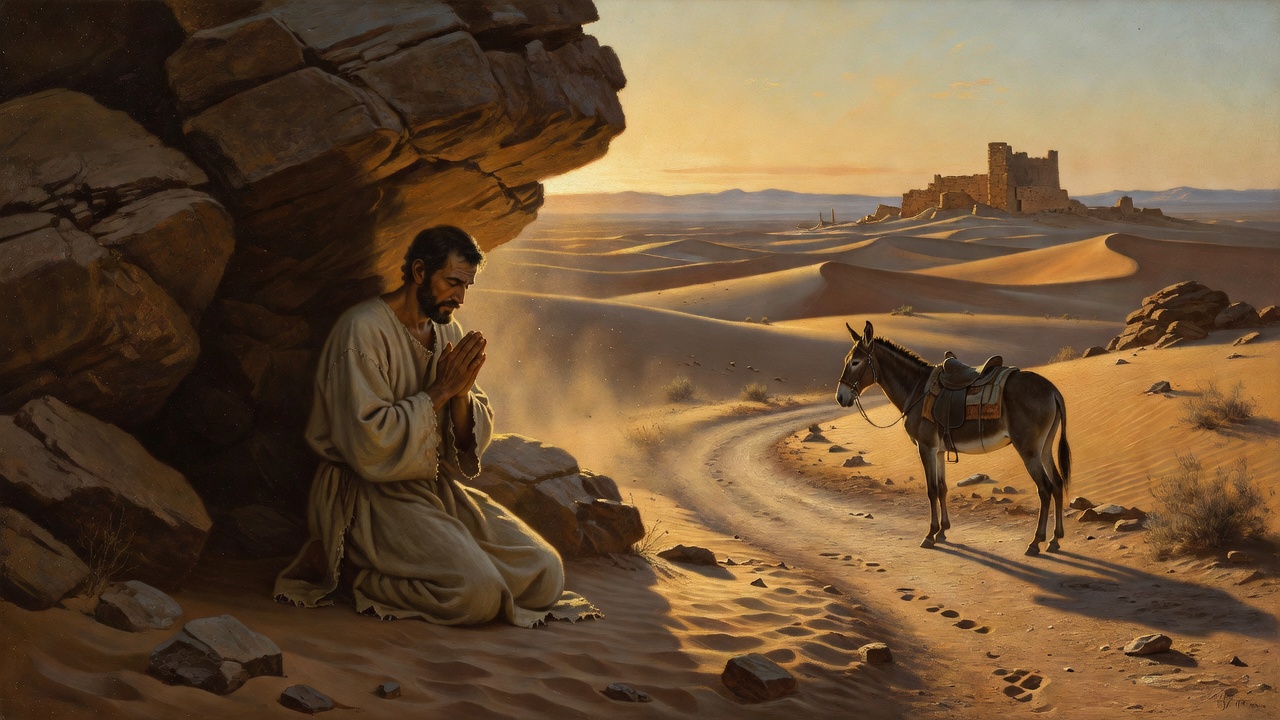
- The psalm uses the imagery of working animals, contrasting the willing follower of divine counsel with stubborn horses and mules that require a bit and bridle to be guided.Sources: the Bible text itself
Notes written with AI assistance from open sources (Theographic Bible Metadata, CC BY-SA 4.0; Easton’s Bible Dictionary, public domain) and reviewed before publishing.
Credits and license for this translation
American Standard Version Byzantine Text
The Holy Bible with Apocrypha, American Standard Version conformed to the Byzantine Text New Testament
Public Domain
Language: English
Dialect: Archaic American
Changes to the ASV dedicated to the Public Domain by Adam Boyd in 2021. The ASV itself is in the Public Domain due to copyright expiration.
2026-10-02
Section headings adapted from the Berean Standard Bible (public domain); they are not part of this translation’s text.
Source: http://ebible.org/engasvbt/ · eBible.org