Malachi 1
American Standard Version Byzantine Text · Tap a verse to see its cross-references.
About this book
About Malachi
- Easton's Bible Dictionary (1897) presents Malachi, a name meaning "messenger" or "angel," as the last of the minor prophets and the writer of the last book of the Old Testament canon. Nothing is known of him beyond what is contained in his book of prophecies.Sources: Easton: Malachi · Malachi
- Some have supposed that the name is simply a title for a messenger of Jehovah, not a proper name. Easton's Bible Dictionary (1897) concludes, however, that there is reason to regard Malachi as the prophet's ordinary name.Sources: Easton: Malachi · Malachi
- Easton's Bible Dictionary (1897) dates the prophecies to about 420 B.C., after Nehemiah's second return from Persia, or possibly before that return. Because Ezra does not mention him and he does not mention the restoration of the temple, the dictionary infers that he prophesied after Haggai and Zechariah.Sources: Easton: Malachi
- Easton's Bible Dictionary (1897) treats Malachi as a contemporary of Nehemiah, comparing Malachi 2:8 with Nehemiah 13:15 and Malachi 2:10-16 with Nehemiah 13:23. It also notes that the temple services were still in existence, citing Malachi 1:10, 3:1 and 3:10.Sources: Easton: Malachi
Notes written with AI assistance from open sources (Theographic Bible Metadata, CC BY-SA 4.0; Easton’s Bible Dictionary, public domain) and reviewed before publishing.
The LORD’s Love for Israel
1The burden of the word of Jehovah to Israel by Malachi.
2I have loved you, saith Jehovah. Yet ye say, Wherein hast thou loved us? Was not Esau Jacob’s brother? saith Jehovah: yet I loved Jacob; 3but Esau I hated, and made his mountains a desolation, and gave his heritage to the jackals of the wilderness. 4Whereas Edom saith, We are beaten down, but we will return and build the waste places; thus saith Jehovah of hosts, They shall build, but I will throw down; and men shall call them The border of wickedness, and The people against whom Jehovah hath indignation forever. 5And your eyes shall see, and ye shall say, Jehovah be magnified beyond the border of Israel.
The Polluted Offerings
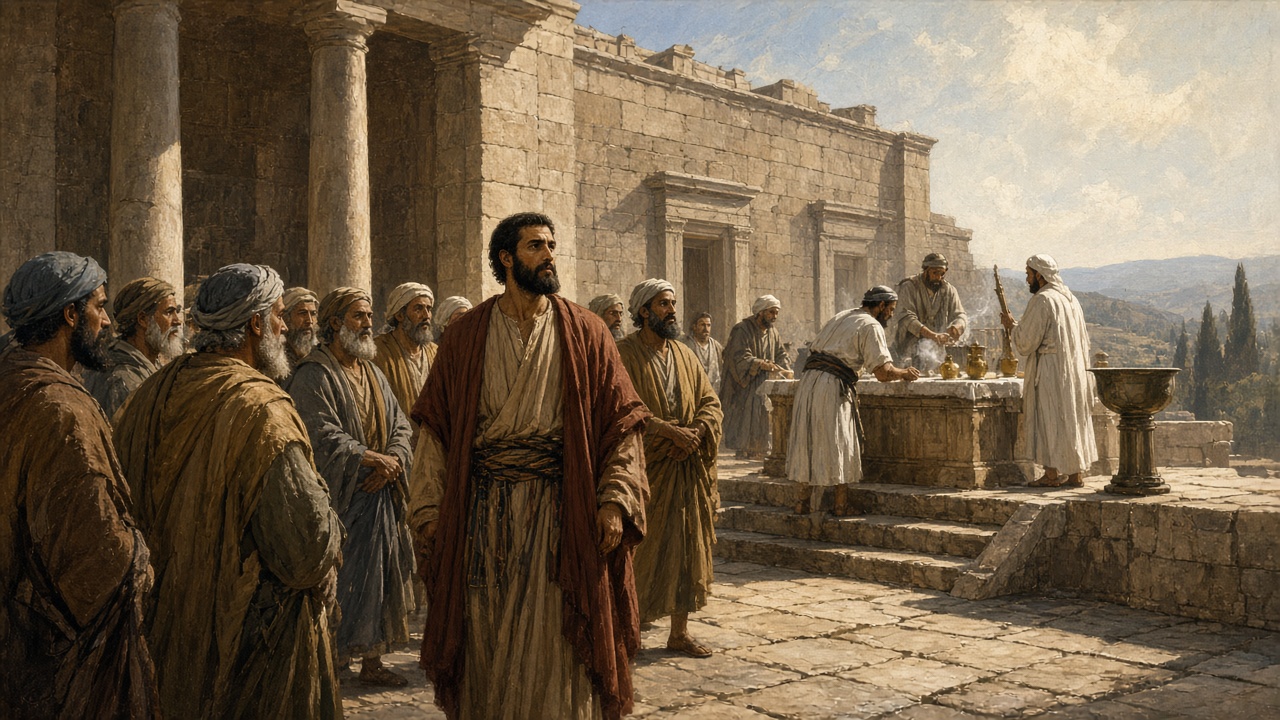
6A son honoreth his father, and a servant his master: if then I am a father, where is mine honor? and if I am a master, where is my fear? saith Jehovah of hosts unto you, O priests, that despise my name. And ye say, Wherein have we despised thy name? 7Ye offer polluted bread upon mine altar. And ye say, Wherein have we polluted thee? In that ye say, The table of Jehovah is contemptible. 8And when ye offer the blind for sacrifice, it is no evil! and when ye offer the lame and sick, it is no evil! Present it now unto thy governor; will he be pleased with thee? or will he accept thy person? saith Jehovah of hosts. 9And now, I pray you, entreat the favor of God, that he may be gracious unto us: this hath been by your means: will he accept any of your persons? saith Jehovah of hosts. 10Oh that there were one among you that would shut the doors, that ye might not kindle fire on mine altar in vain! I have no pleasure in you, saith Jehovah of hosts, neither will I accept an offering at your hand. 11For from the rising of the sun even unto the going down of the same my name shall be great among the Gentiles; and in every place incense shall be offered unto my name, and a pure offering: for my name shall be great among the Gentiles, saith Jehovah of hosts. 12But ye profane it, in that ye say, The table of Jehovah is polluted, and the fruit thereof, even its food, is contemptible. 13Ye say also, Behold, what a weariness is it! and ye have snuffed at it, saith Jehovah of hosts; and ye have brought that which was taken by violence, and the lame, and the sick; thus ye bring the offering: should I accept this at your hand? saith Jehovah. 14But cursed be the deceiver, who hath in his flock a male, and voweth, and sacrificeth unto the Lord a blemished thing; for I am a great King, saith Jehovah of hosts, and my name is terrible among the Gentiles.
Did you know?
Honoring God and Defective Offerings
- The name Malachi means messenger or angel. While some have suggested it was a title rather than a proper name, scholars and traditions widely treat it as the prophet's personal name, placing his ministry during the period of Nehemiah, after Haggai and Zechariah.Sources: Malachi
- The opening dispute recalls the twin brothers Jacob and Esau, the ancestors of Israel and Edom. The text contrasts God's covenant love for Israel with the judgment and desolation coming upon the mountainous region of Edom.Sources: Esau (Edom) · Jacob (Israel) · Edom · the Bible text itself
- The priests are rebuked for offering blind, lame, and diseased animals on the altar rather than unblemished livestock. Malachi exposes their disrespect by asking whether a civil governor would accept such inferior gifts.Sources: the Bible text itself
Notes written with AI assistance from open sources (Theographic Bible Metadata, CC BY-SA 4.0; Easton’s Bible Dictionary, public domain) and reviewed before publishing.
Places in this chapter
- Edom · 30.746, 35.604 · verse 4
Only places identified with high confidence are shown (90% or more according to the scholarly sources compiled by OpenBible). Period map: DARE (Digital Atlas of the Roman Empire), CC BY 4.0; modern map: © OpenStreetMap contributors; places: OpenBible.info (CC BY 4.0).
Credits and license for this translation
American Standard Version Byzantine Text
The Holy Bible with Apocrypha, American Standard Version conformed to the Byzantine Text New Testament
Public Domain
Language: English
Dialect: Archaic American
Changes to the ASV dedicated to the Public Domain by Adam Boyd in 2021. The ASV itself is in the Public Domain due to copyright expiration.
2026-10-02
Section headings adapted from the Berean Standard Bible (public domain); they are not part of this translation’s text.
Source: http://ebible.org/engasvbt/ · eBible.org