Numbers 24
Wycliffe Bible · Tap a verse to see its cross-references.
Balaam’s Third Oracle
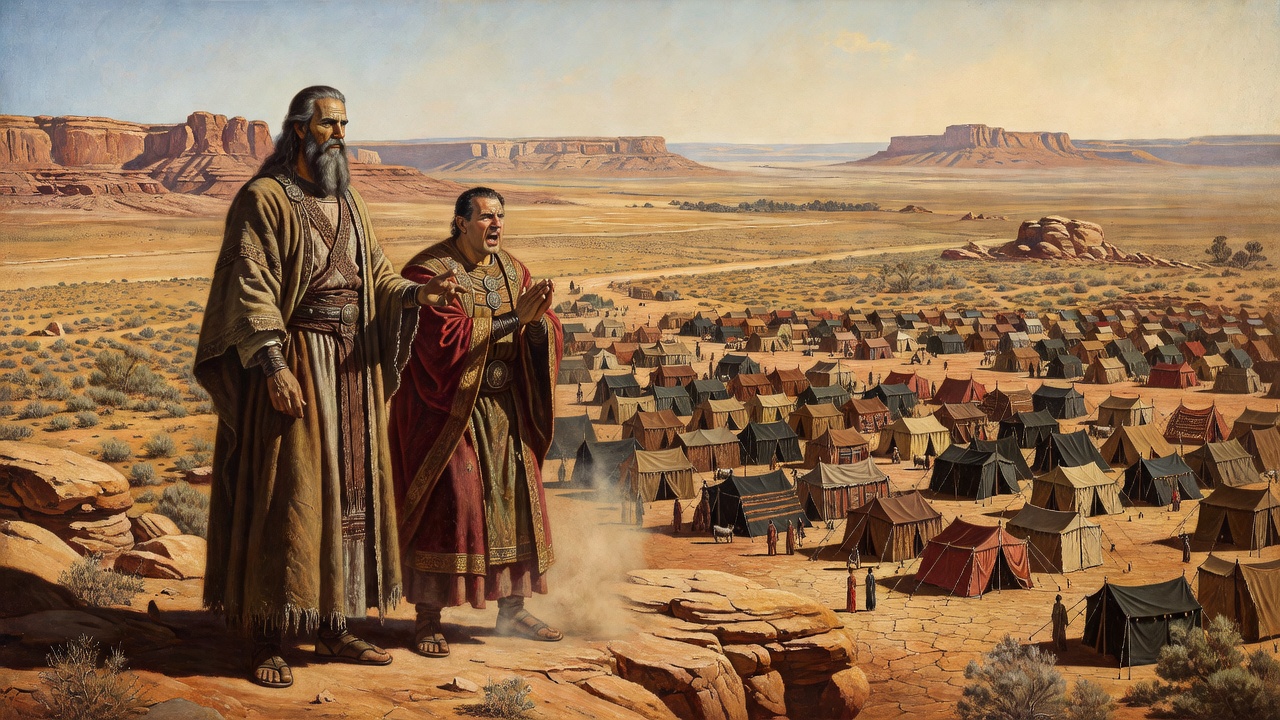
1And whanne Balaam siy that it pleside the Lord that he schulde blesse Israel, he yede not as he `hadde go bifore, `that he schulde seke fals dyuynyng `bi chiteryng of briddis, but he dresside his face ayens the desert, 2and reiside iyen, and siy Israel dwellynge in tentis bi hise lynagis. And whanne the Spirit of God felde on hym, and whanne a parable was takun, 3he seide, Balaam, the sone of Beor, seide, a man whois iye is stoppid seide, 4the herere of Goddis wordis seide, which bihelde the reuelacioun of almyyti God, which fallith doun, and hise iyen ben openyd so, Hou faire ben thi tabernaclis, 5Jacob, and thi tentis, Israel! 6as valeys ful of woodis, and moiste gardyns bisidis floodis, as tabernaclis whiche the Lord hath set, as cedris bisidis watris; 7watir schal flowe of his bokat, and his seed schal be in to many watris, `that is, puplis. The kyng of hym schal be takun a wei for Agag, and the rewme of hym schal be doon awai. 8God ledde hym out of Egipt, whos strengthe is lijk an vnicorn; thei schulen deuoure hethene men, enemyes `of hym, that is, of Israel; and thei schulen breke the boonus of hem, and schulen perse with arowis. 9He restide and slepte as a lyoun, and as a lionesse, whom no man schal dore reise. He that blessith thee, schal be blessid; he that cursith, schal
Balak Dismisses Balaam
10be arettid in to cursyng And Balaach was wrooth ayens Balaam, and seide, whanne the hondis weren wrungun to gidere, I clepide thee to curse myn enemyes, whiche ayenward thou hast blessid thries. 11Turne ayen to thi place; forsothe Y demede to onoure thee greetli, but the Lord priuyde thee fro onour disposid. 12Balaam answeride to Balaach, Whethir Y seide not to thi messangeris, whiche thou sentist to me, 13Thouy Balaach schal yyue to me his hows ful of siluer and of gold, Y schal not mow passe the word of my Lord God, that Y brynge forth of myn herte ony thing, ethir of good ethir of yuel, but what euer thing the Lord schal seie, Y schal speke this? 14Netheles Y schal go to my puple, and Y schal yyue counsel to thee, what thi puple schal do in the laste tyme to this puple.
Balaam’s Fourth Oracle
15Therfor whanne a parable was takun, he seide eft, Balaam, the sone of Beor seide, a man whos iye is stoppid, 16seide, the herere of Goddis wordis seide, which knowith the doctrine of the hiyeste, and seeth the reuelacioun of almiyti God, which fallith doun and hath opyn iyen, 17Y schal se hym, but not now; Y schal biholde hym, but not nyy; a sterre schal be borun of Jacob, and a yerde schal rise of Israel; and he schal smyte the duykis of Moab, and he schal waste alle the sones of Seth; and Ydumye schal be hys possessioun, 18the eritage of Seir schal bifalle to his enemyes; forsothe Israel schal do strongli, of Jacob schal be he that schal be lord, 19and schal leese the relikis of the citee.
Balaam’s Final Three Oracles
20And whanne he hadde seyn Amalech, he took a parable, and seide, Amalech is the bigynning of hethene men, whos laste thingis schulen be lost. 21Also `he siy Cyney, and whanne a parable was takun, he seide, Forsothe thi dwellyng place is strong, but if thou schalt sette thi nest in a stoon, 22and schalt be chosun of the generacioun of Cyn, hou longe schalt thou mow dwelle? forsothe Assur schal take thee. 23And whanne a parable was takun, he spak eft, Alas! who schal lyue, whanne the Lord schal make thes thingis? 24Thei schulen come in grete schippis fro Ytalie, thei schulen ouercome Assiries, and thei schulen distrie Ebrews, and at the last also thei hem silf schulen perische. 25And Balaam roos, and turnide ayen in to his place; and Balaach yede ayen bi the weye in which he cam.
Did you know?
Balaam's Final Oracles
- Unlike his previous attempts, Balaam did not resort to sorcery before his third oracle, but turned toward the wilderness. When he looked out and saw Israel encamped tribe by tribe, the Spirit of God came upon him to pronounce a blessing rather than a curse.Sources: the Bible text itself · Balaam
- Balaam's oracles refer to Agag and Amalek, a nomadic tribe dwelling between the Dead Sea and the Red Sea whose rulers bore the name Agag. Although Amalek was described as first among the nations, Balaam foretold its eventual destruction.Sources: the Bible text itself · Agag · Amalek
- In his final prophecy, Balaam looked to the distant future, foretelling a star coming from Jacob and a scepter from Israel that would crush Moab and take possession of Edom, the rugged mountainous region also called Seir.Sources: the Bible text itself · Jacob (Israel) · Edom · Seir
Notes written with AI assistance from open sources (Theographic Bible Metadata, CC BY-SA 4.0; Easton’s Bible Dictionary, public domain) and reviewed before publishing.
Places in this chapter
- Egypt · 30.129, 31.308 · verse 8
- Moab · Today: Moab 1 · 31.181, 35.701 · verse 17
- Edom · 30.746, 35.604 · verse 18
- Amalek · 30.648, 34.422 · verses 20, 24
- Asshur · Today: Assur · 35.457, 43.263 · verses 22, 24
- Kittim · Today: Cyprus · 35.000, 33.000 · verse 24
Only places identified with high confidence are shown (90% or more according to the scholarly sources compiled by OpenBible). Period map: DARE (Digital Atlas of the Roman Empire), CC BY 4.0; modern map: © OpenStreetMap contributors; places: OpenBible.info (CC BY 4.0).
Credits and license for this translation
Wycliffe Bible
This is the Pentateuch and Gospels from The Holy Bible, containing the Old and New Testaments, with the apocryphal books, in the earliest English version made from the latin Vulgate by John Wycliffe and his followers. c.1395
Public Domain
Language: Middle English (English)
Dialect: Middle
Translation by: John Wycliffe
2016-11-08
Section headings adapted from the Berean Standard Bible (public domain); they are not part of this translation’s text.
Source: http://ebible.org/engWycliffe/ · eBible.org