Luke 11
Wycliffe Bible · Tap a verse to see its cross-references.
The Lord’s Prayer
1And it was don, whanne he was preiynge in a place, as he ceesside, oon of hise disciplis seide to hym, Lord, teche vs to preye, as Joon tauyte hise disciplis. 2And he seide to hem, Whanne ye preien, seie ye, Fadir, halewid be thi name. Thi kyngdom come to. 3Yyue `to vs to dai oure ech daies breed. 4And foryyue to vs oure synnes, as we foryyuen to ech man that owith to vs. And lede vs not in to temptacioun.
Ask, Seek, Knock
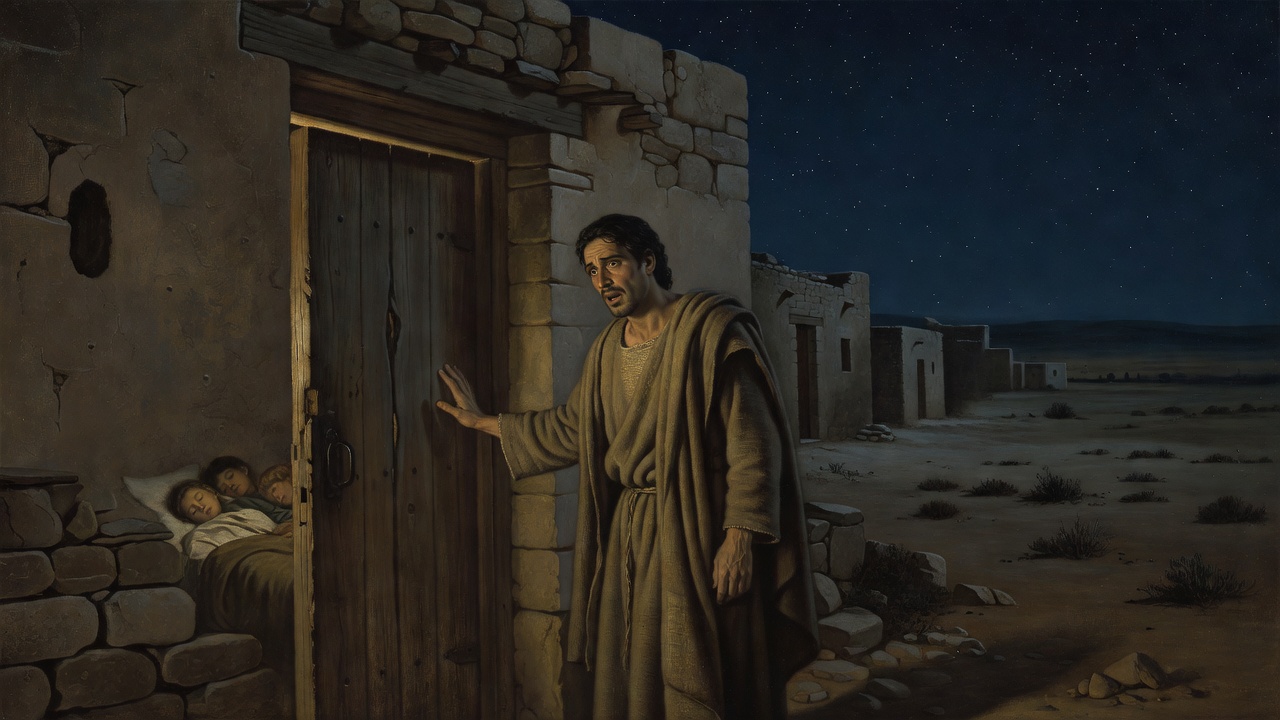
5And he seide to hem, Who of you schal haue a freend, and schal go to hym at mydnyyt, and schal seie to hym, Freend, leene to me thre looues; 6for my freend cometh to me fro the weie, and Y haue not what Y schal sette bifor hym. 7And he with ynforth answere and seie, Nyle thou be heuy to me; the dore is now schit, and my children ben with me in bed; Y may not rise, and yyue to thee. 8And if he schal dwelle stil knockynge, Y seie to you, thouy he schal not rise, and yyue to him, for that that he is his freend, netheles for his contynuel axyng he schal ryse, and yyue to hym, as many as he hath nede to. 9And Y seie to you, axe ye, and it schal be youun to you; seke ye, and ye schulen fynde; knocke ye, and it schal be openyd to you. 10For ech that axith, takith, and he that sekith, fyndith; and to a man that knockith, it schal be openyd. 11Therfor who of you axith his fadir breed, whether he schal yyue hym a stoon? or if he axith fisch, whether he schal yyue hym a serpent for the fisch? 12or if he axe an eye, whether he schal a reche hym a scorpioun? 13Therfor if ye, whanne ye ben yuel, kunnen yyue good yiftis to youre children, hou myche more youre fadir of heuene schal yyue a good spirit to men that axith him.
A House Divided
14And Jhesus was castynge out a feend, and he was doumbe. And whanne he hadde cast out the feend, the doumbe man spak; and the puple wondride. 15And sum of hem seiden, In Belsabub, prince of deuelis, he castith out deuelis. 16And othir temptinge axiden of hym a tokene fro heuene. 17And as he saiy the thouytis of hem, he seide to hem, Euery rewme departid ayens it silf, schal be desolat, and an hous schal falle on an hous. 18And if Sathanas be departid ayens hym silf, hou schal his rewme stonde? For ye seien, that Y caste out feendis in Belsabub. 19And if Y in Belsabub caste out fendis, in whom casten out youre sones? Therfor thei schulen be youre domesmen. 20But if Y caste out fendis in the fyngir of God, thanne the rewme of God is comun among you. 21Whanne a strong armed man kepith his hous, alle thingis that he weldith ben in pees. 22But if a stronger than he come vpon hym, and ouercome hym, he schal take awei al his armere, in which he tristide, and schal dele abrood his robries. 23He that is not with me, is ayens me; and he that gederith not togidir with me, scaterith abrood.
An Unclean Spirit Returns
24Whanne an vnclene spirit goith out of a man, he wandrith bi drie placis, and sekith reste; and he fyndynge not, seith, Y schal turne ayen in to myn hous, fro whannes Y cam out. 25And whanne he cometh, he fyndith it clansid with besyms, and fayre arayed. 26Thanne he goith, and takith with hym seuene othere spirits worse than hym silf, and thei entren, and dwellen there. And the laste thingis of that man ben maad worse than the formere.
True Blessedness
27And it was don, whanne he hadde seid these thingis, a womman of the cumpanye reride hir vois, and seide to hym, Blessid be the wombe that bare thee, and blessid be the tetis that thou hast soken. 28And he seide, But yhe blessid be thei, that heren the word of God, and kepen it.
The Sign of Jonah
29And whanne the puple runnen togidere, he bigan to seie, This generacioun is a weiward generacioun; it sekith a token, and a tokene schal not be youun to it, but the tokene of Jonas, the profete. 30For as Jonas was a tokene to men of Nynyue, so mannus sone schal be to this generacioun. 31The queen of the south schal rise in doom with men of this generacioun, and schal condempne hem; for sche cam fro the endis of the erthe, for to here the wisdom of Salomon, and lo! here is a gretter than Salomon. 32Men of Nynyue schulen rise in doom with this generacioun, and schulen condempne it; for thei diden penaunce in the prechyng of Jonas, and lo! here is a gretter than Jonas.
The Lamp of the Body
33No man tendith a lanterne, and puttith in hidils, nether vndur a buyschel, but on a candilstike, that thei that goen in, se liyt. 34The lanterne of thi bodi is thin iye; if thin iye be symple, al thi bodi schal be liyti; but if it be weyward, al thi bodi schal be derkful. 35Therfor se thou, lest the liyt that is in thee, be derknessis. 36Therfor if al thi bodi be briyt, and haue no part of derknessis, it schal be al briyt, and as a lanterne of briytnesse it schal yyue liyt to thee.
Woes to Pharisees and Experts in the Law
37And whanne he spak, a Farisee preiede him, that he schulde ete with hym. And he entride, and sat to the meete. 38And the Farisee bigan to seie, gessynge with ynne hym silf, whi he was not waschen bifor mete. 39And the Lord seide to hym, Now ye Farisees clensen that that is with outenforth of the cuppe and the plater; but that thing that is with ynne of you, is ful of raueyn and wickidnesse. 40Foolis, whether he that made that that is withoutenforth, made not also that that is with ynne? 41Netheles that that is ouer plus, yyue ye almes, and lo! alle thingis ben cleene to you. 42But wo to you, Farisees, that tithen mynte, and rue, and ech eerbe, and leeuen doom and the charite of God. For it bihofte to do these thingis, and not leeue tho. 43Wo to you, Farisees, that louen the firste chaieris in synagogis, and salutaciouns in chepyng. 44Wo to you, that ben as sepulcris, that ben not seyn, and men walkynge aboue witen not. 45But oon of the wise men of the lawe answeride, and seide to hym, Maystir, thou seiynge these thingis, also to vs doist dispit. 46And he seide, Also wo to you, wise men of lawe, for ye chargen men with birthuns which thei moun not bere, and ye you silf with youre o fyngur touchen not the heuynessis. 47Wo to you, that bilden toumbis of profetis; and youre fadris slowen hem. 48Treuli ye witnessen, that ye consenten to the werkis of youre fadris; for thei slowen hem, but ye bilden her sepulcris. 49Therfor the wisdom of God seide, Y schal sende to hem profetis and apostlis, and of hem thei schulen sle and pursue, 50that the blood of alle prophetis, that was sched fro the making of the world, be souyt of this generacioun; 51fro the blood of the iust Abel to the blood of Zacharie, that was slayn bitwixe the auter and the hous. So Y seie to you, it schal be souyt of this generacioun. 52Wo to you, wise men of the lawe, for ye han takun awei the keye of kunnyng; and ye yow silf entriden not, and ye han forbeden hem that entriden. 53And whanne he seide these thingis to hem, the Farisees and wise men of lawe bigunnen greuousli to ayenstonde, and stoppe his mouth of many thingis, 54aspiynge hym, and sekynge to take sum thing of his mouth, to accuse hym.
Did you know?
Prayer, Signs, and Woes
- Jesus speaks of the blood of all the prophets, from the blood of Abel to the blood of Zechariah, who was killed between the altar and the sanctuary. Abel was the second son of Adam and Eve and was killed by his brother Cain. Easton's Bible Dictionary (1897) identifies this Zechariah as the son or grandson of the high priest Jehoiada, stoned at the king's command in the court of the house of the Lord after he condemned the king and the people, and notes that Jesus alludes to that murder in this chapter.Sources: the Bible text itself · Abel · Zacharias
- Jesus says this generation will be given no sign except the sign of Jonah: as Jonah was a sign to the Ninevites, so the Son of Man will be a sign to this generation, and the men of Nineveh, who repented at his preaching, will condemn it at the judgment, because someone greater than Jonah is here. Easton's Bible Dictionary (1897) describes Jonah, son of Amittai of Gath-hepher, as a prophet of Israel and a missionary to Nineveh, and calls him a type of the Son of Man. It describes Nineveh as a great and populous city, the flourishing capital of the Assyrian empire.Sources: the Bible text itself · Jonah · Nineveh
- After Jesus drives out a demon that was mute, some say he does it by Beelzebul, the prince of the demons. Easton's Bible Dictionary (1897) explains the name Satan as adversary or accuser, says the New Testament uses it interchangeably with the devil, and lists Beelzebub among his titles. Jesus answers that every kingdom divided against itself will be laid waste, and asks how Satan's kingdom can stand if Satan is divided against himself.Sources: the Bible text itself · Satan
Notes written with AI assistance from open sources (Theographic Bible Metadata, CC BY-SA 4.0; Easton’s Bible Dictionary, public domain) and reviewed before publishing.
Places in this chapter
Only places identified with high confidence are shown (90% or more according to the scholarly sources compiled by OpenBible). Period map: DARE (Digital Atlas of the Roman Empire), CC BY 4.0; modern map: © OpenStreetMap contributors; places: OpenBible.info (CC BY 4.0).
Credits and license for this translation
Wycliffe Bible
This is the Pentateuch and Gospels from The Holy Bible, containing the Old and New Testaments, with the apocryphal books, in the earliest English version made from the latin Vulgate by John Wycliffe and his followers. c.1395
Public Domain
Language: Middle English (English)
Dialect: Middle
Translation by: John Wycliffe
2016-11-08
Section headings adapted from the Berean Standard Bible (public domain); they are not part of this translation’s text.
Source: http://ebible.org/engWycliffe/ · eBible.org