Leviticus 2
Wycliffe Bible · Tap a verse to see its cross-references.
Laws for Grain Offerings
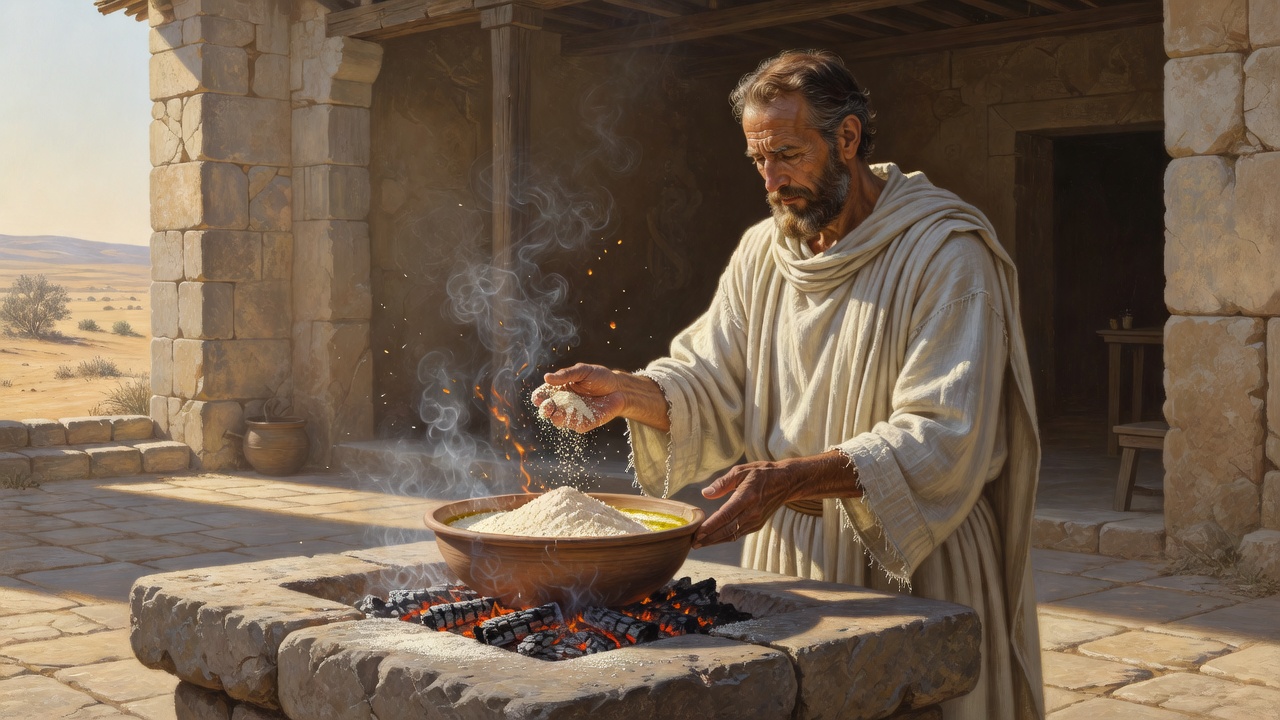
1Whanne a soule offrith an offryng of sacrifice to the Lord, flour of wheete schal be his offring. And he schal schede oile ther onne, 2and he schal putte encense, and he schal bere to the sones of Aaron, preest, of whiche sones oon schal take an handful of `flour of whete, and of oile, and alle the encense; and he schal putte a memorial on the auter, in to swettest odour to the Lord. 3Forsothe that that `is residue of the sacrifice schal be Aarons and hise sones, the hooli of hooli thingis of offryngis to the Lord. 4Forsothe whanne thou offrist a sacrifice bakun in an ouene of whete flour, that is, loouys without sour dow, spreynd with oile, and therf breed sodun in watir, bawmed with oile; 5if thin offryng is `of a friyng panne, of wheete flour spreynd with oile and without sour dow, 6thou schalt departe it in smale partis, and thou schalt schede oile ther onne. 7Ellis if the sacrifice is of a gridele, euenli the whete flour schal be spreynd with oile; 8which whete flour thou schalt offre to the Lord, and schalt bitake in the hondis of the preest. 9And whanne he hath offrid it, he schal take a memorial of the sacrifice, and he schal brenne it on the auter, in to `odour of swetnesse to the Lord. 10Sotheli what euer thing `is residue, it schal be Aarons and hise sones, the hooly of hooli thingis of the offryngis to the Lord. 11Ech offryng which is offrid to the Lord, schal be without sour dow, nether ony thing of sour dow, and of hony, schal be brent in the sacrifice of the Lord. 12Ye schulen offre oneli the firste fruytis of tho, and yiftis; sotheli tho schulen not be put on the auter, in to odour of swetnesse. 13Whateuer thing of sacrifice thou schalt offre, thou schalt make it sauery with salt, nether thou schalt take awey the salt of the boond of pees of thi God fro thi sacrifice; in ech offryng thou schalt offre salt. 14Forsothe if thou offrist a yifte of the firste thingis of thi fruytis to the Lord, of `eeris of corn yit grene, thou schalt seenge tho in fier, and thou schalt breke in the maner of seedis; and so thou schalt offre thi firste fruytis to the Lord, 15and thou schalt schede oyle theronne, and schalt putte encense, for it is the offryng of the Lord. 16Of which the preest schal brenne, in to mynde of the yifte, a part of the `seedis brokun, and of oyle, and al the encense.
Did you know?
Regulations for the Grain Offering
- The grain offering could be brought in various forms, including uncooked fine flour, bread baked in an oven, cakes prepared on a griddle or pan, or crushed heads of fresh grain roasted over fire. In each case, it was accompanied by olive oil.Sources: the Bible text itself
- Only a handful of the grain offering, called the memorial portion, along with all of its frankincense, was burned on the altar. The rest was designated as a most holy portion set aside for Aaron and his sons.Sources: the Bible text itself · Aaron
- The law strictly forbade leaven and honey in any offering burned on the altar, but it required every grain offering to be seasoned with the salt of the covenant.Sources: the Bible text itself
Notes written with AI assistance from open sources (Theographic Bible Metadata, CC BY-SA 4.0; Easton’s Bible Dictionary, public domain) and reviewed before publishing.
Credits and license for this translation
Wycliffe Bible
This is the Pentateuch and Gospels from The Holy Bible, containing the Old and New Testaments, with the apocryphal books, in the earliest English version made from the latin Vulgate by John Wycliffe and his followers. c.1395
Public Domain
Language: Middle English (English)
Dialect: Middle
Translation by: John Wycliffe
2016-11-08
Section headings adapted from the Berean Standard Bible (public domain); they are not part of this translation’s text.
Source: http://ebible.org/engWycliffe/ · eBible.org