Leviticus 17
Wycliffe Bible · Tap a verse to see its cross-references.
The Place of Sacrifice
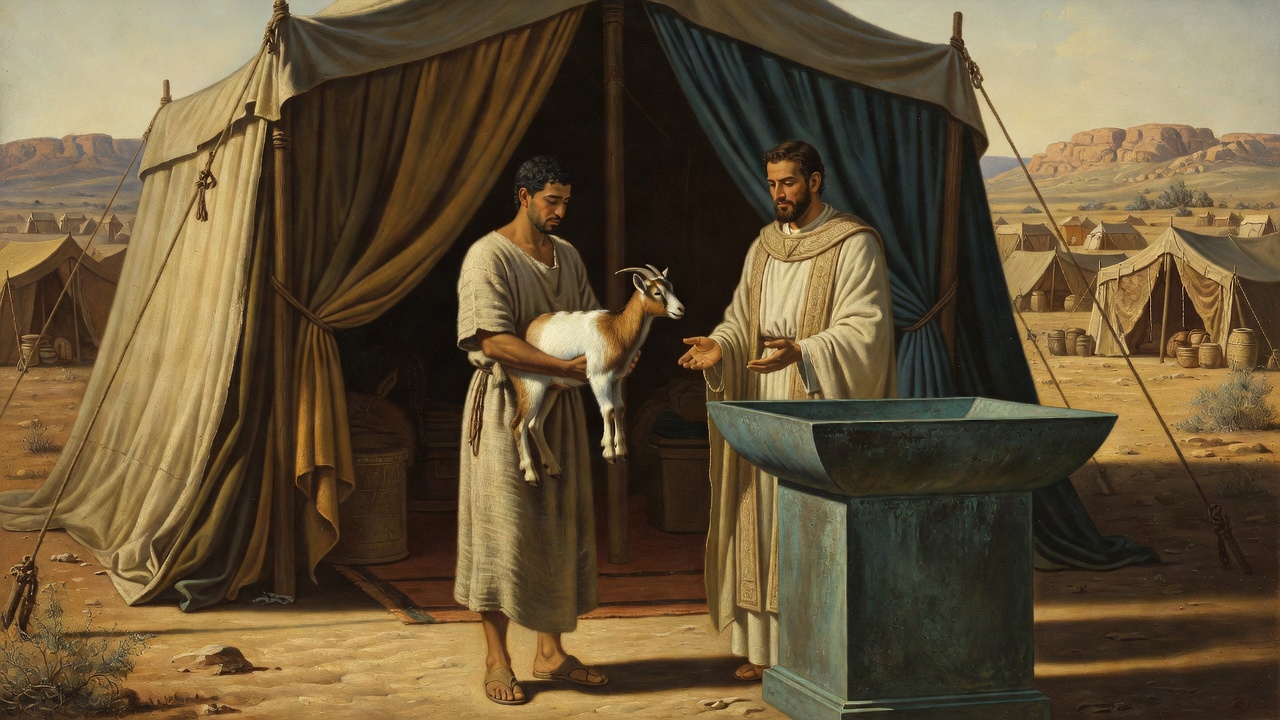
1And the Lord spak to Moises, and seide, Speke thou to Aaron, 2and to hise sones, and to alle the sones of Israel, and seie thou to hem, This is the word which the Lord comaundide, 3and seide, Ech man of the hows of Israel schal be gilti of blood, if he sleeth an oxe, ether a scheep, ethir a geet in the castels, ethir out of the castels, 4and offrith not an offryng to the Lord at the dore of the tabernacle; as he schedde mannus blood, so he schal perische fro the myddis of his puple. 5Therfor the sones of Israel owen to offre her sacrifices to the preest, whiche thei sleen in the feeld, that tho be halewid to the Lord, bifor the dore of the tabernacle of witnessyng, and that thei offre tho pesible sacrifices to the Lord. 6And the preest schal schede the blood on the auter of the Lord, at the dore of the tabernacle of witnessyng; and he schal brenne the ynnere fatnesse in to odour of swetnesse to the Lord. 7And thei schulen no more offre her sacrifices to fendis, with whiche thei diden fornycacioun; it schal be a lawful thing euerlastynge to hem, and to the aftircomeris `of hem. 8And thou schalt seie to hem, A man of the hows of Israel, and of the comelyngis that ben pilgryms among you, that offrith a brent sacrifice, ethir a slayn sacrifice, 9and bryngith it not to the dore of the tabernacle of witnessyng, that it be offrid to the Lord, schal perische fro his puple.
Laws against Eating Blood
10If ony man of the sones of Israel, and of comelyngis that ben pilgryms among you, etith blood, Y schal sette faste my face ayens `the soule of hym, and Y schal leese hym fro his puple; 11for the lijf of fleisch is in blood, and Y yaf that blood to you, that ye clense on myn auter `for youre soulis, and that the blood be for the synne of soule. 12Therfor Y seide to the sones of Israel, Ech lyuynge man of you schal not ete blood, nethir of the comelyngis that ben pilgryms among you. 13What euer man of the sones of Israel, and of the comelyngis that ben pilgryms anentis you, takith a wielde beeste, ethir a brid, whiche it is leueful to ete, whether bi huntyng, whether bi haukyng, schede the blood therof, and hile it with erthe; 14for the lijf of ech fleisch is in blood. Wherfor Y seide to the sones of Israel, Ye schulen not ete the blood of ony fleisch, for the lijf of fleisch is in blood, and who euer etith blood, schal perische. 15A man that etith a thing deed bi it silf, ethir takun of a beeste, as wel of men borun in the lond, as of comelyngis, he schal waische hise clothis and hym silf in watir, and he schal be `defoulid til to euentid; and by this ordre he schal be maad cleene; that if he waischith not his clothis, 16ether his bodi, he schal bere his wickidnesse.
Did you know?
Sacrificial Slaughter and the Sacredness of Blood
- Leviticus mandates that domestic animals such as oxen, lambs, and goats be brought directly to the entrance of the Tent of Meeting rather than slaughtered in open fields. This rule ensured sacrifices were presented exclusively as peace offerings to the LORD and halted illicit sacrifices to goat demons.Sources: the Bible text itself
- Both native Israelites and resident foreigners were strictly prohibited from eating blood, on penalty of being cut off from the community. The text grounds this law in the theological principle that the life of the flesh is in the blood, which God appointed specifically for making atonement upon the altar.Sources: the Bible text itself
- When Israelites or resident aliens hunted wild animals or birds that were clean for food, they were commanded to drain the blood upon the ground and cover it with dirt. This instruction reinforced that life belongs to God and preserved the sanctity of blood outside the sacrificial sanctuary.Sources: the Bible text itself
Notes written with AI assistance from open sources (Theographic Bible Metadata, CC BY-SA 4.0; Easton’s Bible Dictionary, public domain) and reviewed before publishing.
Credits and license for this translation
Wycliffe Bible
This is the Pentateuch and Gospels from The Holy Bible, containing the Old and New Testaments, with the apocryphal books, in the earliest English version made from the latin Vulgate by John Wycliffe and his followers. c.1395
Public Domain
Language: Middle English (English)
Dialect: Middle
Translation by: John Wycliffe
2016-11-08
Section headings adapted from the Berean Standard Bible (public domain); they are not part of this translation’s text.
Source: http://ebible.org/engWycliffe/ · eBible.org