Leviticus 15
Wycliffe Bible · Tap a verse to see its cross-references.
The Uncleanness of Men
1And the Lord spak to Moises and Aaron, `and seide, 2Speke ye to the sones of Israel, and seie ye to hem, A man that suffrith the rennyng out of seed, schal be vncleene; 3and thanne he schal be demed to be suget to this vice, whanne bi alle momentis foul vmour `ethir moysture cleueth to his fleisch, and growith togidere. 4Ech bed in which he slepith schal be vncleene, and where euer he sittith. 5If ony man touchith his bed, he schal waische his clothis, and he schal be waischun in watir, and schal be vncleene `til to euentid. 6If a man sittith where he satt, also thilke man schal waische hise clothis, and he schal be waischun in watir, and schal be vnclene `til to euentid. 7He that touchith hise fleischis, schal waische hise clothis, and he schal be waischun in watir, and schal be vncleene `til to euentid. 8If sich a man castith out spetyng on hym that is cleene, he schal waische his clothis, and he schal be waischun in watir, and schal be vncleene `til to euentid. 9The sadil on which he sittith, 10schal be vncleene; and ech man that touchith what euer thing is vndur hym that suffrith the fletyng out of seed, schal be defoulid `til to euentid. He that berith ony of these thingis, schal waische hise clothis, and he schal be waischun in watir, and schal be vncleene `til to euentid. 11Ech man, whom he that is such touchith with hondis not waischun bifore, schal waische hise clothis, and he schal be waischun in watir, and schal be vncleene `til to euentid. 12`A vessel of erthe which he touchith, schal be brokun; but a `vessel of tre schal be waischun in watir.
The Cleansing of Men
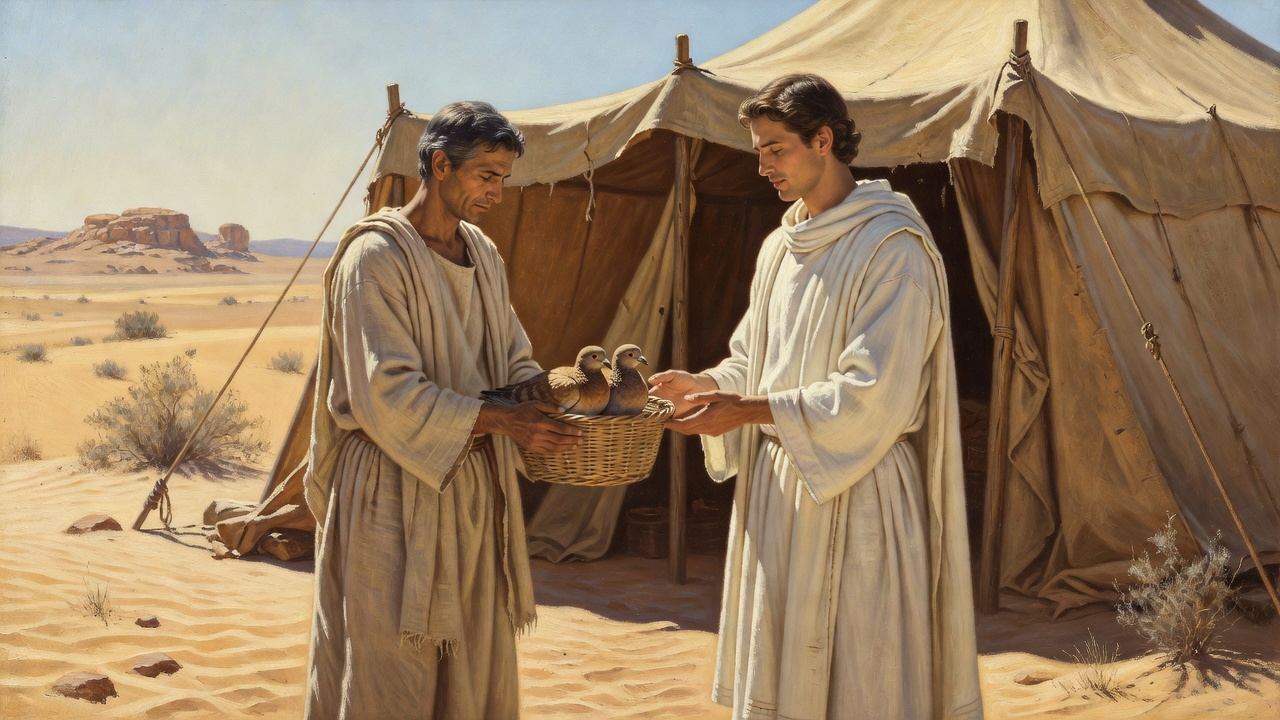
13If he that suffrith sich a passioun, is heelid, he schal noumbre seuene daies aftir his clensyng, and whanne the clothis and al `the bodi ben waischun in lyuynge watris, he schal be clene. 14Forsothe in the eiytthe dai he schal take twei turtlis, ethir twei `briddis of a culuer, and he schal come in the `siyt of the Lord at the dore of tabernacle of witnessyng, and schal yyue tho to the preest; 15and the preest schal make oon for synne, and the tother in to brent sacrifice; and the preest schal preye for hym bifor the Lord, that he be clensid fro the fletyng out of his seed. 16A man fro whom the seed of letcherie, `ethir of fleischli couplyng, goith out, schal waische in watir al his bodi, and he schal be vncleene `til to euentid. 17He schal waische in watir the cloth `and skyn which he hath, and it schal be unclene `til to euentid. 18The womman with which he `is couplid fleischli, schal be waischun in watir, and schal be vncleene `til to euentid.
The Uncleanness of Women
19A womman that suffrith the fletyng out of blood, whanne the moneth cometh ayen, schal be departid bi seuene daies; ech man that touchith hir schal be vncleene `til to euentid, 20and the place in which sche slepith ether sittith in the daies of hir departyng, schal be defoulid. 21He that touchith her bed, schal waische hise clothis, and he schal be waischun in watir, and schal be vncleene `til to euentid. 22Who euer touchith ony vessel on which sche sittith, he schal waische hise clothis, and he schal be waischun in watir, and schal be defoulid `til to euentid. 24If a man is couplid fleischli with hir in the tyme of blood that renneth bi monethis, he schal be vncleene bi seuene daies, and ech bed in which he slepith schal be defoulid. 25A womman that suffrith in many daies the `fletyng out of blood, not in the tyme of monethis, ethir which womman ceessith not to flete out blood aftir the blood of monethis, schal be vncleene as longe as sche `schal be suget to this passioun, as if sche is in the tyme of monethis. 26Ech bed in which sche slepith, and `vessel in which sche sittith, schal be defoulid. 27Who euer touchith hir schal waische his clothis, and he schal be waischun in watir, and schal be vncleene `til to euentid.
The Cleansing of Women
28If the blood stondith, and ceessith to flete out, sche schal noumbre seuene daies of hir clensyng, 29and in the eiytthe dai sche schal offre for hir silf to the preest twei turtlis, ethir twei `briddis of culueris, at the dore of the tabernacle of witnessyng; 30and the preest schal make oon for synne, and the tothir in to brent sacrifice; and the preest schal preye for hir bifor the Lord, and for the fletyng out of hir vnclennesse. 31Therfor ye schulen teche the sones of Israel, that thei eschewe vnclennessis, and that thei die not for her filthis, whanne thei defoulen my tabernacle which is among hem. 32This is the lawe of hym that suffrith fletyng out of seed, and which is defoulid with fleischly couplyng, 33and of a womman which is departid in the tymes of monethis, ethir which flowith out in contynuel blood, and of the man that slepith with hir.
Did you know?
Laws on Bodily Discharges and Purification
- The purity laws in Leviticus 15 regulated both natural and abnormal bodily discharges in men and women, which rendered individuals ceremonially unclean. Objects touched by an afflicted person, such as beds, chairs, and saddles, transmitted uncleanness, requiring anyone who touched them to wash their clothes, bathe in water, and remain unclean until evening.Sources: the Bible text itself
- Purification from prolonged discharges required waiting seven days after healing, washing garments, and bathing in fresh water. On the eighth day, the person brought two turtledoves or two young pigeons to the priest at the entrance of the Tent of Meeting to offer one as a sin offering and the other as a burnt offering.Sources: the Bible text itself
- The explicit goal of these regulations was to keep the Israelites mindful of ritual boundaries, preventing them from defiling the tabernacle that stood in the midst of the camp.Sources: the Bible text itself
Notes written with AI assistance from open sources (Theographic Bible Metadata, CC BY-SA 4.0; Easton’s Bible Dictionary, public domain) and reviewed before publishing.
Credits and license for this translation
Wycliffe Bible
This is the Pentateuch and Gospels from The Holy Bible, containing the Old and New Testaments, with the apocryphal books, in the earliest English version made from the latin Vulgate by John Wycliffe and his followers. c.1395
Public Domain
Language: Middle English (English)
Dialect: Middle
Translation by: John Wycliffe
2016-11-08
Section headings adapted from the Berean Standard Bible (public domain); they are not part of this translation’s text.
Source: http://ebible.org/engWycliffe/ · eBible.org