Exodus 22
Wycliffe Bible · Tap a verse to see its cross-references.
Property Laws
1If ony man stelith a scheep, ether oxe, and sleeth, ether sillith, he schal restore fiue oxen for oon oxe, and foure scheep for o scheep. 2And if a nyyt theef brekynge an hows, ether vndurmynynge, is foundun, and is deed bi a wounde takun, the smytere schal not be gilti of blood; 3that if he dide this whanne the sunne was rysun, he dide man sleyng, and he schal die. If a theef hath not that, that he schal yelde for thefte, he schal be seeld; 4if that thing that he staal, is foundun quyk at hym, ether oxe, ether asse, ether scheep, he schal restore the double. 5If a man harmeth a feeld, ethir vyner, and suffrith his beeste, that it waaste othere mennus thingis, he schal restore for the valu of harm, `what euer beste thing he hath in his feeld, ethir vyner. 6If fier goith out, and fyndith eeris of corn, and catchith heepis of corn, ethir cornes stondynge in feeldis, he that kyndlide the fier schal yeelde the harm. 7If a man bitakith in to kepyng monei to a freend, ether a vessel `in to keping, and it is takun awey bi thefte fro hym that resseyuede, if the theef is foundun, he schal restore the double. 8If the theef is hid, the lord of the hows schal be brouyt to goddis, `that is, iugis, and he schal swere, that he helde not forth the hond in to `the thing of his neiybore, 9to `do fraude; as wel in oxe, as in asse, and in scheep, and in clooth; and what euer thing may brynge in harm, the cause of euer eithir schal come to goddis, and if thei demen, he schal restore the double to his neiybore. 10If ony man bitakith to his neiybore oxe, asse, scheep, and al werk beeste to kepyng, and it is deed, ether is maad feble, ethir is takun of enemyes, and no man seeth this, 11an ooth schal be in the myddis, that he helde not forth the hond to the `thing of his neiybore; and the lord schal resseyue the ooth, and he schal not be compellid to yelde. 12That if it is takun awei bi thefte, he schal restore the harm to the lord; 13if it is etun of a beeste, he schal brynge to the lord that that is slayn, and he schal not restore. 14He that axith of his neiybore ony thing of these bi borewyng, and it is feblid, ether deed, while the lord is not present, he schal be constreyned to yelde; that if the lord is in presence, 15he schal not restore, moost if it cam hirid, for the meede of his werk.
Laws of Social Responsibility
16If a man disseyueth a virgyn not yit weddid, and slepith with hir, he schal yyue dower to hir, and schal haue hir wijf. 17If the fadir of the virgyn nyle yyue, he schal yelde money, bi the maner of dower, which virgyns weren wont to take. 18Thou schalt not suffre witchis to lyue. 19He that doith letcherie with a beeste, die by deeth. 20He that offrith to goddis, out takun to the Lord aloone, be he slayn. 21Thou schalt not make sory a comelyng, nether thou schalt turmente hym; for also ye weren comelyngis in the lond of Egipt. 22Ye schulen not anoye a widewe, and a fadirles ethir modirles child. 23If ye hirten hem, thei schulen crye to me, and Y schal here the cry of hem, 24and my greet veniaunce schal haue indignacioun, and Y schal smyte you with swerd, and youre wyues schulen be widewis, and youre sones schulen be fadirles. 25If thou yyuest money to loone to my pore puple, that dwellith with thee, thou schalt not constreyne hym, as an extorsioner doith, nether thou schalt oppresse hym by vsuris. 26If thou takist of thi neiybore `a wed a clooth, thou schalt yelde to hym bifore the goyng doun of the sunne; 27for that aloone is the cloothing of his fleisch, with which he is hilid, nether he hath another, in which he slepith; if he crieth to me, Y schal here hym; for Y am mercyful. 28Thou schalt not bacbyte goddis, and thou schalt not curse the prince of thi puple. 29Thou schalt not tarye to offre to the Lord thi tithis, and firste fruytis. Thou schalt yyue to me the firste gendrid of thi sones; 30also of oxen, and of scheep thou schalt do in lijk maner; seuene daies be he with his modir, in the eiytithe dai thou schalt yelde hym to me. 31Ye schulen be holi men to me; ye schulen not ete fleisch which is bifore taastid of beestis, but ye schulen caste forth to houndis.
Did you know?
Restitution and care for the vulnerable
- Exodus 22 sets a higher repayment when a stolen animal is gone: five oxen for an ox that is slaughtered or sold, and four sheep for a sheep. If the ox, donkey, or sheep is found alive, the thief pays double, and if he has nothing, he himself is sold for the theft. If a thief caught breaking in is beaten to death, no one is guilty of bloodshed; but if it happens after sunrise, there is guilt for his blood.Sources: the Bible text itself
- A man who lets livestock stray into another’s field must make restitution from the best of his own field or vineyard, and whoever starts a fire that spreads to thornbushes and consumes stacked or standing grain, or the whole field, must make full restitution. If goods left for safekeeping are stolen and the thief is not found, the householder appears before the judges. An oath before the LORD settles whether a neighbor has taken an animal left in his care when no one was watching.Sources: the Bible text itself
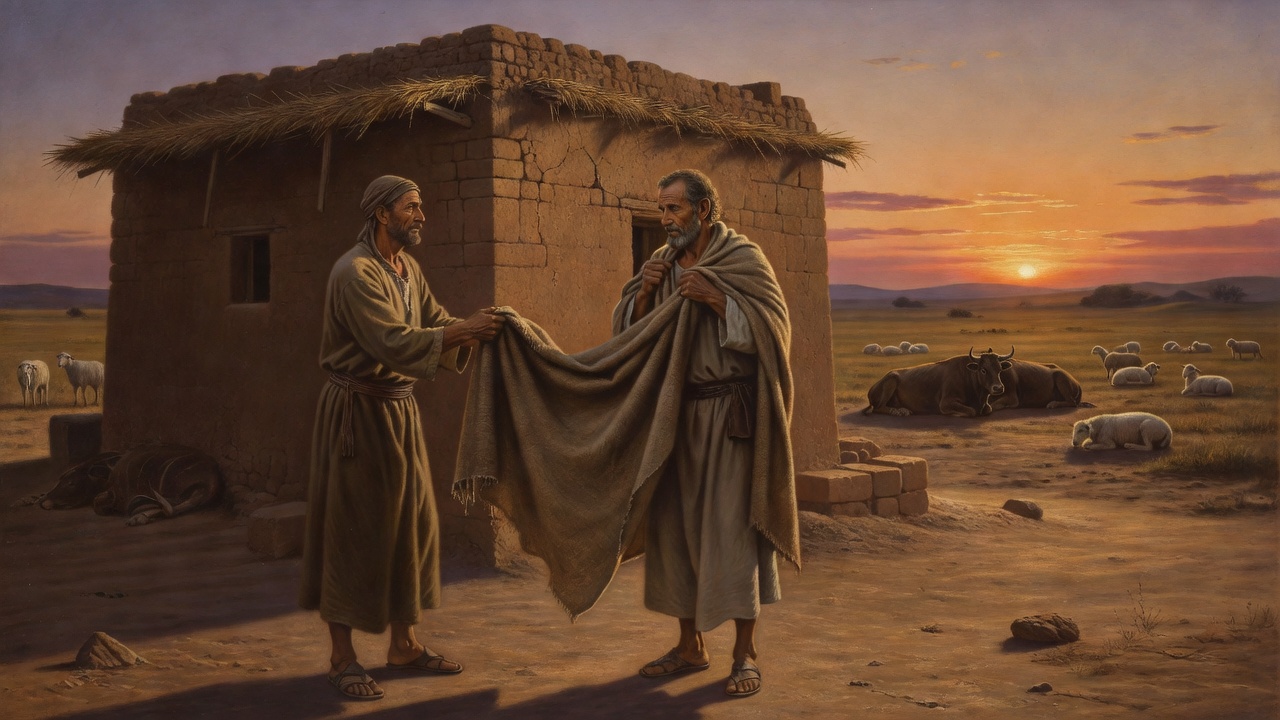
- The people are told not to exploit or oppress a foreign resident, because they themselves were foreigners in Egypt, the land of the Nile. They must not mistreat a widow or an orphan, and they must not charge interest when lending to the poor. A neighbor’s cloak taken as collateral is to be returned by sunset, because it is his only covering for sleep.Sources: the Bible text itself · Egypt
Notes written with AI assistance from open sources (Theographic Bible Metadata, CC BY-SA 4.0; Easton’s Bible Dictionary, public domain) and reviewed before publishing.
Places in this chapter
- Egypt · 30.129, 31.308 · verse 21
Only places identified with high confidence are shown (90% or more according to the scholarly sources compiled by OpenBible). Period map: DARE (Digital Atlas of the Roman Empire), CC BY 4.0; modern map: © OpenStreetMap contributors; places: OpenBible.info (CC BY 4.0).
Credits and license for this translation
Wycliffe Bible
This is the Pentateuch and Gospels from The Holy Bible, containing the Old and New Testaments, with the apocryphal books, in the earliest English version made from the latin Vulgate by John Wycliffe and his followers. c.1395
Public Domain
Language: Middle English (English)
Dialect: Middle
Translation by: John Wycliffe
2016-11-08
Section headings adapted from the Berean Standard Bible (public domain); they are not part of this translation’s text.
Source: http://ebible.org/engWycliffe/ · eBible.org