Deuteronomy 29
Wycliffe Bible · Tap a verse to see its cross-references.
The Covenant in Moab
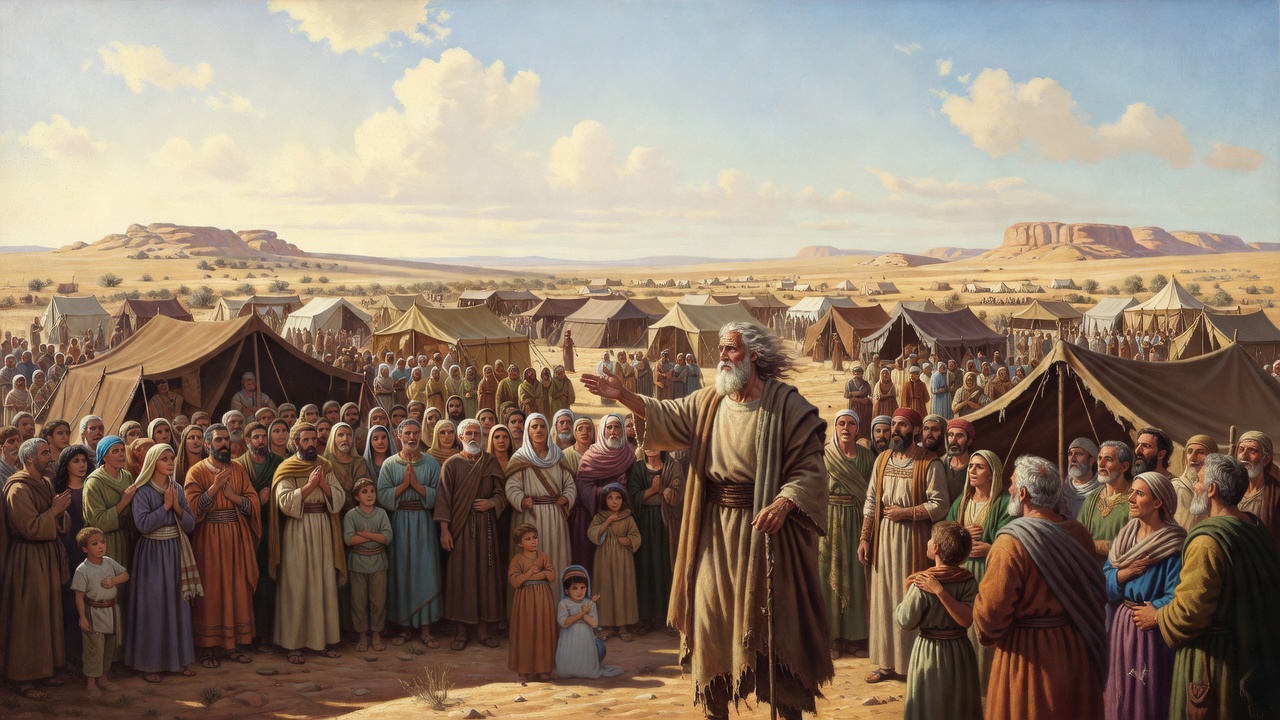
1These ben the wordis of boond of pees, which the Lord comaundide to Moyses, that he schulde smyte with the sones of Israel in the lond of Moab, outakun that bond of pees, which he couenauntide with hem in Oreb. 2And Moises clepid al Israel, and seide to hem, Ye sien alle thingis whiche the Lord dide bifor you in the lond of Egipt, to Farao and alle hise seruauntis, and to al his lond; 3the greet temptaciouns whiche thin iyen sien, `tho signes, and grete wondris. 4And the Lord yaf not to you an herte vndurstondynge, and iyen seynge, and eeris that moun here, til in to present dai. 5He ledde you bi fourti yeer thoruy deseert; youre clothis weren not brokun, nether the schoon of youre feet weren waastid bi eldnesse; 6ye eetun not breed, ye drunken not wyn and sidur, that ye schulden wite that he is youre Lord God. 7And ye camen to this place; and Seon, the kyng of Esebon yede out, and Og, the kyng of Basan, and camen to us to batel. And we han smyte hem, 8and we token awey the lond `of hem, and we yauen `the lond to possessioun, to Ruben, and to Gad, and to the half lynage of Manasses. 9Therfor kepe ye the wordis of this couenaunt, and fille ye tho, that ye vndirstonde all thingis whiche ye schulen do. 10Alle ye stonden to day bifor youre Lord God, youre princes, and lynagis, and the grettere men in birthe, and techeris, al the puple of Israel, 11fre children, and youre wyues, and comelyngis that dwellen with thee in castels, outakun the heweris of stonus, and outakun hem that beren watris; 12that thou go in the boond of pees of thi Lord God, and in the ooth which thi Lord God smytith with thee, 13that he reise thee in to a puple to hym silf, and that he be thi Lord God, as he spak to thee, and as he swoor to thi fadris, to Abraham, Ysaac, and Jacob. 14And not to you aloone Y smyte this loond of pees, and conferme these othis, 15but to alle men, present and absent. 16For ye witen hou we dwelliden in the lond of Egipt, and how we passiden bi the myddis of naciouns; whiche ye passiden, 17and siyen abhomynaciouns and filthis, that is, idols `of hem, tre and stoon, siluer and gold, whiche thei worschipiden. 18Lest perauenture among you be man ether womman, meyne ether lynage, whos herte is turned away to dai fro youre Lord God, that he go, and serue the goddis of tho folkis; and a roote buriounnynge galle and bitternesse be among you; 19and whanne he hath herd the wordis of this ooth, he blesse hym silf in his herte, and seie, Pees schal be to me, and Y schal go in the schrewidnesse of myn herte; and lest the drunkun take the thirsti, 20and the Lord forgyue not to hym, but thanne ful greetli his strong veniaunce be feers, and the feruour ayens that man, and alle the cursis that ben writun in this book `sitte on hym; and `the Lord do away his name vndur heuene, 21and waaste hym in to perdicioun fro alle the lynagis of Israel, bi the cursis that ben conteyned in the book of this lawe and of boond of pees. 22And the generacioun suynge schal seie, and the sones that schulen be borun aftirward, and pilgrimys that schulen come fro fer, seynge the veniauncis of that lond, and the sikenessis bi whiche the Lord turmentide that lond, 23brennynge `that lond with brymston and heete of the sunne, so that it be no more sowun, nether bringe forth ony grene thing, in to ensaumple of destriyng of Sodom and of Gommorre, of Adama and of Seboym, whiche the Lord destriede in his ire and stronge veniaunce. 24And alle folkis schulen seie, Whi dide the Lord so to this lond? What is the greet ire of his stronge veniaunce? 25and thei schulen answere, For thei forsoken the couenaunt of the Lord, whiche he couenauntide with her fadris, whanne he ledde hem out of the lond of Egipt, 26and thei serueden alien goddis, and worschipiden hem, whiche thei knewen not, and to whiche thei weren not youun; 27therfor the strong veniaunce of the Lord was wrooth ayens this lond, that he brouyte yn on it alle the cursis that ben writun in this book; 28and he castide hem out of her lond, in ire and strong veniaunce, and in gretteste indignacioun; and he castide forth in to an alien lond, as it is preued to dai. 29Thingis ben hid of oure Lord God, `that is, in his biforknowing, whiche thingis ben schewid to us, and to oure sones with outen ende, that we do alle the wordis of this lawe.
Did you know?
The Covenant Renewed in Moab
- The covenant in the land of Moab is presented as an agreement in addition to the one established at Mount Horeb. To encourage faithfulness, Moses recalled their forty years in the wilderness and their victories over King Sihon of Heshbon and King Og of Bashan.Sources: the Bible text itself · Horeb · Sihon · Og
- The covenant gathering included the entire community, from tribal leaders, elders, and men to women, children, and resident foreigners who gathered wood and drew water. Moses emphasized that the oath bound not only those standing there that day, but also future generations.Sources: the Bible text itself
- Moses warned the people against turning away to worship idols made of wood, stone, silver, and gold. Breaking the covenant would bring severe judgment, leaving the soil a barren waste of sulfur and salt like the overthrow of Sodom and Gomorrah.Sources: the Bible text itself · Sodom
Notes written with AI assistance from open sources (Theographic Bible Metadata, CC BY-SA 4.0; Easton’s Bible Dictionary, public domain) and reviewed before publishing.
Places in this chapter
- Moab · Today: Moab 1 · 31.181, 35.701 · verse 1
- Mount Horeb · Today: Jebel Musa · 28.540, 33.973 · verse 1
- Egypt · 30.129, 31.308 · verses 2, 16, 25
- Bashan · 32.781, 35.935 · verse 7
Only places identified with high confidence are shown (90% or more according to the scholarly sources compiled by OpenBible). Period map: DARE (Digital Atlas of the Roman Empire), CC BY 4.0; modern map: © OpenStreetMap contributors; places: OpenBible.info (CC BY 4.0).
Credits and license for this translation
Wycliffe Bible
This is the Pentateuch and Gospels from The Holy Bible, containing the Old and New Testaments, with the apocryphal books, in the earliest English version made from the latin Vulgate by John Wycliffe and his followers. c.1395
Public Domain
Language: Middle English (English)
Dialect: Middle
Translation by: John Wycliffe
2016-11-08
Section headings adapted from the Berean Standard Bible (public domain); they are not part of this translation’s text.
Source: http://ebible.org/engWycliffe/ · eBible.org