Leviticus 11
Unlocked Literal Bible · Tap a verse to see its cross-references.
Clean and Unclean Animals
1Yahweh spoke to Moses and to Aaron, saying, 2“Speak to the people of Israel, saying, 'These are the living things which you may eat among all the animals that are on the earth. 3You may eat any animal that has a split hoof and that also chews the cud. 4However, some animals either chew the cud or have a split hoof, and you must not eat them, animals such as the camel, because it chews the cud but does not have a split hoof. So the camel is unclean to you. 5Also the rock badger, because it chews the cud but does not have a split hoof, it is also unclean to you. 6The rabbit, because it chews the cud, but does not have a split hoof, is unclean to you. 7The pig, although it has a split hoof, does not chew the cud, is unclean to you. 8You must not eat any of their meat, nor touch their carcasses. They are unclean to you.
9The animals living in the water that you may eat are all those that have fins and scales, whether in the ocean or in the rivers. 10But all living creatures that do not have fins and scales in the ocean or rivers, including all that move in the water and all the living creatures that are in the water— they must be detested by you. 11Since they must be detested, you must not eat of their meat; also, their carcasses must be detested. 12Whatever has no fins or scales in the water must be detested by you.
13The birds you must detest and that you must not eat are these: the eagle, the vulture, 14the kite, any kind of falcon, 15every kind of raven, 16the horned owl and the screech owl, the seagull, and any kind of hawk. 17You must also detest the little owl and the great owl, the cormorant, 18the white owl and the barn owl, the osprey, 19the stork, any kind of heron, the hoopoe, and also the bat.
20All winged insects that walk on four legs are detestable to you. 21Yet you may eat any of the flying insects that also walk on four legs if they have jointed legs for hopping on the ground. 22You may also eat any kind of locust, katydid, cricket, or grasshopper. 23But all the flying insects that have four feet must be detested by you.
24You will become unclean until evening by these animals if you touch a carcass of one of them. 25Whoever picks up one of their carcasses must wash his clothes and remain unclean until evening. 26Every animal which has a split hoof that is not completely divided or which does not chew the cud is unclean to you. Everyone who touches them will be unclean. 27Whatever walks on its paws among all the animals that walk on all four legs, they are unclean to you. Whoever touches such a carcass will be unclean until the evening. 28Whoever picks up such a carcass must wash his clothes and be unclean until the evening. These animals will be unclean to you.
29Of the animals that creep on the ground, these are the animals that will be unclean to you: the weasel, the rat, every kind of large lizard, 30the gecko, the monitor lizard, the lizard, the skink, and the chameleon. 31Of all the animals that creep, these are the animals which will be unclean to you. Whoever touches them when they are dead will be unclean until evening. 32If any of them dies and falls on anything, that thing will be unclean, whether it is made of wood, cloth, leather, or sackcloth. Whatever it is and whatever it is used for, it must be put into water; it will be unclean until evening. Then it will be clean. 33For every clay pot into or onto which any unclean animal falls, whatever is in the pot will become unclean, and you must destroy that pot. 34Any food that could be eaten but has water on it from such a pot is unclean. Any liquid that is for drinking from such a pot is unclean. 35Anything that one of their carcasses falls on becomes unclean; if it is an oven or small stove, it must be broken to pieces. They are unclean and they must remain unclean to you. 36A spring or cistern for collecting water remains clean; but anyone who touches their carcass is unclean. 37If any part of their carcass falls upon any seeds for planting, those seeds will still be clean. 38But if water is put on the seeds, and if any part of their carcass falls on them, then they will be unclean to you.
39If any animal that you may eat dies, then he who touches the carcass will be unclean until evening. 40Whoever eats any of that carcass must wash his clothes and be unclean until evening. Anyone who picks up such a carcass will wash his clothes and be unclean until evening.
41Every animal that creeps on the ground is to be detested; it must not be eaten. 42Whatever crawls on its belly, and whatever walks on all four legs, or whatever has many feet—all the animals that creep on the ground, these you must not eat, for they are to be detested. 43You must not make yourselves unclean with any living creatures that creep; you must not make yourselves unclean with them, that you should be made impure by them. 44For I am Yahweh your God. You are to keep yourselves holy, therefore, and be holy, because I am holy. You must not defile yourselves with any kind of animal that moves about on the ground. 45For I am Yahweh, who brought you up out of the land of Egypt, to be your God. You must therefore be holy, for I am holy.
46This is the law regarding the animals, the birds, every living creature that moves in the waters, and of every creature that creeps on the ground, 47for which a distinction is to be made between the unclean and the clean, and between the living things that may be eaten and the living things that may not be eaten.'”
Did you know?
Clean and Unclean Animals
- The dietary laws of Leviticus establish clear dual criteria for land and aquatic animals: land creatures had to both chew the cud and possess fully divided hooves to be eaten, while water creatures required both fins and scales.Sources: the Bible text itself
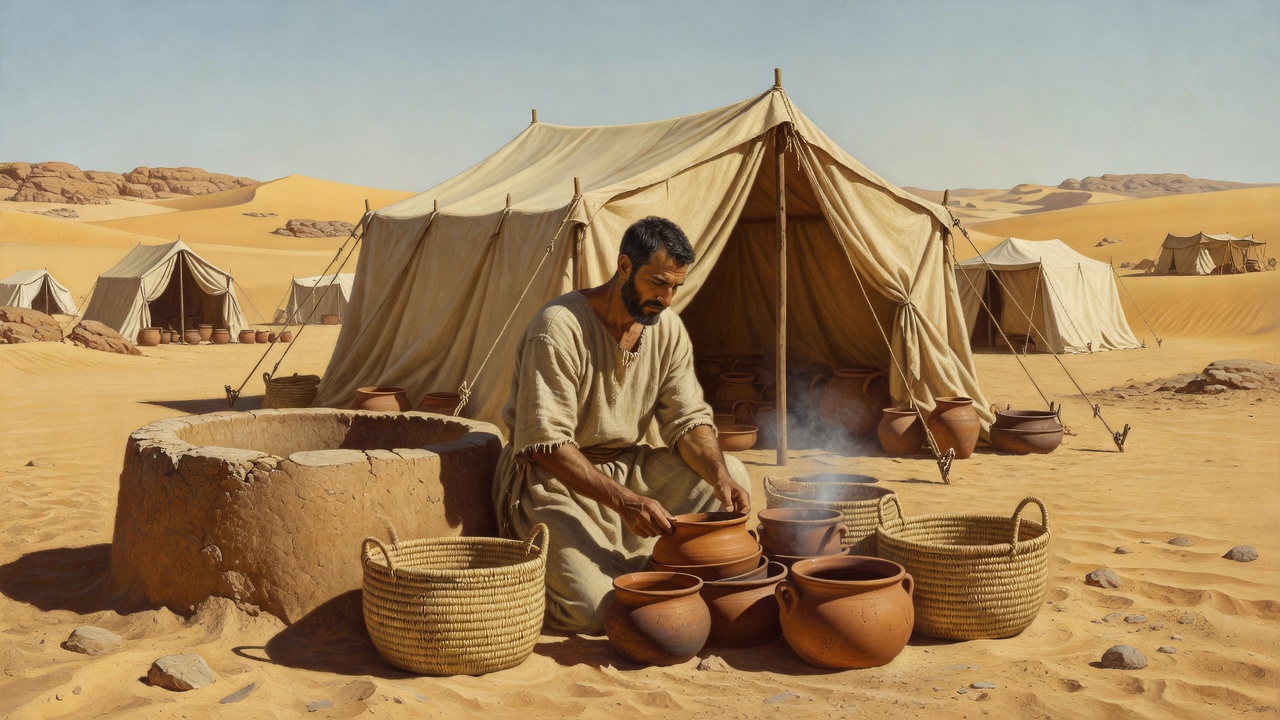
- Purity laws extended to household items: porous clay pots and ovens contaminated by the carcass of an unclean crawling creature could not be washed like wooden or cloth items, but had to be smashed entirely.Sources: the Bible text itself
- The stated theological purpose for distinguishing between clean and unclean creatures was Israel's consecration to God, who delivered them from Egypt and called them to be holy because He is holy.Sources: the Bible text itself · Egypt
Notes written with AI assistance from open sources (Theographic Bible Metadata, CC BY-SA 4.0; Easton’s Bible Dictionary, public domain) and reviewed before publishing.
Places in this chapter
- Egypt · 30.129, 31.308 · verse 45
Only places identified with high confidence are shown (90% or more according to the scholarly sources compiled by OpenBible). Period map: DARE (Digital Atlas of the Roman Empire), CC BY 4.0; modern map: © OpenStreetMap contributors; places: OpenBible.info (CC BY 4.0).
Credits and license for this translation
Unlocked Literal Bible
The Holy Bible in English, Unlocked Literal Bible translation
copyright © 2017 Door43 World Missions Community
Language: English
Translation by: Door43 World Missions Community
Contributor: 'Alrick G. Headley, M.Div., Th.M.', 'Adam W. Nagelvoort, M.Div. Academic
Ministries, Columbia International University', 'Dave Statezni, BA Orig langs.,
M.Div. Fuller Theological Seminary', 'Bram van den Heuvel, M.A.', 'C. Harry
Harriss, M.Div.', 'David Trombold, M. Div.', 'Elizabeth Oakes, BA in Religious
Studies, Linguistics', 'George "Drew" Curley, M.Div., PhD, Professor of Biblical
Languages', Hendrik "Henry" de Vries, 'Henry Whitney, BA Linguistics', 'Jesse
Griffin, BA Biblical Studies, MA Biblical Languages', 'James N. Pohlig, M.Div.,
MA in Linguistics, D. Litt. in Biblical Languages', 'Larry T Brooks, M.Div.,
Assemblies of God Theological Seminary', 'Larry Sallee, D.Min.', 'Paul M Fahnestock,
M.Div. Reformed Theological Seminary, D. Min. Pittsburgh Theological Seminary',
'Perry Oakes, PhD in Old Testament, MA in Linguistics', 'Peter Smircich, BA Philosophy',
'Susan Quigley, MA in Linguistics', 'Thomas Warren, M.Div., Trinity Evangelical
Divinity School, D.Min, Reformed Theological Seminary', 'Timothy Neu, Ph.D.
Biblical Studies', 'Ward Pyles, M.Div., Western Baptist Theological Seminary',
David Trombold, Dean Ropp, Gene Mullen, James Vigen, Leonard Smith, Nicholas Alsop,
Michael Francis
This is an open-licensed update of the ASV, intended to provide a 'form-centric' understanding of the Bible. It increases the translator's understanding of the lexical and grammatical composition of the underlying text by adhering closely to the word order and structure of the originals.
This translation is made available to you under the terms of the
Creative Commons Attribution Share-Alike license 4.0.
You have permission to share and redistribute this Bible translation in any format and to make reasonable revisions and adaptations of this translation, provided that:
You include the above copyright and source information.
If you make any changes to the text, you must indicate that you did so in a way that makes it clear that the original licensor is not necessarily endorsing your changes.
If you redistribute this text, you must distribute your contributions under the same license as the original.
Pictures included with Scriptures and other documents on this site are licensed just for use with those Scriptures and documents.
For other uses, please contact the respective copyright owners.
Note that in addition to the rules above, revising and adapting God's Word involves a great responsibility to be true to God's Word. See Revelation 22:18-19.
2020-12-04
Section headings adapted from the Berean Standard Bible (public domain); they are not part of this translation’s text.
Source: http://ebible.org/engULB/ · eBible.org