Proverbs 14
Douay-Rheims 1899 · Tap a verse to see its cross-references.
The Wise Woman
1A wise woman buildeth her house: but the foolish will pull down with her hands that also which is built. 2He that walketh in the right way, and feareth God, Cis despised by him that goeth by an infamous way. 3In the mouth of a fool is the rod of pride: but the lips of the wise preserve them. 4Where there are no oxen, the crib is empty: but where there is much corn, there the strength of the ox is manifest. 5A faithful witness will not lie: but a deceitful witness uttereth a lie. 6A scorner seeketh wisdom, and findeth it not: the learning of the wise is easy. 7Go against a foolish man, and he knoweth not the lips of prudence. 8The wisdom of a. discreet man is to understand his way: and the imprudence of fools erreth. 9A fool will laugh at sin, but among the just grace shall abide. 10The heart that knoweth the bitterness of his own soul, in his joy the stranger shall not intermeddle. 11The house of the wicked shall be destroyed: but the tabernacles of the just shall flourish. 12There is a way which seemeth just to a man: but the ends thereof lead to death. 13Laughter shall be mingled with sorrow, and mourning taketh hold of the end of joy. 14A fool shall be filled with his own ways, and the good man shall be above him. 15The innocent believeth every word: the discreet man considereth his steps. No good shall come to the deceitful son: but the wise servant shall prosper in his dealings, and his way shall be made straight. 16A wise man feareth and declineth from evil: the fool leapeth over and is confident. 17The impatient man shall work folly: and the crafty man is hateful. 18The childish shall possess folly, and the prudent, shall look for knowledge. 19The evil shall fall down before the good: and the wicked before the gates of the just. 20The poor man shall be hateful even to his own neighbour: but the friends of the rich are many. 21He that despiseth his neighbour, sinneth: but he that sheweth mercy to the poor, shall be blessed. He that believeth in the Lord, loveth mercy. 22They err that work evil: but mercy and truth prepare good things. 23In much work there shall be abundance: but where there are many words, there is oftentimes want. 24The crown of the wise is their riches: the folly of fools, imprudence. 25A faithful witness delivereth souls: and the double dealer uttereth lies. 26In the fear of the Lord is confidence of strength, and there shall be hope for his children. 27The fear of the Lord is a fountain of life, to decline from the ruin of death. 28In the multitude of people is the dignity of the king: and in the small number of people the dishonour of the prince. 29He that is patient, is governed with much wisdom: but he that is impatient, exalteth his folly. 30Soundness of heart is the life of the flesh: but envy is the rottenness of the bones. 31He that oppresseth the poor, upbraideth his Maker: but he that hath pity on the poor, honoureth him. 32The wicked man shall be driven out in his wickedness: but the just hath hope in his death. 33In the heart of the prudent resteth wisdom, and it shall instruct all the ignorant. 34Justice exalteth a nation: but sin maketh nations miserable. 35A wise servant is acceptable to the king: he that is good for nothing shall feel his anger.
Did you know?
Wisdom, Labor, and Justice
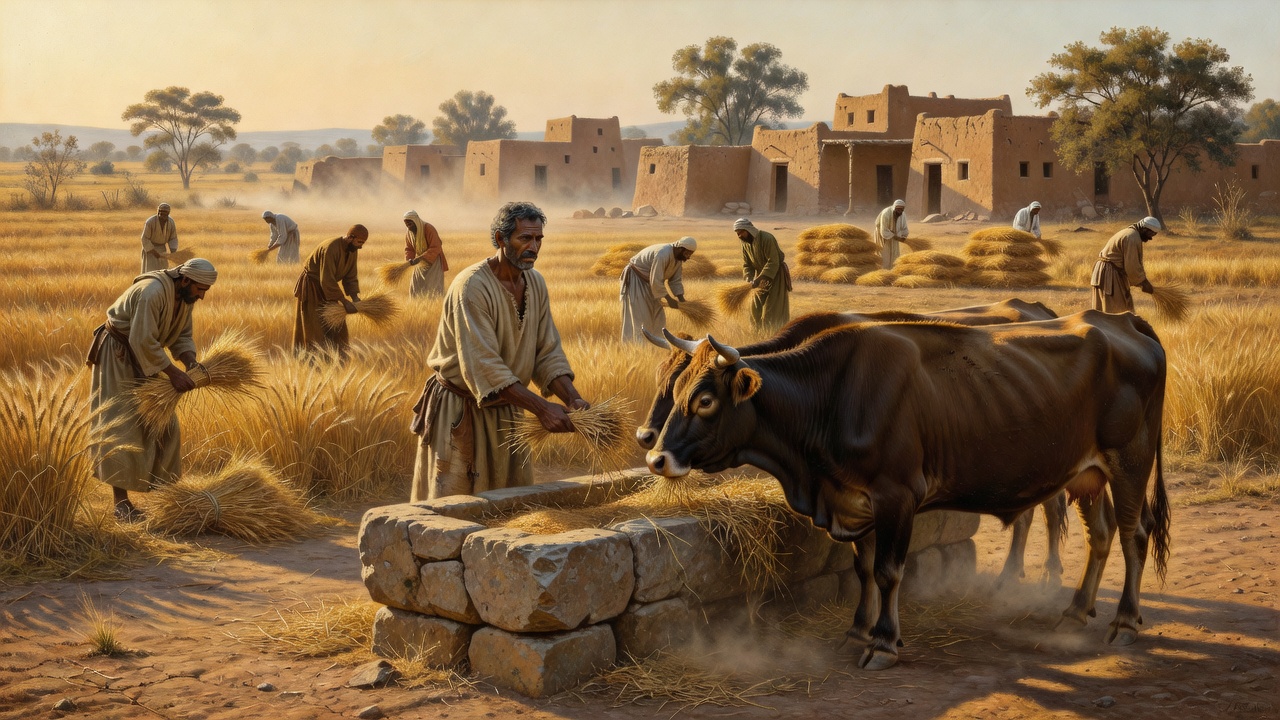
- Proverbs 14 uses practical agricultural life to illustrate that meaningful productivity requires labor and investment. While an empty manger stays clean without oxen, an abundant harvest depends directly on the strength and work of draft animals.Sources: the Bible text itself
- The chapter directly links social justice to reverence for God. Mistreating or despising the poor and needy is described as an insult to their Maker, whereas showing kindness and generosity to them honors God.Sources: the Bible text itself
- The proverbs extend moral guidance to governance and national health, stating that a king's glory depends on a thriving population and that moral righteousness exalts an entire nation, while sin brings collective disgrace.Sources: the Bible text itself
Notes written with AI assistance from open sources (Theographic Bible Metadata, CC BY-SA 4.0; Easton’s Bible Dictionary, public domain) and reviewed before publishing.
Credits and license for this translation
Douay-Rheims 1899
The Holy Bible in English, Douay-Rheims American Edition of 1899, translated from the Latin Vulgate
Public Domain
Language: English
Dialect: archaic American
Translation by: English College, Douai
This Public Domain Bible text is brought to you courtesy of eBible.org.
Help support free Bible access at https://eBible.org/give.php .
2022-11-03
Section headings adapted from the Berean Standard Bible (public domain); they are not part of this translation’s text.
Source: http://ebible.org/engDRA/ · eBible.org