Leviticus 17
Douay-Rheims 1899 · Tap a verse to see its cross-references.
The Place of Sacrifice
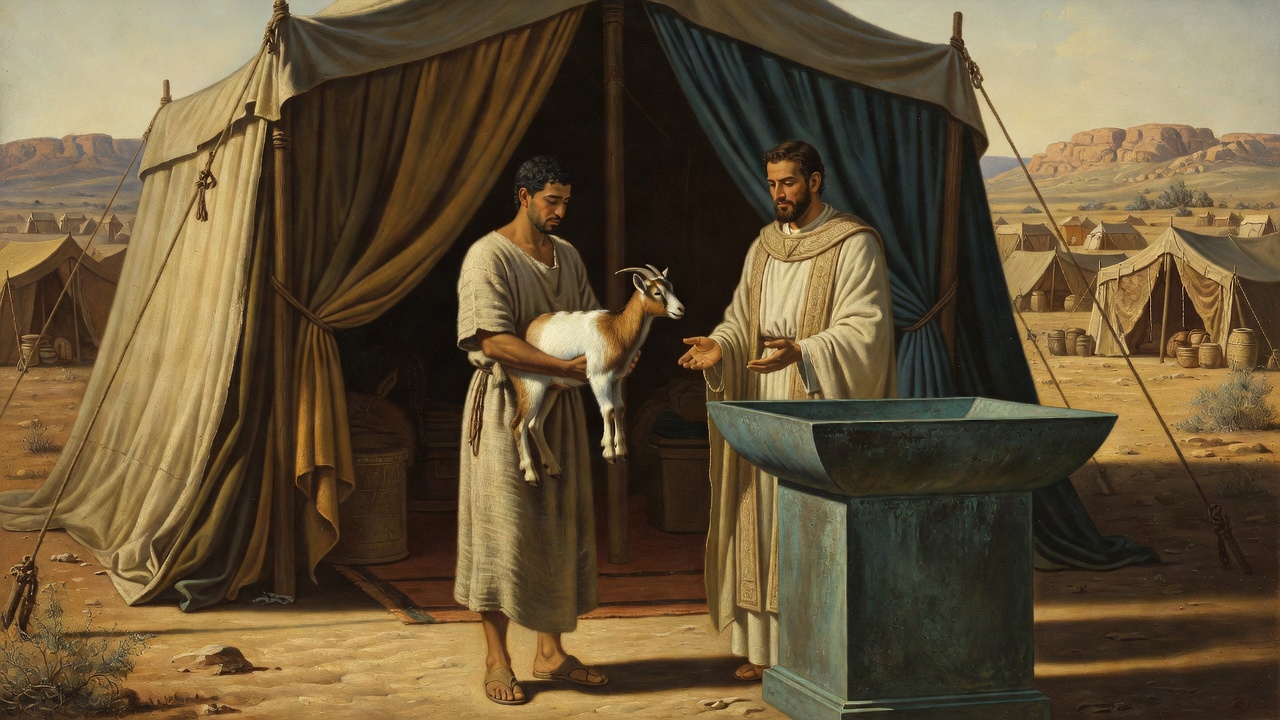
1And the Lord spoke to Moses, saying: 2Speak to Aaron and his sons, and to all the children of Israel, saying to them: This is the word, which the Lord hath commanded, saying: 3Any man whosoever of the house of Israel if he kill an ox, or a sheep, or a goat in the camp, or without the camp, 4And offer it not at the door of the tabernacle an oblation to the Lord, shall be guilty of blood: as if he had shed blood, so shall he perish from the midst of his people. 5Therefore the children of Israel shall bring to the priest their victims, which they kill in the field, that they may be sanctified to the Lord before the door of the tabernacle of the testimony, and they may sacrifice them for peace offerings to the Lord. 6And the priest shall pour the blood upon the altar of the Lord, at the door of the tabernacle of the testimony, and shall burn the fat for a sweet odour to the Lord. 7And they shall no more sacrifice their victims to devils, with whom they have committed fornication. It shall be an ordinance for ever to them and to their posterity. 8And thou shalt say to them: The man of the house of Israel, and of the strangers who sojourn among you, that offereth a holocaust or a victim, 9And bringeth it not to the door of the tabernacle of the testimony, that it may be offered to the Lord, shall perish from among his people.
Laws against Eating Blood
10If any man whosoever of the house of Israel, and of the strangers that sojourn among them, eat blood, I will set my face against his soul, and will cut him off from among his people: 11Because the life of the flesh is in the blood: and I have given it to you, that you may make atonement with it upon the altar for your souls, and the blood may be for an expiation of the soul. 12Therefore I have said to the children of Israel: No soul of you, nor of the strangers that sojourn among you, shall eat blood. 13Any man whosoever of the children of Israel, and of the strangers that sojourn among you, if by hunting or fowling, he take a wild beast or a bird, which is lawful to eat, let him pour out its blood, and cover it with earth. 14For the life of all flesh is in the blood: therefore I said to the children of Israel: You shall not eat the blood of any flesh at all, because the life of the flesh is in the blood, and whosoever eateth it, shall be cut off. 15The soul that eateth that which died of itself, or has been caught by a beast, whether he be one of your own country or a stranger, shall wash his clothes and himself with water, and shall be defiled until the evening: and in this manner he shall be made clean. 16But if he do not wash his clothes, and his body, he shall bear his iniquity.
Did you know?
Sacrificial Slaughter and the Sacredness of Blood
- Leviticus mandates that domestic animals such as oxen, lambs, and goats be brought directly to the entrance of the Tent of Meeting rather than slaughtered in open fields. This rule ensured sacrifices were presented exclusively as peace offerings to the LORD and halted illicit sacrifices to goat demons.Sources: the Bible text itself
- Both native Israelites and resident foreigners were strictly prohibited from eating blood, on penalty of being cut off from the community. The text grounds this law in the theological principle that the life of the flesh is in the blood, which God appointed specifically for making atonement upon the altar.Sources: the Bible text itself
- When Israelites or resident aliens hunted wild animals or birds that were clean for food, they were commanded to drain the blood upon the ground and cover it with dirt. This instruction reinforced that life belongs to God and preserved the sanctity of blood outside the sacrificial sanctuary.Sources: the Bible text itself
Notes written with AI assistance from open sources (Theographic Bible Metadata, CC BY-SA 4.0; Easton’s Bible Dictionary, public domain) and reviewed before publishing.
Credits and license for this translation
Douay-Rheims 1899
The Holy Bible in English, Douay-Rheims American Edition of 1899, translated from the Latin Vulgate
Public Domain
Language: English
Dialect: archaic American
Translation by: English College, Douai
This Public Domain Bible text is brought to you courtesy of eBible.org.
Help support free Bible access at https://eBible.org/give.php .
2022-11-03
Section headings adapted from the Berean Standard Bible (public domain); they are not part of this translation’s text.
Source: http://ebible.org/engDRA/ · eBible.org