Isaiah 47
Douay-Rheims 1899 · Tap a verse to see its cross-references.
The Humiliation of Babylon
1Come down, sit in the dust, O virgin daughter of Babylon, sit on the ground: there is no throne for the daughter of the Chaldeans, for thou shalt no more be called delicate and tender. 2Take a millstone and grind meal: uncover thy shame, strip thy shoulder, make bare thy legs, pass over the rivers. 3Thy nakedness shall be discovered, and thy shame shall be seen: I will take vengeance, and no man shall resist me. 4Our redeemer, the Lord of hosts is his name, the Holy One of Israel. 5Sit thou silent, and get thee into darkness, O daughter of the Chaldeans: for thou shalt no more be called the lady of kingdoms. 6I was angry with my people, I have polluted my inheritance, and have given them into thy bend: thou hast shewn no mercy to them: upon the ancient thou hast laid thy yoke exceeding heavy. 7And thou hast said: I shall be a lady for ever: thou hast not laid these things to thy heart, neither hast thou remembered thy latter end. 8And now hear these things, thou that art delicate, and dwellest confidently, that sayest in thy heart: I am, and there is none else besides me: I shall not sit as a widow, and I shall not know barrenness. 9These two things shall come upon thee suddenly in one day, barrenness and widowhood. All things are come upon thee, because of the multitude of thy sorceries, and for the great hardness of thy enchanters. 10And thou best trusted in thy wickedness, and hast said: There is none that seeth me. Thy wisdom, and thy knowledge, this hath deceived thee. And thou best said in thy heart: I am, and besides me there is no other. 11Evil shall come upon thee, and then shalt not know the rising thereof: and calamity shall fall violently upon thee, which thou canst not keep off: misery shall come upon thee suddenly, which thou shalt not know. 12Stand now with thy enchanters, and with the multitude of thy sorceries, in which thou hast laboured from thy youth, if so be it may profit thee any thing, or if thou mayst become stronger. 13Thou hast failed in the multitude or thy counsels: let now the astrologers stand and save thee, they that gazed at the stars, and counted the months, that from them they might tell the things that shall come to thee. 14Behold they are as stubble, fire hath burnt them, they shall not deliver themselves from the power of the dames: there are no coals wherewith they may be warmed, nor fire, that they may sit thereat. 15Such are all the things become to thee, in which thou best laboured: thy merchants from thy youth, every one hath erred in his own way, there is none that can save thee.
Did you know?
The Fall of Babylon
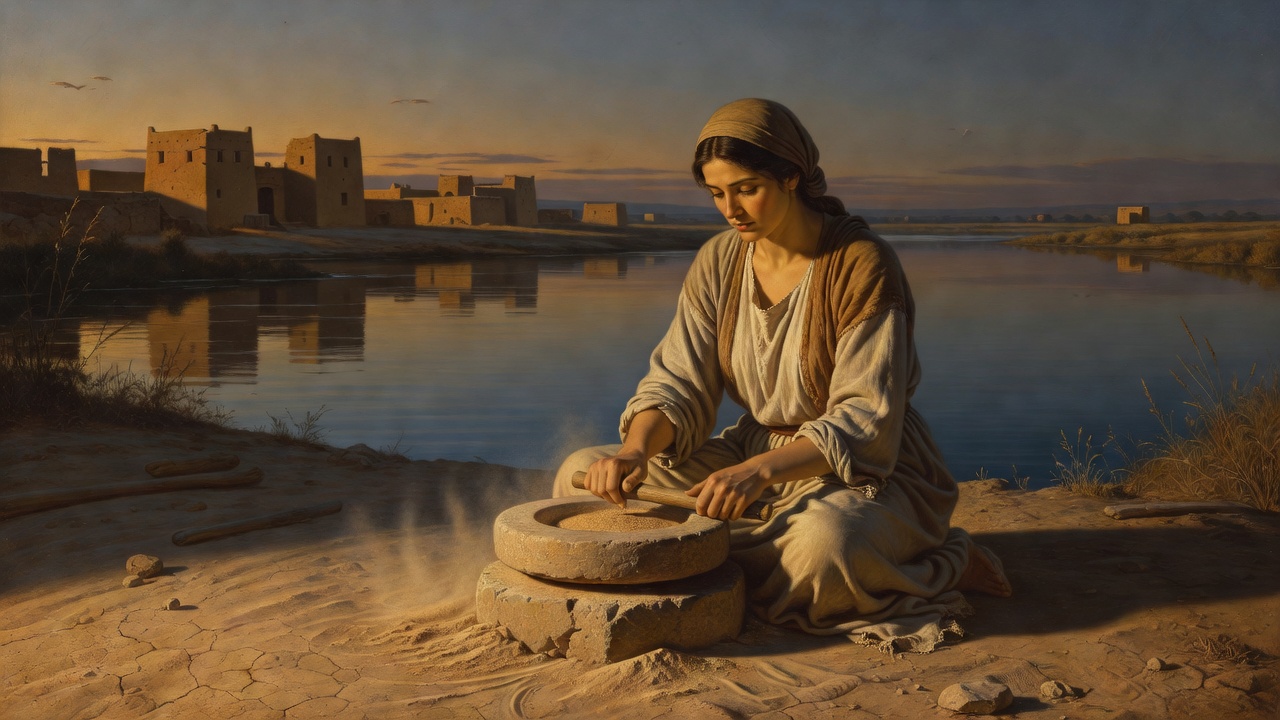
- Babylon is personified as a pampered queen and royal daughter who is abruptly humiliated. Instead of sitting securely on a throne in luxury, she is commanded to sit in the dust and perform the menial labor of an enslaved worker, grinding flour with millstones.Sources: the Bible text itself
- The chapter highlights Babylon's reliance on occult practices and stargazing. The prophet challenges the city's astrologers, sorcerers, and monthly omen-casters to step forward, declaring that their arts will be completely burned up like stubble and unable to prevent sudden ruin.Sources: the Bible text itself
- Babylon, situated along the Euphrates River in Chaldea, had been allowed to rule over God's people as an instrument of judgment. However, the text rebukes the empire for showing no mercy, noting that it placed heavy yokes even upon the elderly.Sources: Babylon · the Bible text itself
Notes written with AI assistance from open sources (Theographic Bible Metadata, CC BY-SA 4.0; Easton’s Bible Dictionary, public domain) and reviewed before publishing.
Places in this chapter
Only places identified with high confidence are shown (90% or more according to the scholarly sources compiled by OpenBible). Period map: DARE (Digital Atlas of the Roman Empire), CC BY 4.0; modern map: © OpenStreetMap contributors; places: OpenBible.info (CC BY 4.0).
Credits and license for this translation
Douay-Rheims 1899
The Holy Bible in English, Douay-Rheims American Edition of 1899, translated from the Latin Vulgate
Public Domain
Language: English
Dialect: archaic American
Translation by: English College, Douai
This Public Domain Bible text is brought to you courtesy of eBible.org.
Help support free Bible access at https://eBible.org/give.php .
2022-11-03
Section headings adapted from the Berean Standard Bible (public domain); they are not part of this translation’s text.
Source: http://ebible.org/engDRA/ · eBible.org