Isaiah 17
Douay-Rheims 1899 · Tap a verse to see its cross-references.
The Burden against Damascus
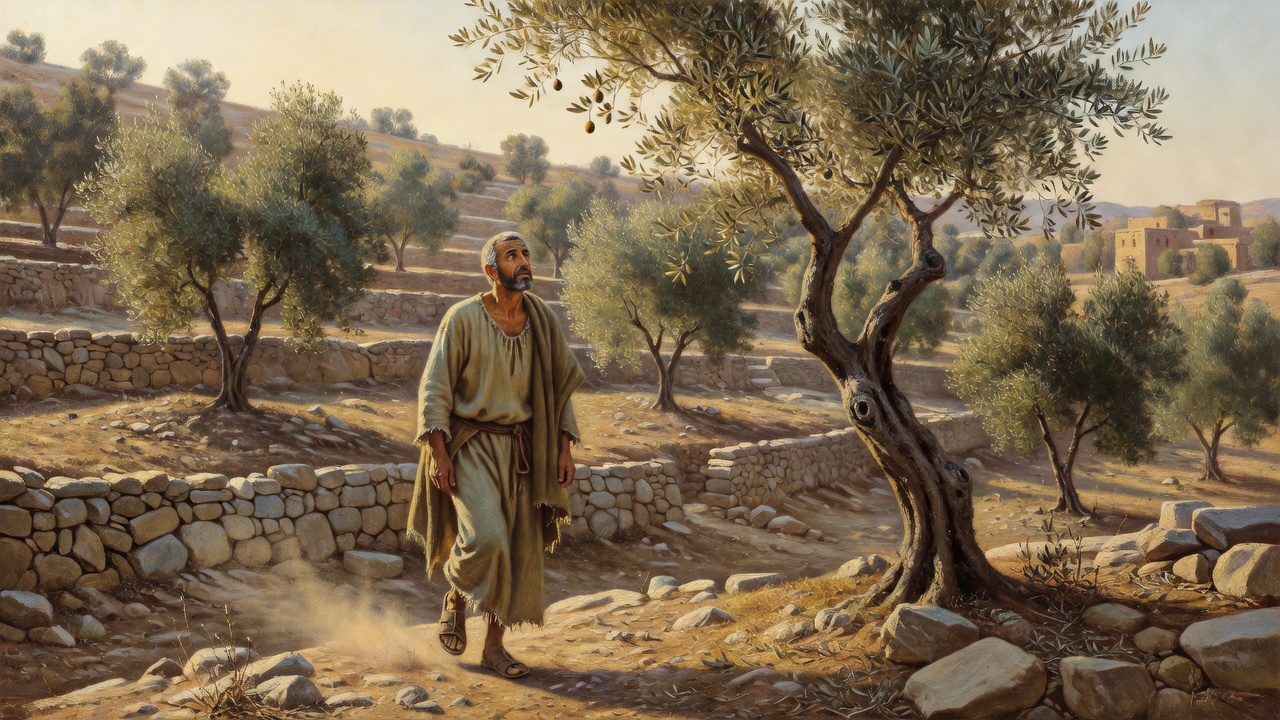
1The burden of Damascus. Behold Damascus shall cease to be a city, and shall be as a ruinous heap of stones. 2The cities of Aroer shall be left for flocks, and they shall rest there, and there shall be none to make them afraid. 3And aid shall cease from Ephraim, and the kingdom from Damascus: and the remnant of Syria shall be as the glory of the children of Israel: saith the Lord of hosts. 4And it shall come to pass in that day, that the glory of Jacob shall be made thin, and the fatness of his flesh shall grow lean. 5And it shall be as when one gathereth in the harvest that which remaineth, and his arm shall gather the ears of corn: and it shall be as he that seeketh ears in the vale of Raphaim. 6And the fruit thereof that shall be left upon it, shall be as one cluster of grapes, and as the shaking of the olive tree, two or three berries in the top of a bough, or four or five upon the top of the tree, saith the Lord the God of Israel. 7In that day man shall bow down himself to his Maker, and his eyes shall look to the Holy One of Israel. 8And he shall not look to the altars which his hands made: and he shall not have respect to the things that his fingers wrought, such as groves and temples. 9In that day his strong cities shall be forsaken, as the ploughs, and the corn that were left before the face of the children of Israel, and thou shalt be desolate. 10Because thou hast forgotten God thy saviour, and hast not remembered thy strong helper: therefore shalt thou plant good plants, and shalt sow strange seed. 11In the day of thy planting shall be the wild grape, and in the morning thy seed shall flourish: the harvest is taken away in the day of inheritance, and shall grieve thee much. 12Woe to the multitude of many people, like the multitude of the roaring sea: and the tumult of crowds, like the noise of many waters. 13Nations shall make a noise like the noise of waters overflowing, but he shall rebuke him, and he shall flee far off: and he shall be carried away as the dust of the mountains before the wind, and as a whirlwind before a tempest. 14In the time of the evening, behold there shall be trouble: the morning shall come, and he shall not be: this is the portion of them that have wasted us, and the lot of them that spoiled us.
Did you know?
Judgment on Damascus and Ephraim
- The oracle against Damascus connects the fate of the Syrian capital with that of the northern kingdom of Israel, referred to as Ephraim and Jacob. The prophecy foretells that both the sovereignty of Damascus and the fortified power of Israel would fade together.Sources: the Bible text itself · Damascus · Syria
- The text uses familiar agricultural imagery to describe judgment and remnant: a harvester gathering grain in the Valley of Rephaim near Jerusalem, and a beaten olive tree left with only two or three olives at the very top.Sources: the Bible text itself · Valley of Rephaim
Notes written with AI assistance from open sources (Theographic Bible Metadata, CC BY-SA 4.0; Easton’s Bible Dictionary, public domain) and reviewed before publishing.
Places in this chapter
- Damascus · 33.511, 36.306 · verses 1, 3
- Syria · Today: Aram · 33.511, 36.306 · verse 3
- Valley of Rephaim · 31.763, 35.219 · verse 5
Only places identified with high confidence are shown (90% or more according to the scholarly sources compiled by OpenBible). Period map: DARE (Digital Atlas of the Roman Empire), CC BY 4.0; modern map: © OpenStreetMap contributors; places: OpenBible.info (CC BY 4.0).
Credits and license for this translation
Douay-Rheims 1899
The Holy Bible in English, Douay-Rheims American Edition of 1899, translated from the Latin Vulgate
Public Domain
Language: English
Dialect: archaic American
Translation by: English College, Douai
This Public Domain Bible text is brought to you courtesy of eBible.org.
Help support free Bible access at https://eBible.org/give.php .
2022-11-03
Section headings adapted from the Berean Standard Bible (public domain); they are not part of this translation’s text.
Source: http://ebible.org/engDRA/ · eBible.org