Ecclesiastes 7
Douay-Rheims 1899 · Tap a verse to see its cross-references.
The Value of Wisdom
1What needeth a man to seek things that are above him, whereas he knoweth not what is profitable for him in his life, in all the days of his pilgrimage, and the time that passeth like a shadow? Or who can tell him what shall be after him under the sun? 2A good name is better than precious ointments: and the day of death than the day of one’s birth. 3It is better to go to the house of mourning, than to the house of feasting: for in that we are put in mind of the end of all, and the living thinketh what is to come. 4Anger is better than laughter: because by the sadness of the countenance the mind of the offender is corrected. 5The heart of the wise is where there is mourning, and the heart of fools where there is mirth. 6It is better to be rebuked by a wise man, than to be deceived by the flattery of fools. 7For as the crackling of thorns burning under a pot, so is the laughter of a fool: now this also is vanity. 8Oppression troubleth the wise, and shall destroy the strength of his heart. 9Better is the end of a speech than the beginning. Better is the patient man than the presumptuous. 10Be not quickly angry: for anger resteth in the bosom of a fool. 11Say not: What thinkest thou is the cause that former times were better than they are now? for this manner of question is foolish. 12Wisdom with riches is more profitable, and bringeth more advantage to them that see the sun. 13For as wisdom is a defence, so money is a defence: but learning and wisdom excel in this, that they give life to him that possesseth them. 14Consider the works of God, that no man can correct whom he hath despised.
The Limits of Human Wisdom
15In the good day enjoy good things, and beware beforehand of the evil day: for God hath made both the one and the other, that man may not find against him any just complaint. 16These things also I saw in the days of my vanity: A just man perisheth in his justice, and a wicked man liveth a long time in his wickedness. 17Be not over just: and be not more wise than is necessary, lest thou become stupid. 18Be not overmuch wicked: and be not foolish, lest thou die before thy time. 19It is good that thou shouldst hold up the just, yea and from him withdraw not thy hand: for he that feareth God, neglecteth nothing. 20Wisdom hath strengthened the wise more than ten princes of the city. 21For there is no just man upon earth, that doth good, and sinneth not. 22But do not apply thy heart to all words that are spoken: lest perhaps thou hear thy servant reviling thee. 23For thy conscience knoweth that thou also hast often spoken evil of others. 24I have tried all things in wisdom. I have said: I will be wise: and it departed farther from me, 25Much more than it was: it is a great depth, who shall find it out? 26I have surveyed all things with my mind, to know, and consider, and seek out wisdom and reason: and to know the wickedness of the fool, and the error of the imprudent: 27And I have found a woman more bitter than death, who is the hunter’s snare, and her heart is a net, and her hands are bands. He that pleaseth God shall escape from her: but he that is a sinner, shall be caught by her. 28Lo this have I found, said Ecclesiastes, weighing one thing after another, that I might find out the account, 29Which yet my soul seeketh, and I have not found it. One man among a thousand I have found, a woman among them all I have not found. 30Only this I have found, that God made man right, and he hath entangled himself with an infinity of questions. Who is as the wise man? and who hath known the resolution of the word?
Did you know?
Wisdom, Mortality, and the Limits of Understanding
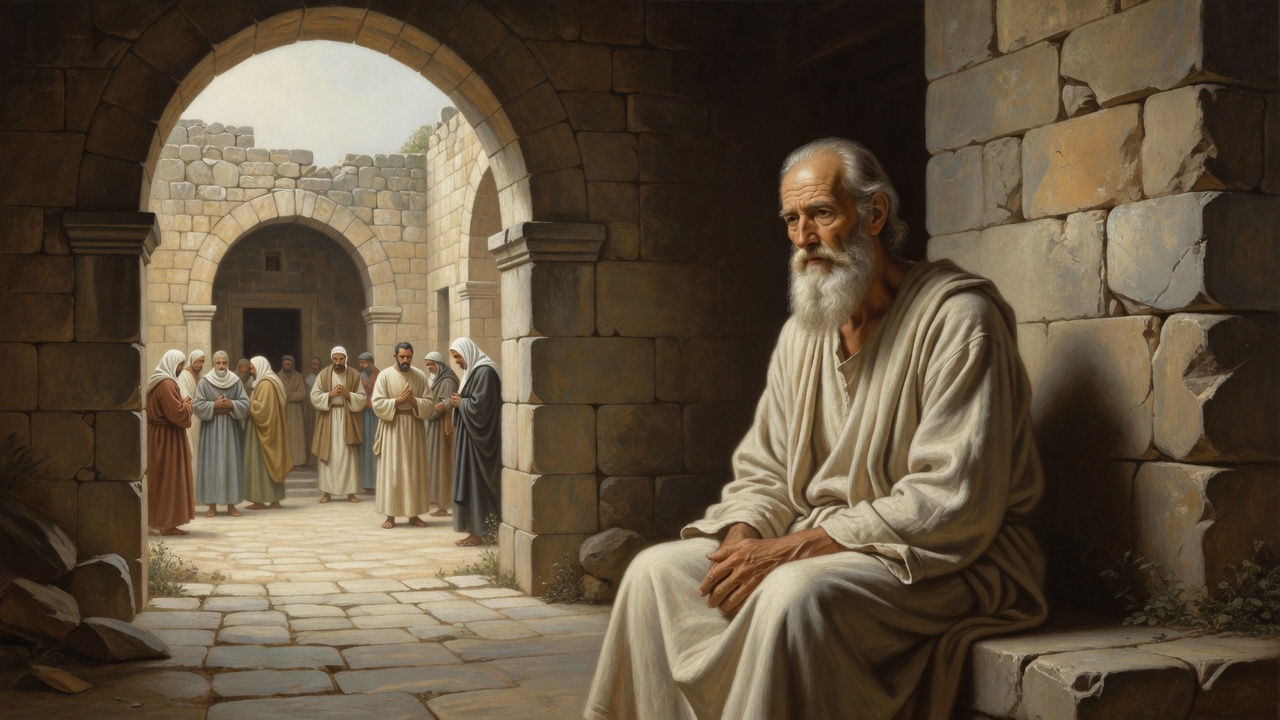
- Ecclesiastes 7 begins with a series of comparative proverbs arguing that moments of solemn reflection, such as visiting a house of mourning or facing sorrow, provide greater insight into life than superficial laughter and feast houses.Sources: the Bible text itself
- The Teacher reflects on the reality of human experience, noting that God has appointed both prosperous and adverse days so that humans cannot foresee their future, and that righteous people sometimes perish while the wicked live long.Sources: the Bible text itself
- The chapter highlights the universal limitation of human goodness, observing that there is no one on earth who does good and never sins, and concluding that while God created humanity upright, people pursue many complex schemes.Sources: the Bible text itself
Notes written with AI assistance from open sources (Theographic Bible Metadata, CC BY-SA 4.0; Easton’s Bible Dictionary, public domain) and reviewed before publishing.
Credits and license for this translation
Douay-Rheims 1899
The Holy Bible in English, Douay-Rheims American Edition of 1899, translated from the Latin Vulgate
Public Domain
Language: English
Dialect: archaic American
Translation by: English College, Douai
This Public Domain Bible text is brought to you courtesy of eBible.org.
Help support free Bible access at https://eBible.org/give.php .
2022-11-03
Section headings adapted from the Berean Standard Bible (public domain); they are not part of this translation’s text.
Source: http://ebible.org/engDRA/ · eBible.org