Psalms 128
Darby Translation · Tap a verse to see its cross-references.
A Song of degrees.
The Blessed Fear of the LORD
1Blessed is every one that feareth Jehovah, that walketh in his ways.
2For thou shalt eat the labour of thy hands; happy shalt thou be, and it shall be well with thee.
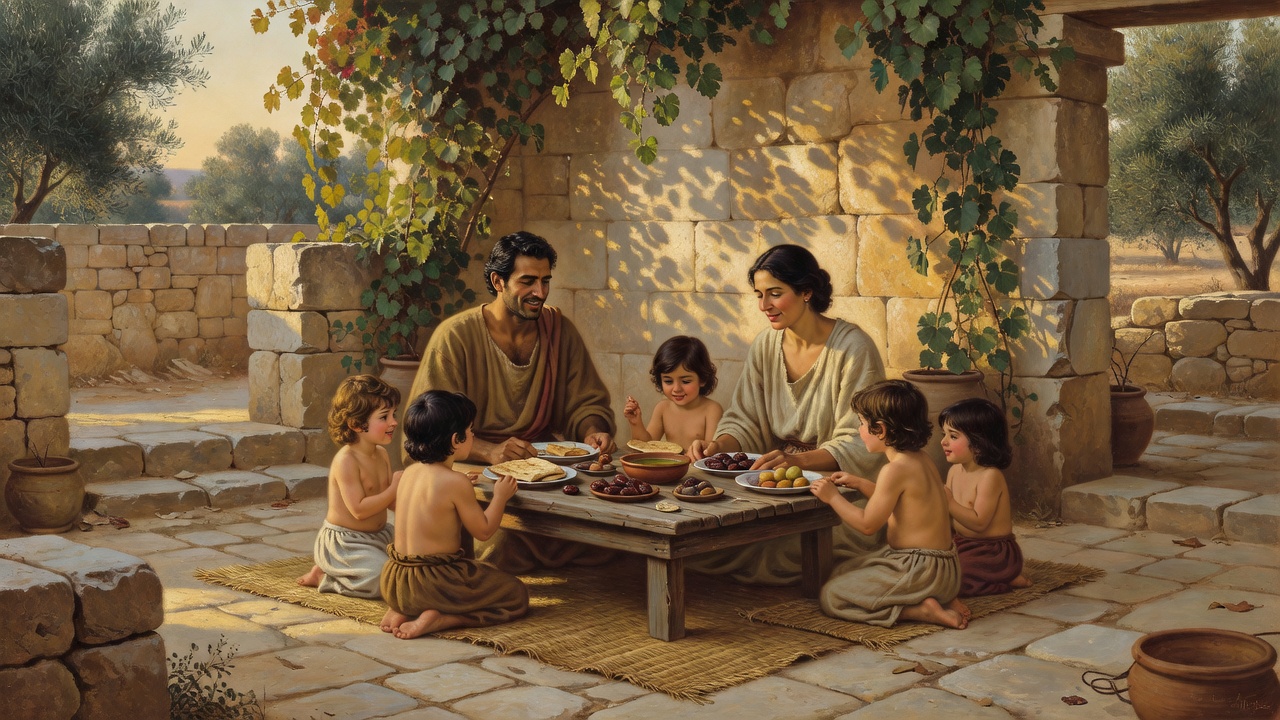
3Thy wife shall be as a fruitful vine in the inner part of thy house; thy children like olive-plants round about thy table.
4Behold, thus shall the man be blessed that feareth Jehovah.
5Jehovah will bless thee out of Zion; and mayest thou see the good of Jerusalem all the days of thy life,
6And see thy children's children. Peace be upon Israel!
Did you know?
Blessings of Family and the Peace of Jerusalem
- Psalm 128 uses familiar agricultural metaphors to depict domestic abundance, comparing a wife to a fruitful grapevine and children gathered around the table to vigorous olive shoots.Sources: the Bible text itself
- The psalm is designated as a Song of Ascents, connecting the daily labor and domestic happiness of the individual with the collective welfare of Zion and Jerusalem.Sources: the Bible text itself · Zion
- The final blessing for peace upon Israel echoes the traditional meaning of Jerusalem itself, whose name signifies a possession or foundation of peace.Sources: the Bible text itself · Jerusalem
Notes written with AI assistance from open sources (Theographic Bible Metadata, CC BY-SA 4.0; Easton’s Bible Dictionary, public domain) and reviewed before publishing.
Places in this chapter
Only places identified with high confidence are shown (90% or more according to the scholarly sources compiled by OpenBible). Period map: DARE (Digital Atlas of the Roman Empire), CC BY 4.0; modern map: © OpenStreetMap contributors; places: OpenBible.info (CC BY 4.0).
Credits and license for this translation
Darby Translation
The Holy Scriptures, a New Translation from the Original Languages by J. N. Darby
Public Domain
Language: English
Dialect: archaic British
Translation by: J. N. Darby
2019-11-15
Section headings adapted from the Berean Standard Bible (public domain); they are not part of this translation’s text.
Source: http://ebible.org/engDBY/ · eBible.org