Proverbs 24
Darby Translation · Tap a verse to see its cross-references.
Do Not Envy
Saying 20
1Be not thou envious of evil men, neither desire to be with them; 2for their heart studieth destruction, and their lips talk of mischief.
Saying 21
3Through wisdom is a house built, and by understanding it is established; 4and by knowledge are the chambers filled with all precious and pleasant substance.
Saying 22
5A wise man is strong, and a man of knowledge increaseth strength. 6For with good advice shalt thou make thy war; and in the multitude of counsellors there is safety.
Saying 23
7Wisdom is too high for a fool: he will not open his mouth in the gate.
Saying 24
8He that deviseth to do evil shall be called a master of intrigues. 9The purpose of folly is sin, and the scorner is an abomination to men.
Saying 25
10[If] thou losest courage in the day of trouble, thy strength is small. 11Deliver them that are taken forth unto death, and withdraw not from them that stagger to slaughter. 12If thou sayest, Behold, we knew it not, will not he that weigheth the hearts consider it? And he that preserveth thy soul, he knoweth it; and he rendereth to man according to his work.
Saying 26
13Eat honey, my son, for it is good; and a honeycomb is sweet to thy taste: 14so consider wisdom for thy soul; if thou hast found it, there shall be a result, and thine expectation shall not be cut off.
Saying 27
15Lay not wait, O wicked [man], against the dwelling of the righteous; lay not waste his resting-place. 16For the righteous falleth seven times, and riseth up again; but the wicked stumble into disaster.
Saying 28
17Rejoice not when thine enemy falleth, and let not thy heart be glad when he stumbleth; 18lest Jehovah see it, and it be evil in his sight, and he turn away his anger from him.
Saying 29
19Fret not thyself because of evil-doers, [and] be not envious of the wicked: 20for there shall be no future to the evil [man]; the lamp of the wicked shall be put out.
Saying 30
21My son, fear Jehovah and the king: meddle not with them that are given to change. 22For their calamity shall rise suddenly; and who knoweth the ruin of them both?
Further Sayings of the Wise
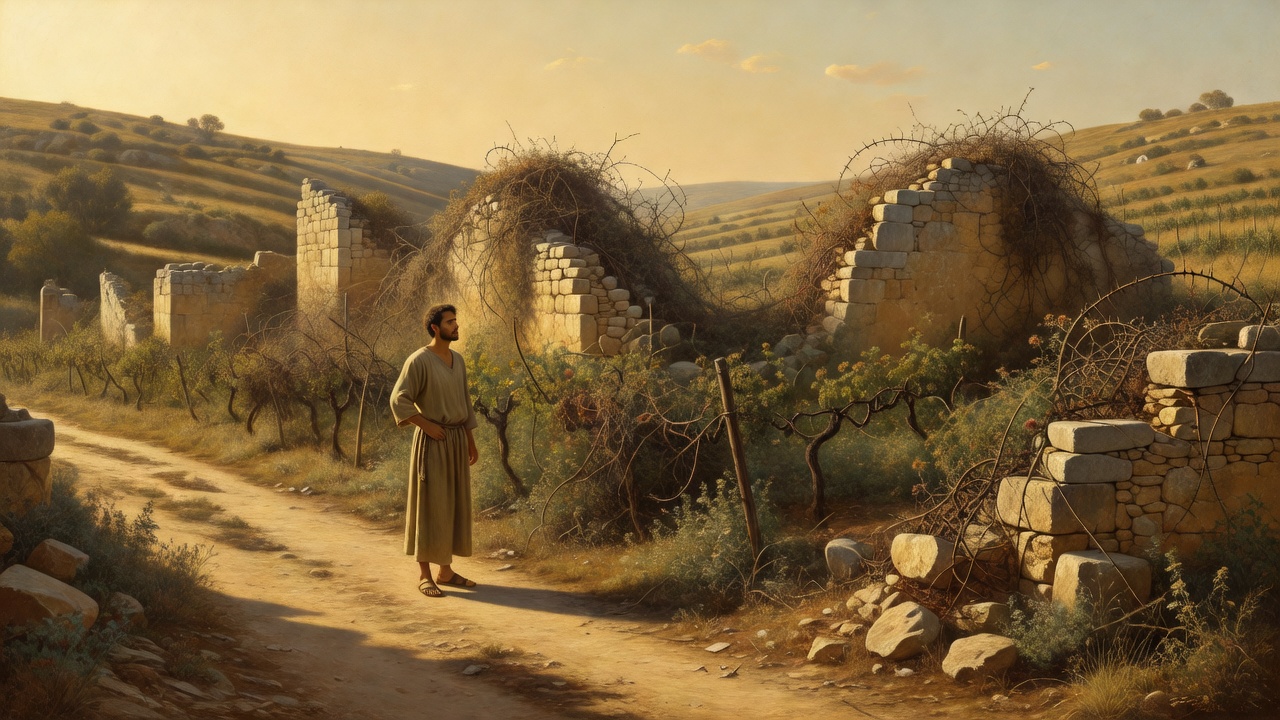
23These things also come from the wise. It is not good to have respect of persons in judgment. 24He that saith unto the wicked, Thou art righteous, peoples shall curse him, nations shall abhor him; 25but to them that rebuke [him] shall be delight, and a good blessing cometh upon them. 26He kisseth the lips who giveth a right answer. 27Prepare thy work without, and put thy field in order, and afterwards build thy house. 28Be not a witness against thy neighbour without cause; and wouldest thou deceive with thy lips? 29Say not, I will do so to him as he hath done to me, I will render to the man according to his work. 30I went by the field of a sluggard, and by the vineyard of a man void of understanding; 31and lo, it was all grown over with thistles, and nettles had covered the face thereof, and its stone wall was broken down. 32Then I looked, I took it to heart; I saw, I received instruction: 33— A little sleep, a little slumber, a little folding of the hands to rest! 34So shall thy poverty come [as] a roving plunderer, and thy penury as an armed man.
Did you know?
Wisdom for Daily Life, Justice, and Diligence
- Proverbs 24:27 reflects the priorities of ancient agrarian life by advising that one should first prepare fields and secure an agricultural livelihood before building a house. Securing reliable food production had to take precedence over investing resources into domestic shelter.Sources: the Bible text itself
- The chapter challenges passive bystander apathy, asserting that claiming ignorance will not excuse failing to rescue those facing unjust peril or death. It similarly warns against judicial partiality in civic assemblies, strongly condemning those who exonerate the guilty.Sources: the Bible text itself
- The vivid portrait of a slacker's vineyard highlights the rapid physical decay of untended land, marked by overgrown thistles and broken stone walls. In the hill country of ancient Israel, maintaining stone terrace walls was essential for preventing soil erosion and protecting crops.Sources: the Bible text itself
Notes written with AI assistance from open sources (Theographic Bible Metadata, CC BY-SA 4.0; Easton’s Bible Dictionary, public domain) and reviewed before publishing.
Credits and license for this translation
Darby Translation
The Holy Scriptures, a New Translation from the Original Languages by J. N. Darby
Public Domain
Language: English
Dialect: archaic British
Translation by: J. N. Darby
2019-11-15
Section headings adapted from the Berean Standard Bible (public domain); they are not part of this translation’s text.
Source: http://ebible.org/engDBY/ · eBible.org