Job 35
Darby Translation · Tap a verse to see its cross-references.
Elihu Recalls God’s Justice
1Moreover Elihu answered and said, 2Thinkest thou this to be right, that thou saidst, My righteousness is more than God's? 3For thou hast asked of what profit it is unto thee: what do I gain more than if I had sinned? 4I will reply to thee in words, and to thy companions with thee. 5Look unto the heavens and see; and survey the skies: they are higher than thou. 6If thou sinnest, what doest thou against him? If thy transgressions be multiplied, what doest thou unto him? 7If thou be righteous, what givest thou to him? or what doth he receive of thy hand? 8Thy wickedness [may affect] a man as thou [art], and thy righteousness a son of man. 9By reason of the multitude of oppressions they cry; they cry out by reason of the arm of the mighty: 10But none saith, Where is God my Maker, who giveth songs in the night, 11Who teacheth us more than the beasts of the earth, and maketh us wiser than the fowl of the heavens? 12There they cry, and he answereth not, because of the pride of evil men. 13Surely God will not hear vanity, neither will the Almighty regard it. 14Although thou sayest thou dost not see him, judgment is before him, therefore wait for him. 15But now, because he hath not visited in his anger, doth not [Job] know [his] great arrogancy? 16For Job hath opened his mouth in vanity, and made words abundant without knowledge.
Did you know?
Elihu on God's Independence and Human Cry
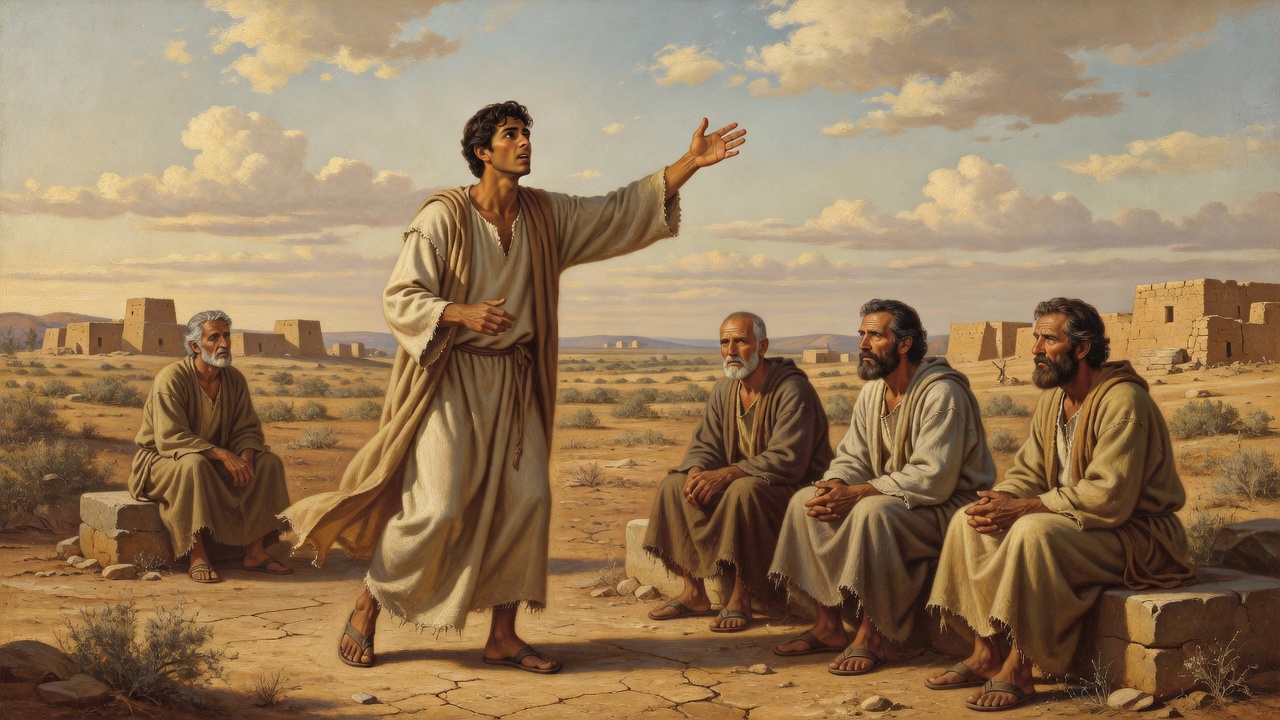
- Elihu intervenes after the debate between Job and his three companions has ended, offering an extended series of speeches across chapters 32 through 37.Sources: Elihu · the Bible text itself
- In this chapter, Elihu argues for God's transcendence by asking Job to observe the heavens and the clouds, asserting that human sin does not harm God nor does human righteousness enrich Him.Sources: the Bible text itself
- Elihu also addresses why cries for help under oppression sometimes go unanswered, contending that people often cry out purely for relief from pain rather than seeking God their Maker in true humility.Sources: the Bible text itself
Notes written with AI assistance from open sources (Theographic Bible Metadata, CC BY-SA 4.0; Easton’s Bible Dictionary, public domain) and reviewed before publishing.
Credits and license for this translation
Darby Translation
The Holy Scriptures, a New Translation from the Original Languages by J. N. Darby
Public Domain
Language: English
Dialect: archaic British
Translation by: J. N. Darby
2019-11-15
Section headings adapted from the Berean Standard Bible (public domain); they are not part of this translation’s text.
Source: http://ebible.org/engDBY/ · eBible.org