Psalms 15
Bible in Basic English · Tap a verse to see its cross-references.
A Psalm. Of David.
Who May Dwell on Your Holy Mountain?
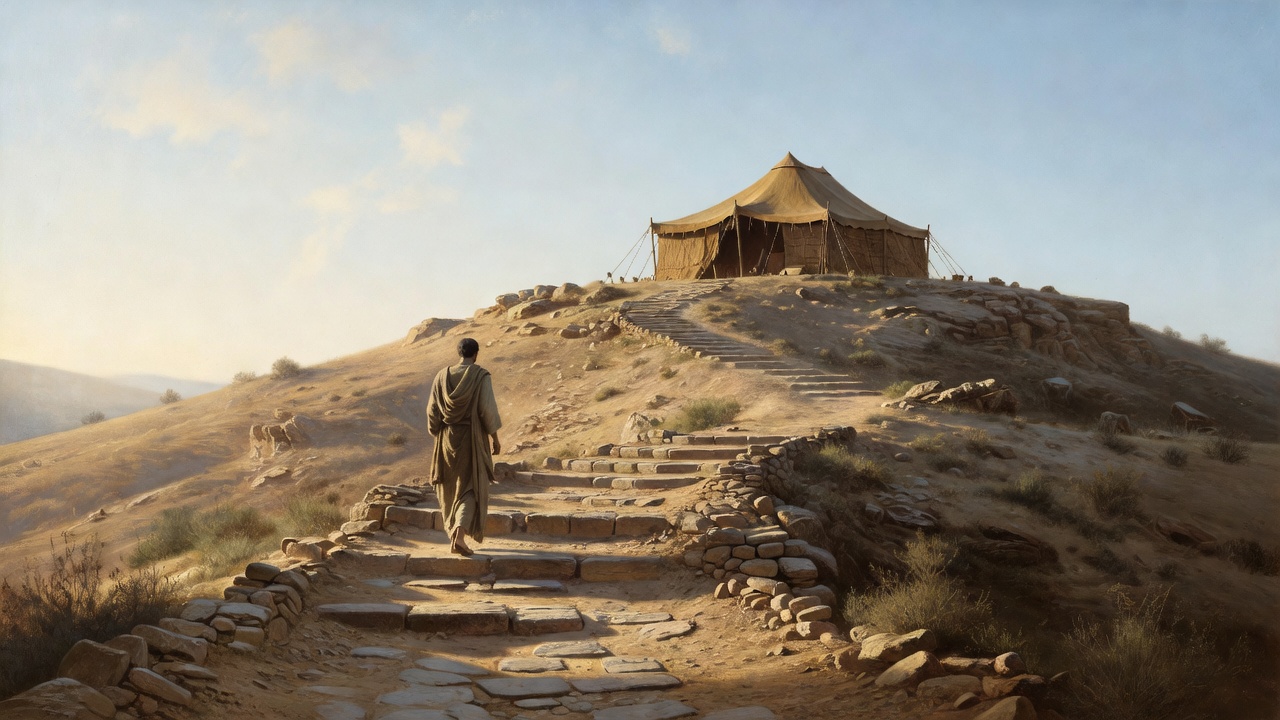
1Lord, who may have a resting-place in your tent, a living-place on your holy hill?
2He who goes on his way uprightly, doing righteousness, and saying what is true in his heart;
3Whose tongue is not false, who does no evil to his friend, and does not take away the good name of his neighbour;
4Who gives honour to those who have the fear of the Lord, turning away from him who has not the Lord's approval. He who takes an oath against himself, and makes no change.
5He who does not put out his money at interest, or for payment give false decisions against men who have done no wrong. He who does these things will never be moved.
Did you know?
Dwelling in God's Presence
- Psalm 15 is framed around an opening question asking who is permitted to abide in the Lord's sacred tent and dwell on His holy mountain.Sources: the Bible text itself
- Rather than focusing on ritual offerings, the psalm outlines qualifications based on ethical integrity, truthful speech, keeping costly oaths, and financial justice such as rejecting bribes and lending without interest.Sources: the Bible text itself
Notes written with AI assistance from open sources (Theographic Bible Metadata, CC BY-SA 4.0; Easton’s Bible Dictionary, public domain) and reviewed before publishing.
Credits and license for this translation
Bible in Basic English
The Bible in Basic English
Public Domain
Language: English
Dialect: simple British
Translation by: Samuel Henry Hooke
The Bible In Basic English was printed in 1965 by Cambridge Press in England. Published without any copyright notice and distributed in America, this work fell immediately and irretrievably into the Public Domain in the United States according to the UCC convention of that time. A call to Cambridge prior to placing this work in etext resulted in an admission of this fact.
2020-04-17
Section headings adapted from the Berean Standard Bible (public domain); they are not part of this translation’s text.
Source: http://ebible.org/engBBE/ · eBible.org