Leviticus 21
Bible in Basic English · Tap a verse to see its cross-references.
Holiness Required of Priests
1And the Lord said to Moses, Say to the priests, the sons of Aaron, Let no man make himself unclean for the dead among his people; 2But only for his near relations, for his mother or his father, his son or his daughter, and his brother; 3And for his sister, a virgin, for she is his near relation and has had no husband, he may make himself unclean. 4But let him, being a chief among his people, not make himself unclean in such a way as to put shame on himself. 5They are not to have their hair cut off for the dead, or the hair on their chins cut short, or make cuts in their flesh. 6Let them be holy to their God and not make the name of their God common; for the fire offerings of the Lord and the bread of their God are offered by them, and they are to be holy. 7They may not take as wife a loose or common woman, or one who has been put away by her husband: for the priest is holy to his God. 8And he is to be holy in your eyes, for by him the bread of your God is offered; he is to be holy in your eyes, for I the Lord, who make you holy, am holy. 9And if the daughter of a priest makes herself common and by her loose behaviour puts shame on her father, let her be burned with fire. 10And he who is the chief priest among his brothers, on whose head the holy oil has been put, who is marked out to put on the holy robes, may not let his hair go loose or have his clothing out of order as a sign of sorrow. 11He may not go near any dead body or make himself unclean for his father or his mother; 12He may not go out of the holy place or make the holy place of his God common; for the crown of the holy oil of his God is on him: I am the Lord. 13And let him take as his wife one who has not had relations with a man. 14A widow, or one whose husband has put her away, or a common woman of loose behaviour, may not be the wife of a priest; but let him take a virgin from among his people. 15And he may not make his seed unclean among his people, for I the Lord have made him holy.
Restrictions against Those with Blemishes
16And the Lord said to Moses, 17Say to Aaron, If a man of your family, in any generation, is damaged in body, let him not come near to make the offering of the bread of his God. 18For any man whose body is damaged may not come near: one who is blind, or has not the use of his legs, or one who has a broken nose or any unnatural growth, 19Or a man with broken feet or hands, 20Or one whose back is bent, or one who is unnaturally small, or one who has a damaged eye, or whose skin is diseased, or whose sex parts are damaged; 21No man of the offspring of Aaron whose body is damaged in any way may come near to give the fire offerings of the Lord: he is damaged, he may not come near to make the offerings. 22He may take of the bread of God, the holy and the most holy; 23But he may not go inside the veil or come near the altar, because he is damaged; and he may not make my holy places common; for I the Lord have made them holy. 24These are the words which Moses said to Aaron and to his sons and to all the children of Israel.
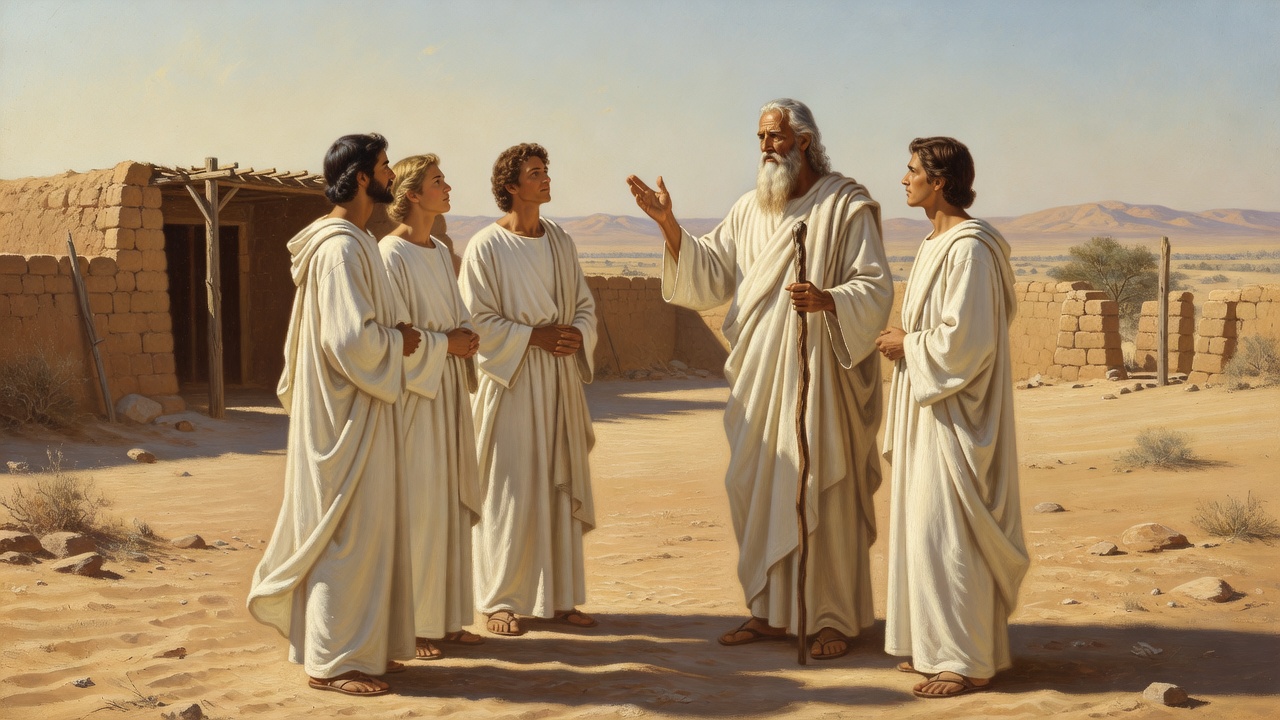
Did you know?
Holiness and Requirements for the Priesthood
- Ordinary priests were permitted to mourn only for immediate blood relatives—parents, children, and unmarried siblings—whereas the high priest was strictly forbidden from defiling himself for any corpse, including his own parents, and could not tear his vestments in grief.Sources: the Bible text itself
- While regular priests were forbidden from marrying divorced women or prostitutes, the high priest faced an even stricter standard: he was permitted to marry only a virgin from his own people.Sources: the Bible text itself
- Descendants of Aaron with physical blemishes or injuries were disqualified from presenting fire offerings at the altar, but they were still fully permitted to share in and eat the holy and most holy food portions.Sources: the Bible text itself
Notes written with AI assistance from open sources (Theographic Bible Metadata, CC BY-SA 4.0; Easton’s Bible Dictionary, public domain) and reviewed before publishing.
Credits and license for this translation
Bible in Basic English
The Bible in Basic English
Public Domain
Language: English
Dialect: simple British
Translation by: Samuel Henry Hooke
The Bible In Basic English was printed in 1965 by Cambridge Press in England. Published without any copyright notice and distributed in America, this work fell immediately and irretrievably into the Public Domain in the United States according to the UCC convention of that time. A call to Cambridge prior to placing this work in etext resulted in an admission of this fact.
2020-04-17
Section headings adapted from the Berean Standard Bible (public domain); they are not part of this translation’s text.
Source: http://ebible.org/engBBE/ · eBible.org