Ecclesiastes 5
Bible in Basic English · Tap a verse to see its cross-references.
Approaching God with Awe
1Put your feet down with care when you go to the house of God, for it is better to give ear than to make the burned offerings of the foolish, whose knowledge is only of doing evil. 2Be not unwise with your mouth, and let not your heart be quick to say anything before God, because God is in heaven and you are on the earth — so let not the number of your words be great. 3As a dream comes from much business, so the voice of a foolish man comes with words in great number. 4When you take an oath before God, put it quickly into effect, because he has no pleasure in the foolish; keep the oath you have taken. 5It is better not to take an oath than to take an oath and not keep it. 6Let not your mouth make your flesh do evil. And say not before the angel, It was an error. So that God may not be angry with your words and put an end to the work of your hands. 7Because much talk comes from dreams and things of no purpose. But let the fear of God be in you.
The Futility of Wealth
8If you see the poor under a cruel yoke, and law and right being violently overturned in a country, be not surprised, because one authority is keeping watch on another and there are higher than they. 9It is good generally for a country where the land is worked to have a king. 10He who has a love for silver never has enough silver, or he who has love for wealth, enough profit. This again is to no purpose. 11When goods are increased, the number of those who take of them is increased; and what profit has the owner but to see them? 12The sleep of a working man is sweet, if he has little food or much; but to him who is full, sleep will not come. 13There is a great evil which I have seen under the sun — wealth kept by the owner to be his downfall. 14And I saw the destruction of his wealth by an evil chance; and when he became the father of a son he had nothing in his hand. 15As he came from his mother at birth, so does he go again; he gets from his work no reward which he may take away in his hand. 16And this again is a great evil, that in all points as he came so will he go; and what profit has he in working for the wind? 17All his days are in the dark, and he has much sorrow, pain, disease, and trouble. 18This is what I have seen: it is good and fair for a man to take meat and drink and to have joy in all his work under the sun, all the days of his life which God has given him; that is his reward. 19Every man to whom God has given money and wealth and the power to have pleasure in it and to do his part and have joy in his work: this is given by God. 20He will not give much thought to the days of his life; because God lets him be taken up with the joy of his heart.
Did you know?
Reverence, Justice, and the Limits of Wealth
- The author cautions against hasty speech in worship, reminding worshippers that God is in heaven while mortals are on earth. Vows made to God were considered serious commitments; the text warns that delaying or failing to fulfill a vow is foolish, making it better not to make a vow at all.Sources: the Bible text itself
- When addressing injustice and the oppression of the poor within a province, the author points to layered government bureaucracy, where each official is watched by a higher authority. Despite this administrative hierarchy, all tiers, including the king, ultimately depend on the produce of the fields.Sources: the Bible text itself
- The chapter contrasts the restless sleeplessness of the wealthy with the sweet sleep of a common laborer, noting that the pursuit of riches brings no lasting satisfaction. True contentment comes when a person accepts their lot and enjoys food, drink, and honest labor as gifts from God.Sources: the Bible text itself
Notes written with AI assistance from open sources (Theographic Bible Metadata, CC BY-SA 4.0; Easton’s Bible Dictionary, public domain) and reviewed before publishing.
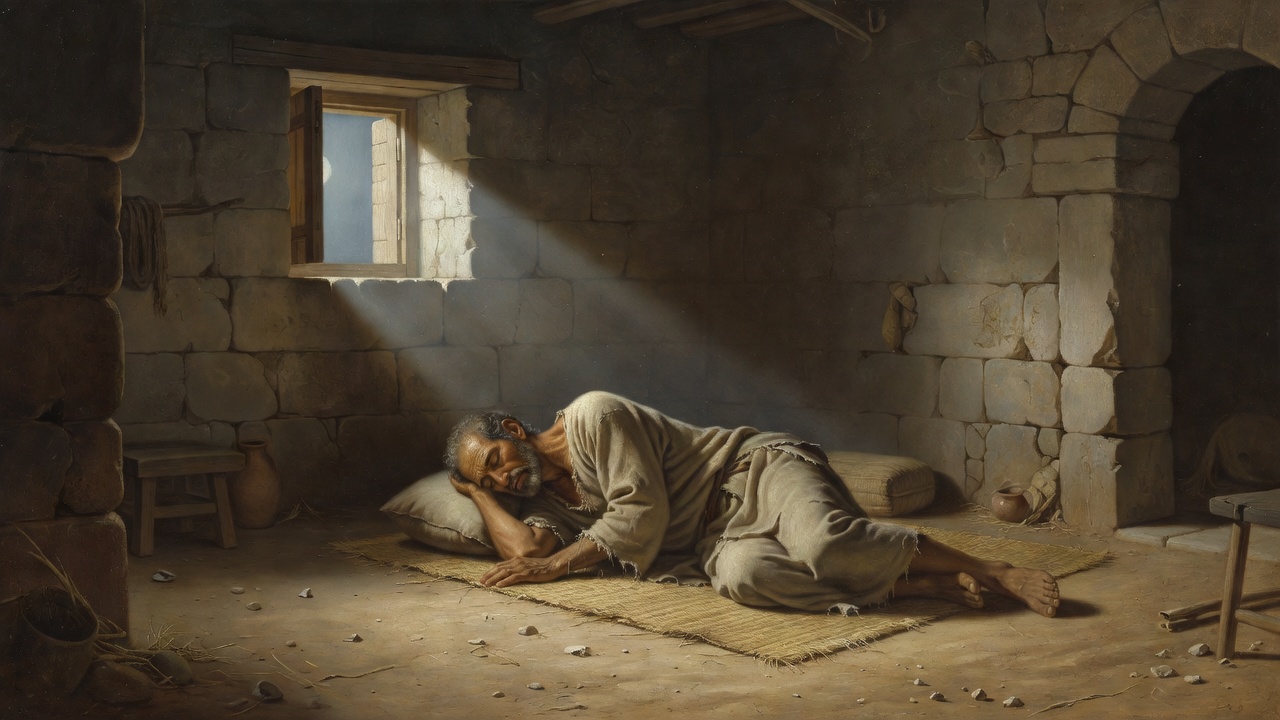
Credits and license for this translation
Bible in Basic English
The Bible in Basic English
Public Domain
Language: English
Dialect: simple British
Translation by: Samuel Henry Hooke
The Bible In Basic English was printed in 1965 by Cambridge Press in England. Published without any copyright notice and distributed in America, this work fell immediately and irretrievably into the Public Domain in the United States according to the UCC convention of that time. A call to Cambridge prior to placing this work in etext resulted in an admission of this fact.
2020-04-17
Section headings adapted from the Berean Standard Bible (public domain); they are not part of this translation’s text.
Source: http://ebible.org/engBBE/ · eBible.org