Psalms 56
LXX2012: Septuagint in British/International English 2012 · Tap a verse to see its cross-references.
(57) For the end. Destroy not: by David, for a memorial, when he fled from the presence of Saul to the cave.
Be Merciful to Me, O God
1Have mercy, upon me, O God, have mercy upon me: for my soul has trusted in you: and in the shadow of your wings will I hope, until the iniquity have passed away.
2I will cry to God most high; the God who has benefitted me. Pause.
3He sent from heaven and saved me; he gave to reproach them that trampled on me: God has sent forth his mercy and his truth;
4and he has delivered my soul from the midst of lions'whelps: I lay down to sleep, though troubled. As for the sons of men, their teeth are arms and missile weapons, and their tongue a sharp sword.
5Be you exalted, O God, above the heavens; and your glory above all the earth.
6They have prepared snares for my feet, and have bowed down my soul: they have dug a pit before my face, and fallen into it themselves. Pause.
7My heart, O God, is ready, my heart is ready: I will sing, yes will sing psalms.
8Awake, my glory; awake, lute and harp: I will awake early.
9O Lord, I will give thanks to you amongst the nations: I will sing to you amongst the Gentiles.
10For your mercy has been magnified even to the heavens, and your truth to the clouds.
11Be you exalted, O God, above the heavens; and your glory above all the earth.
Did you know?
Trusting God in Enemy Territory
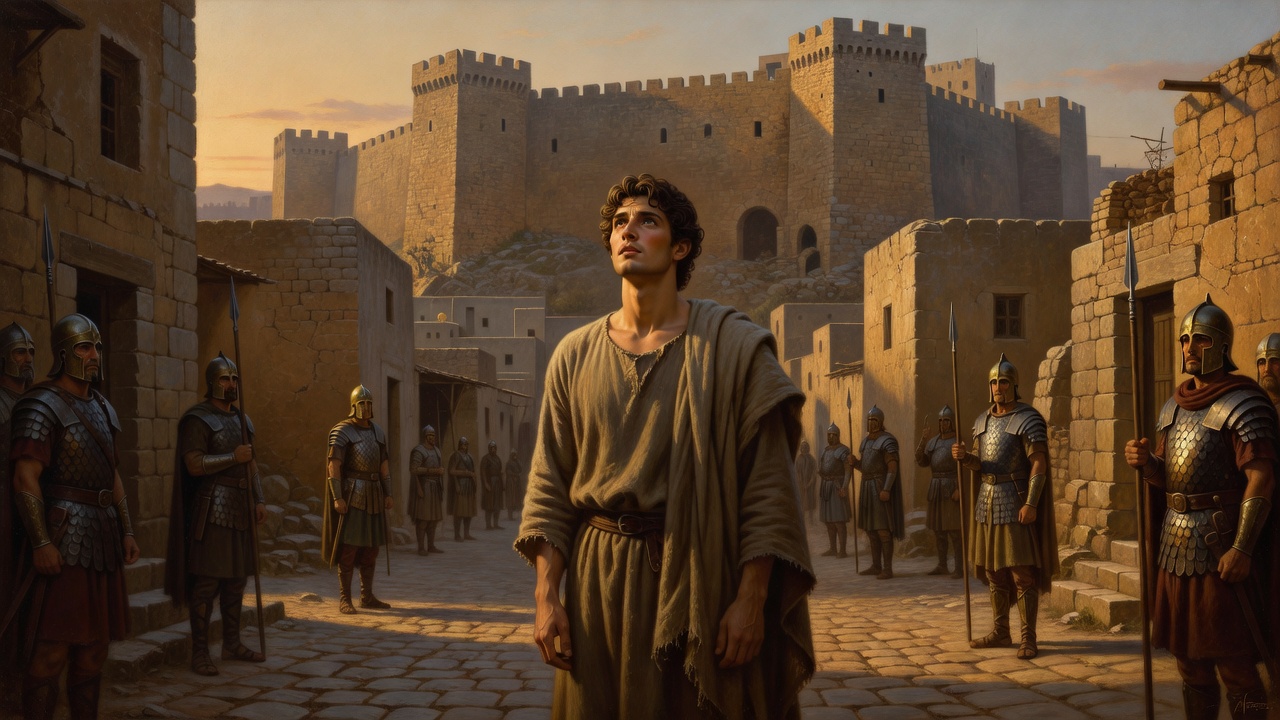
- The superscription links this psalm to David when the Philistines seized him in Gath. Gath was one of the five royal cities of the Philistines and the hometown of Goliath, making David's flight there from King Saul particularly dangerous.Sources: the Bible text itself · Gath
- The psalmist uses vivid personal metaphors, asking God to collect his tears in a bottle and record his wanderings in a book, portraying divine awareness and care in times of distress.Sources: the Bible text itself
Notes written with AI assistance from open sources (Theographic Bible Metadata, CC BY-SA 4.0; Easton’s Bible Dictionary, public domain) and reviewed before publishing.
Credits and license for this translation
LXX2012: Septuagint in British/International English 2012
The Septuagint with Apocrypha, translated from Greek to English by Sir Lancelot C. L. Brenton and published in 1885, with some language updates (British/International English)
Public Domain
Language: English
Dialect (if applicable): British
Language in English: English
Translation by: Sir Lancelot Charles Lee Breton
LXX2012: Septuagint in English 2012, British/International English Edition
This is a translation of the Old Testament and Apocrypha/Deuterocanon from Hebrew to Greek to 19th Century British English, with some updates of spelling and word usage to contemporary British/International English. The original English translation was done by Sir Lancelot Charles Lee Brenton and published by Samuel Bagster & Sons, Ltd., in London in 1851. It has entered the Public Domain due to the passage of sufficient time. In the process of scanning and typing the text, the original poetry and prose formatting, as well as peripheral material like introductions and notes, have been omitted.
This edition of the Septuagint has some language updates. Brenton's word order and punctuation has been mostly retained, meaning that quotation marks are not used, and sentences within quotes may not start with capital letters, as was standard usage in 1851. Names transliterated from Greek to those transliterated from Hebrew in the common English Bibles often differ. These language updates are dedicated to the Public Domain by the author of those edits, Michael Paul Johnson. Therefore this edition may be freely copied, published, etc.
Before considering making changes to the text of this work, I recommend that you consult with God, because this is really His Book.
If you find errors in the text, please report them so that we can correct them.
Donations to help with the expenses of operating this web site and thus help others have free access to the Word of God may be made to us, but are not required. Please see http://MLJohnson.org/partner/ for more about that.
Section headings adapted from the Berean Standard Bible (public domain); they are not part of this translation’s text.
Source: http://ebible.org/eng-uk-lxx2012/ · eBible.org