Psalms 37
LXX2012: Septuagint in British/International English 2012 · Tap a verse to see its cross-references.
(38) A Psalm of David for remembrance concerning the Sabbath-day.
Delight Yourself in the LORD
1O Lord, rebuke me not in your wrath, neither chasten me in your anger.
2For your weapons are fixed in me, and you have pressed your hand heavily upon me.
3For there is no health in my flesh because of your anger; there is no peace to my bones because of my sins.
4For my transgressions have gone over my head: they have pressed heavily upon me like a weighty burden.
5My bruises have become noisome and corrupt, because of my foolishness.
6I have been wretched and bowed down continually: I went with a mourning countenance all the day.
7For my soul is filled with mockings; and there is no health in my flesh.
8I have been afflicted and brought down exceedingly: I have roared for the groaning of my heart.
9But all my desire is before you; and my groaning is not hidden from you.
10My heart is troubled, my strength has failed me; and the light of my eyes is not with me.
11My friends and my neighbours drew near before me, and stood still; and my nearest of kin stood afar off.
12While they pressed hard upon me that sought my soul: and they that sought my hurt spoke vanities, and devised deceits all the day.
13But I, as a deaf man, heard not; and was as a dumb man not opening his mouth.
14And I was as a man that hears not, and who has no reproofs in his mouth.
15For I hoped in you, O Lord: you will hear, O Lord my God.
16For I said, Lest my enemies rejoice against me: for when my feet were moved, they spoke boastingly against me.
17For I am ready for plagues, and my grief is continually before me.
18For I will declare my iniquity, and be distressed for my sin.
19But my enemies live, and are mightier than I: and they that hate me unjustly are multiplied.
20They that reward evil for good slandered me; because I followed righteousness.
21Forsake me not, O Lord my God: depart not from me.
22Draw near to my help, O Lord of my salvation.
Did you know?
Wisdom on the Fate of the Righteous and the Wicked
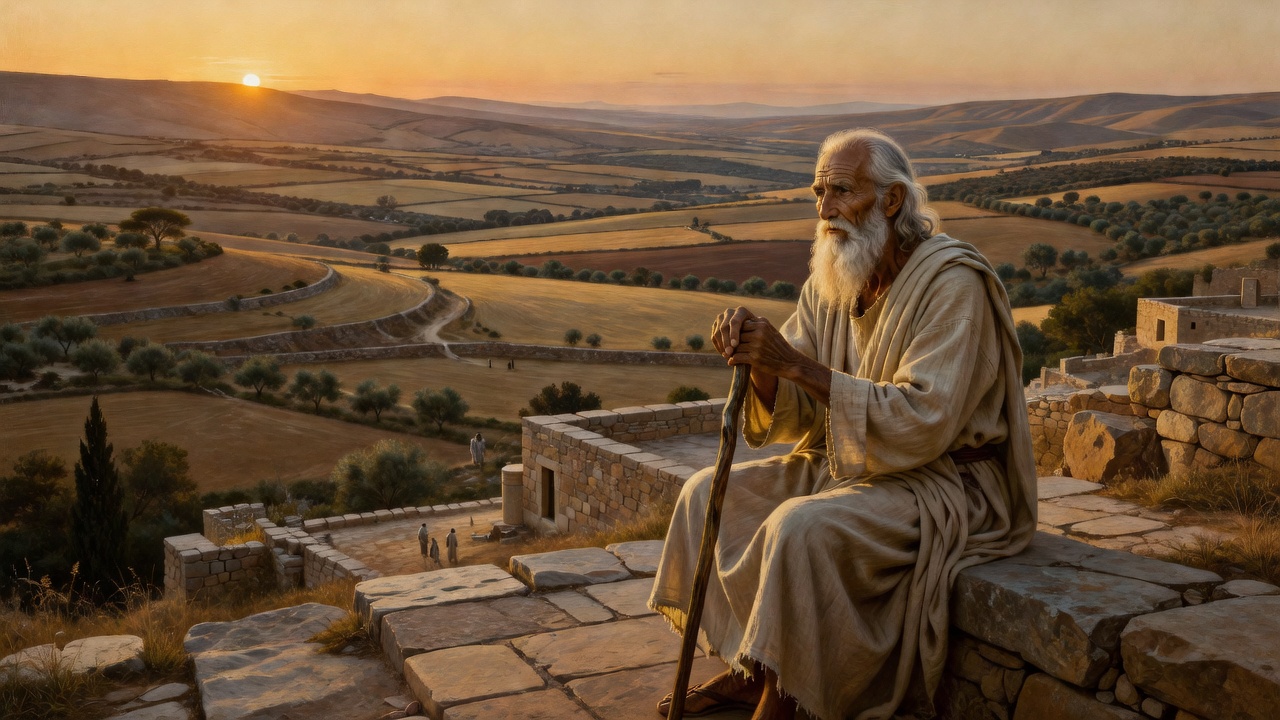
- The psalm is framed as reflection from a lifetime of observation, with the speaker noting that from youth to old age he has watched how the righteous and the wicked fare. Rather than a direct prayer or lament, it functions as wisdom poetry offering counsel to remain patient and avoid fretting over the temporary success of evil.Sources: the Bible text itself
- Throughout the poem, the promise of inheriting and dwelling securely in the land is repeated as the lasting outcome for the humble and righteous. By contrast, the transient prosperity of the wicked is illustrated through agricultural imagery, such as grass that withers quickly, vanishing smoke, and a flourishing tree that abruptly disappears.Sources: the Bible text itself
Notes written with AI assistance from open sources (Theographic Bible Metadata, CC BY-SA 4.0; Easton’s Bible Dictionary, public domain) and reviewed before publishing.
Places in this chapter
- Lebanon · 33.540, 35.584 · verse 35
Only places identified with high confidence are shown (90% or more according to the scholarly sources compiled by OpenBible). Period map: DARE (Digital Atlas of the Roman Empire), CC BY 4.0; modern map: © OpenStreetMap contributors; places: OpenBible.info (CC BY 4.0).
Credits and license for this translation
LXX2012: Septuagint in British/International English 2012
The Septuagint with Apocrypha, translated from Greek to English by Sir Lancelot C. L. Brenton and published in 1885, with some language updates (British/International English)
Public Domain
Language: English
Dialect (if applicable): British
Language in English: English
Translation by: Sir Lancelot Charles Lee Breton
LXX2012: Septuagint in English 2012, British/International English Edition
This is a translation of the Old Testament and Apocrypha/Deuterocanon from Hebrew to Greek to 19th Century British English, with some updates of spelling and word usage to contemporary British/International English. The original English translation was done by Sir Lancelot Charles Lee Brenton and published by Samuel Bagster & Sons, Ltd., in London in 1851. It has entered the Public Domain due to the passage of sufficient time. In the process of scanning and typing the text, the original poetry and prose formatting, as well as peripheral material like introductions and notes, have been omitted.
This edition of the Septuagint has some language updates. Brenton's word order and punctuation has been mostly retained, meaning that quotation marks are not used, and sentences within quotes may not start with capital letters, as was standard usage in 1851. Names transliterated from Greek to those transliterated from Hebrew in the common English Bibles often differ. These language updates are dedicated to the Public Domain by the author of those edits, Michael Paul Johnson. Therefore this edition may be freely copied, published, etc.
Before considering making changes to the text of this work, I recommend that you consult with God, because this is really His Book.
If you find errors in the text, please report them so that we can correct them.
Donations to help with the expenses of operating this web site and thus help others have free access to the Word of God may be made to us, but are not required. Please see http://MLJohnson.org/partner/ for more about that.
Section headings adapted from the Berean Standard Bible (public domain); they are not part of this translation’s text.
Source: http://ebible.org/eng-uk-lxx2012/ · eBible.org