Proverbs 9
LXX2012: Septuagint in British/International English 2012 · Tap a verse to see its cross-references.
The Way of Wisdom
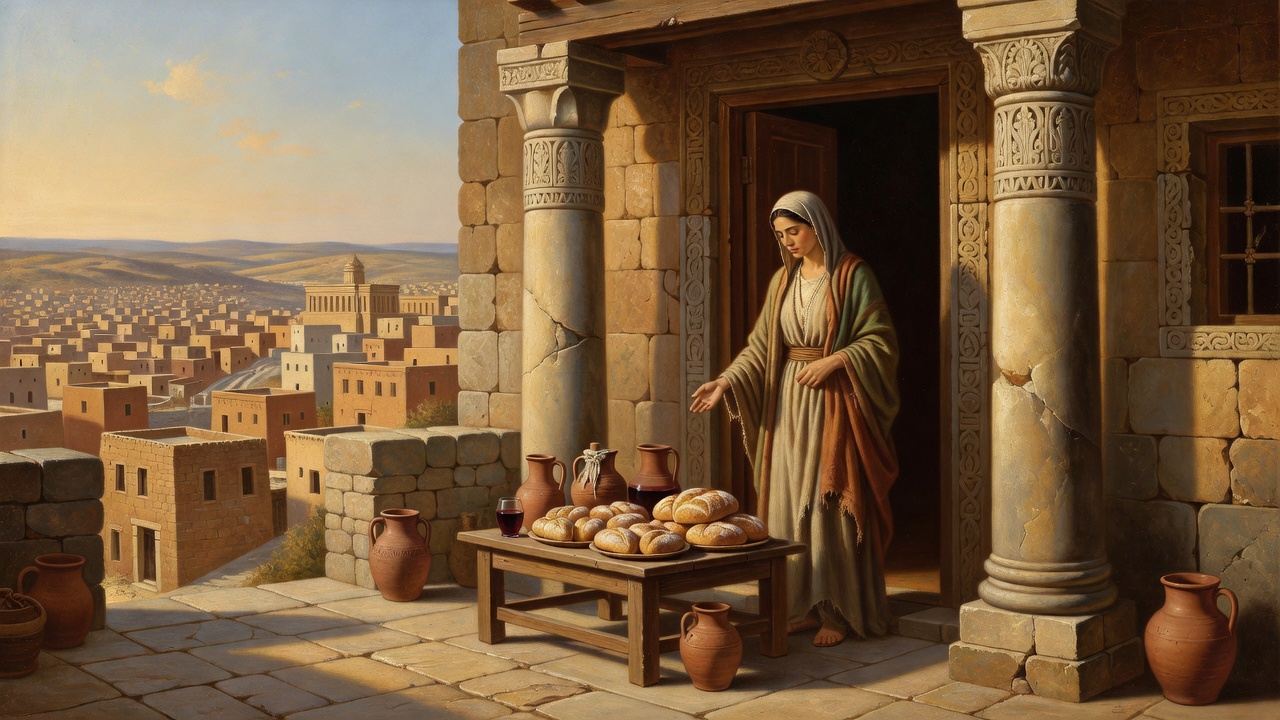
1Wisdom has built a house for herself, and set up seven pillars. 2She has killed her beasts; she has mingled her wine in a bowl, and prepared her table. 3She has sent forth her servants, calling with a loud proclamation to the feast, saying, 4Whoso is foolish, let him turn aside to me: and to them that lack understanding she says, 5Come, eat of my bread, and drink wine which I have mingled for you. 6Leave folly, that you⌃ may reign for ever; and seek wisdom, and improve understanding by knowledge. 7He that reproves evil men shall get dishonour to himself; and he that rebukes an ungodly man shall disgrace himself. 8Rebuke not evil men, lest they should hate you: rebuke a wise man, and he will love you. 9Give an opportunity to a wise man, and he will be wiser: instruct a just man, and he will receive more instruction. 10The fear of the Lord is the beginning of wisdom, and the counsel of saints is understanding: for to know the law is the character of a sound mind. 11For in this way you shall live long, and years of your life shall be added to you. 12Son, if you be wise for yourself, you shall also be wise for your neighbours; and if you should prove wicked, you alone will bear the evil. He that stays himself upon falsehoods, attempts to rule the winds, and the same will pursue birds in their fight: for he has forsaken the ways of his own vineyard, and he has caused the axles of his own husbandry to go astray; and he goes through a dry desert, and a land appointed to drought, and he gathers barrenness with his hands.
The Way of Folly
13A foolish and bold woman, who knows not modesty, comes to lack a morsel. 14She sits at the doors of her house, on a seat openly in the streets, 15calling to passers by, and to those that are going right on their ways; 16saying, Whoso is most senseless of you, let him turn aside to me; and I exhort those that lack prudence, saying, 17Take and enjoy secret bread, and the sweet water of theft. 18But he knows that mighty men die by her, and he falls in with a snare of hell. But hasten away, delay not in the place, neither fix your eye upon her: for thus shall you go through strange water; but do you abstain from strange water, and drink not of a strange fountain, that you may live long, and years of life may be added to you.
Did you know?
The Invitations of Wisdom and Folly
- Proverbs 9 contrasts two personified figures, Wisdom and Folly, who each present a rival banquet. Both women issue public invitations from the highest places of the city, appealing directly to the simple and those lacking judgment to make a choice between their paths.Sources: the Bible text itself
- The two feasts offer starkly different outcomes. Wisdom invites guests to a prepared house with seven carved pillars to eat her meat, drink mixed wine, and gain life, whereas Folly seductively offers stolen water and secret food, concealing that her guests end up in the depths of the grave.Sources: the Bible text itself
- The chapter highlights differing responses to instruction: correcting a mocker brings insult and hatred, whereas teaching a wise person increases their understanding. The foundation of true discernment is described as the fear of the LORD and the knowledge of the Holy One.Sources: the Bible text itself
Notes written with AI assistance from open sources (Theographic Bible Metadata, CC BY-SA 4.0; Easton’s Bible Dictionary, public domain) and reviewed before publishing.
Credits and license for this translation
LXX2012: Septuagint in British/International English 2012
The Septuagint with Apocrypha, translated from Greek to English by Sir Lancelot C. L. Brenton and published in 1885, with some language updates (British/International English)
Public Domain
Language: English
Dialect (if applicable): British
Language in English: English
Translation by: Sir Lancelot Charles Lee Breton
LXX2012: Septuagint in English 2012, British/International English Edition
This is a translation of the Old Testament and Apocrypha/Deuterocanon from Hebrew to Greek to 19th Century British English, with some updates of spelling and word usage to contemporary British/International English. The original English translation was done by Sir Lancelot Charles Lee Brenton and published by Samuel Bagster & Sons, Ltd., in London in 1851. It has entered the Public Domain due to the passage of sufficient time. In the process of scanning and typing the text, the original poetry and prose formatting, as well as peripheral material like introductions and notes, have been omitted.
This edition of the Septuagint has some language updates. Brenton's word order and punctuation has been mostly retained, meaning that quotation marks are not used, and sentences within quotes may not start with capital letters, as was standard usage in 1851. Names transliterated from Greek to those transliterated from Hebrew in the common English Bibles often differ. These language updates are dedicated to the Public Domain by the author of those edits, Michael Paul Johnson. Therefore this edition may be freely copied, published, etc.
Before considering making changes to the text of this work, I recommend that you consult with God, because this is really His Book.
If you find errors in the text, please report them so that we can correct them.
Donations to help with the expenses of operating this web site and thus help others have free access to the Word of God may be made to us, but are not required. Please see http://MLJohnson.org/partner/ for more about that.
Section headings adapted from the Berean Standard Bible (public domain); they are not part of this translation’s text.
Source: http://ebible.org/eng-uk-lxx2012/ · eBible.org