Joshua 20
LXX2012: Septuagint in British/International English 2012 · Tap a verse to see its cross-references.
Six Cities of Refuge
1And the Lord spoke to Joshua, saying, 2Speak to the children of Israel, saying, Assign the cities of refuge, of which I spoke to you by Moses. 3Even a refuge to the slayer who has struck a man unintentionally; and the cities shall be to you a refuge, and the slayer shall not be put to death by the avenger of blood, until he have stood before the congregation for judgement. 4And Joshua separated Cades in Galilee in the mount Nephthali, and Sychem in the mount Ephraim, and the city of Arboc; this is Chebron, in the mountain of Juda. 5And beyond Jordan he appointed Bosor in the wilderness in the plain out of the tribe of Ruben, and Aremoth in Galaad out of the tribe of Gad, and Gaulon in the country of Basan out of the tribe of Manasse. 6These were the cities selected for the sons of Israel, and for the stranger dwelling amongst them, that every one who smites a soul unintentionally should flee there, that he should not die by the hand of the avenger of blood, until he should stand before the congregation for judgement.
Did you know?
The Cities of Refuge
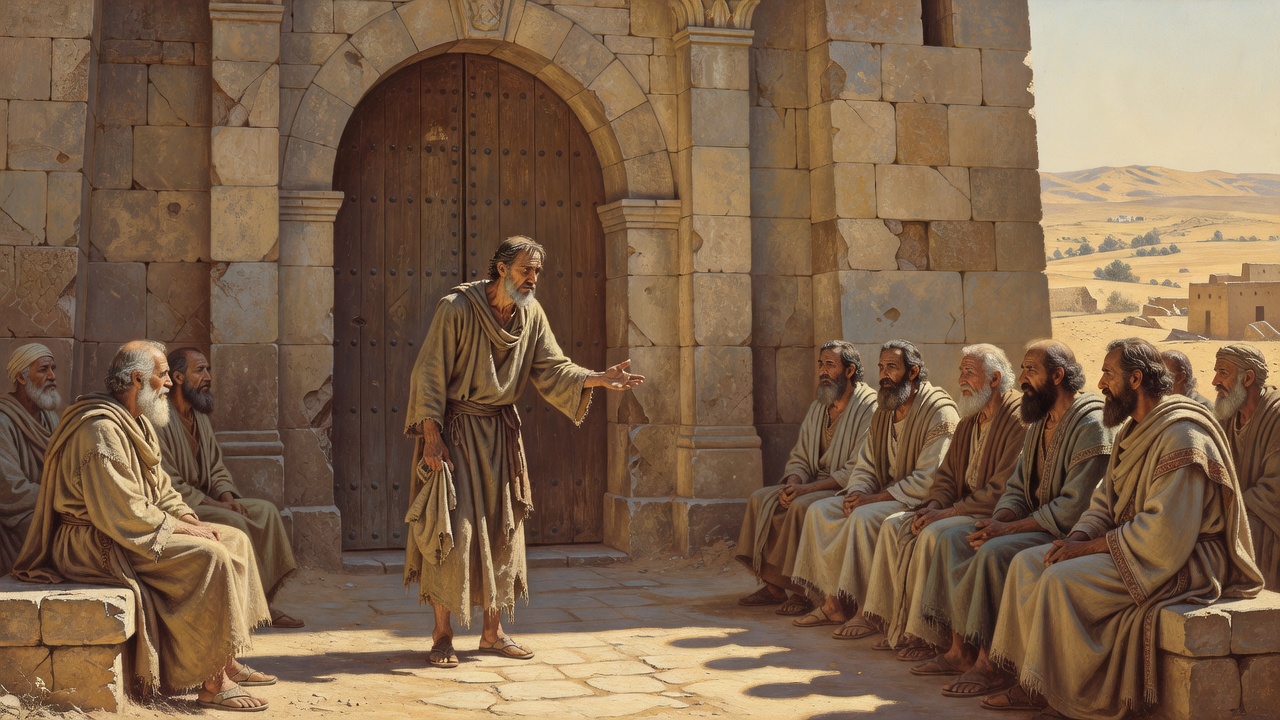
- The cities of refuge provided sanctuary for anyone who caused an accidental death, protecting them from retaliation by the victim's avenger of blood. A fugitive had to present their case to the elders at the city gate and could remain safely inside until standing trial before the assembly and until the death of the serving high priest.Sources: the Bible text itself
- Six cities were designated across the land, divided evenly with three on each side of the Jordan River. Kedesh, Shechem, and Hebron served the hill country west of the Jordan, while Bezer, Ramoth in Gilead, and Golan in Bashan served the eastern tribes.Sources: the Bible text itself · Hebron · Shechem · Kedesh
- The legal protection provided by the cities of refuge applied equally to native Israelites and to foreigners residing among them.Sources: the Bible text itself
Notes written with AI assistance from open sources (Theographic Bible Metadata, CC BY-SA 4.0; Easton’s Bible Dictionary, public domain) and reviewed before publishing.
Places in this chapter
- Galilee · 32.760, 35.527 · verse 7
- Hebron · Today: Tel Rumeida · 31.525, 35.102 · verse 7
- Kedesh · Today: Tel Kedesh · 33.112, 35.530 · verse 7
- Shechem · Today: Tell Balatah · 32.214, 35.282 · verse 7
- Bashan · 32.781, 35.935 · verse 8
- Gilead · Today: Gilead 1 · 32.187, 35.692 · verse 8
- Jericho · Today: Tell es Sultan · 31.872, 35.445 · verse 8
- Jordan · Today: Jordan River · 31.761, 35.558 · verse 8
- Ramoth · Today: Tall er Rumeith · 32.500, 36.015 · verse 8
Only places identified with high confidence are shown (90% or more according to the scholarly sources compiled by OpenBible). Period map: DARE (Digital Atlas of the Roman Empire), CC BY 4.0; modern map: © OpenStreetMap contributors; places: OpenBible.info (CC BY 4.0).
Credits and license for this translation
LXX2012: Septuagint in British/International English 2012
The Septuagint with Apocrypha, translated from Greek to English by Sir Lancelot C. L. Brenton and published in 1885, with some language updates (British/International English)
Public Domain
Language: English
Dialect (if applicable): British
Language in English: English
Translation by: Sir Lancelot Charles Lee Breton
LXX2012: Septuagint in English 2012, British/International English Edition
This is a translation of the Old Testament and Apocrypha/Deuterocanon from Hebrew to Greek to 19th Century British English, with some updates of spelling and word usage to contemporary British/International English. The original English translation was done by Sir Lancelot Charles Lee Brenton and published by Samuel Bagster & Sons, Ltd., in London in 1851. It has entered the Public Domain due to the passage of sufficient time. In the process of scanning and typing the text, the original poetry and prose formatting, as well as peripheral material like introductions and notes, have been omitted.
This edition of the Septuagint has some language updates. Brenton's word order and punctuation has been mostly retained, meaning that quotation marks are not used, and sentences within quotes may not start with capital letters, as was standard usage in 1851. Names transliterated from Greek to those transliterated from Hebrew in the common English Bibles often differ. These language updates are dedicated to the Public Domain by the author of those edits, Michael Paul Johnson. Therefore this edition may be freely copied, published, etc.
Before considering making changes to the text of this work, I recommend that you consult with God, because this is really His Book.
If you find errors in the text, please report them so that we can correct them.
Donations to help with the expenses of operating this web site and thus help others have free access to the Word of God may be made to us, but are not required. Please see http://MLJohnson.org/partner/ for more about that.
Section headings adapted from the Berean Standard Bible (public domain); they are not part of this translation’s text.
Source: http://ebible.org/eng-uk-lxx2012/ · eBible.org