Job 32
LXX2012: Septuagint in British/International English 2012 · Tap a verse to see its cross-references.
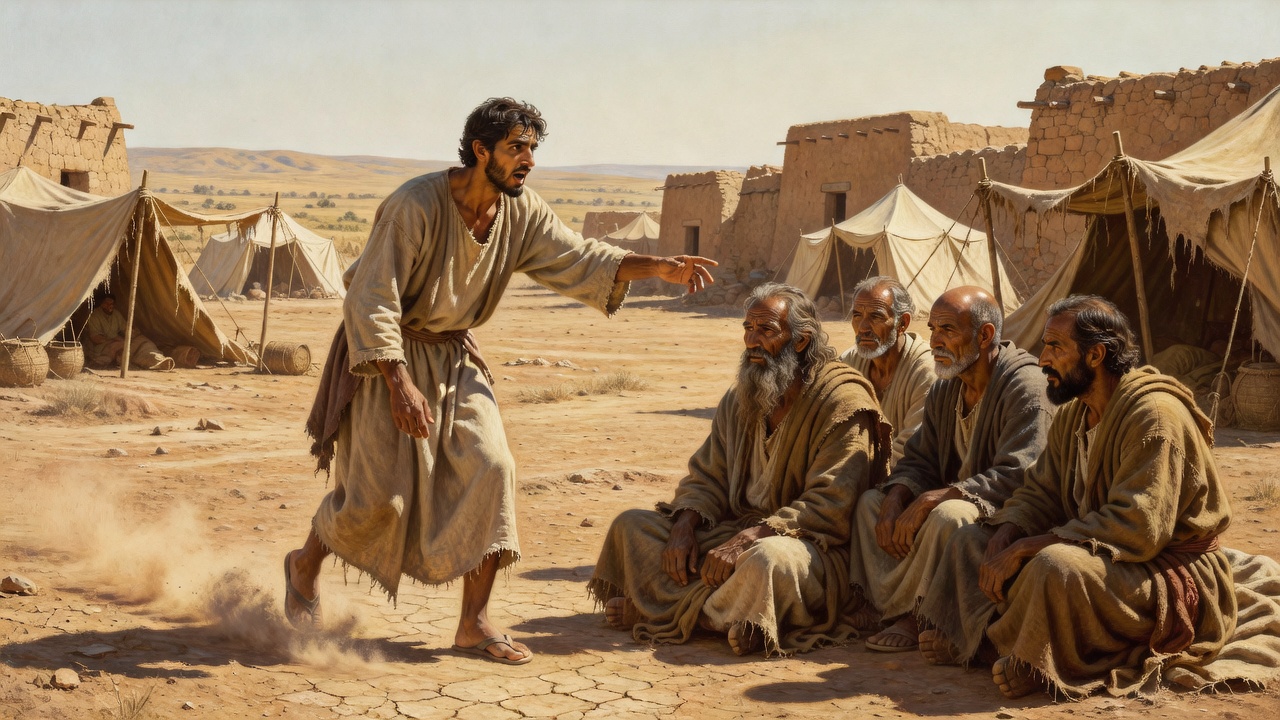
Elihu Rebukes Job’s Friends
1And his three friends also ceased any longer to answer Job: for Job was righteous before them. 2Then Elius the son of Barachiel, the Buzite, of the kindred of Ram, of the country of Ausis, was angered: and he was very angry with Job, because he justified himself before the Lord. 3And he was also very angry with his three friends, because they were not able to return answers to Job, yet set him down for an ungodly man. 4But Elius had forborne to give an answer to Job, because they were older than he. 5And Elius saw that there was no answer in the mouth of the three men; and he was angered in his wrath. 6And Elius the Buzite the son of Barachiel answered and said, I am younger in age, and you⌃ are elder, therefore I kept silence, fearing to declare to you my own knowledge. 7And I said, It is not time that speaks, though in many years men know wisdom: 8but there is a spirit in mortals; and the inspiration of the Almighty is that which teaches. 9The long-lived are not wise as such; neither do the aged know judgement. 10Therefore I said, Hear me, and I will tell you what I know. 11Listen to my words; for I will speak in your hearing, until you⌃ shall have tried the matter with words: 12and I shall understand as far as you; and, behold, there was no one of you that answered Job his words in argument, 13lest you⌃ should say, We have found that we have added wisdom to the Lord. 14And you⌃ have commissioned a man to speak such words. 15They were afraid, they answered no longer; they gave up their speaking. 16I waited, (for I had not spoken,) because they stood still, they answered not. 17And Elius continued, and said, I will again speak, 18for I am full of words, for the spirit of my belly destroys me. 19And my belly is as a skin of sweet wine, bound up and ready to burst; or as a brazier's labouring bellows. 20I will speak, that I may open my lips and relieve myself. 21For truly I will not be awed because of man, nor indeed will I be confounded before a mortal. 22For I know not how to respect persons: and if otherwise, even the moths would eat me.
Did you know?
Elihu Enters the Debate
- Elihu son of Barachel the Buzite, from the family of Ram, appears for the first time after Job's three friends cease answering him. His speeches span from chapter 32 through chapter 37.Sources: the Bible text itself · Elihu · Barachel · Ram
- Elihu is angry with both sides of the debate: he is furious with Job for justifying himself rather than God, and angry with the three older companions because they condemned Job without refuting his arguments.Sources: the Bible text itself
- Out of cultural deference to seniority, Elihu remained silent during the earlier debates believing that age taught wisdom. He speaks only when the others have run out of words, arguing that true understanding comes from the breath and spirit of the Almighty rather than age alone.Sources: the Bible text itself
Notes written with AI assistance from open sources (Theographic Bible Metadata, CC BY-SA 4.0; Easton’s Bible Dictionary, public domain) and reviewed before publishing.
Credits and license for this translation
LXX2012: Septuagint in British/International English 2012
The Septuagint with Apocrypha, translated from Greek to English by Sir Lancelot C. L. Brenton and published in 1885, with some language updates (British/International English)
Public Domain
Language: English
Dialect (if applicable): British
Language in English: English
Translation by: Sir Lancelot Charles Lee Breton
LXX2012: Septuagint in English 2012, British/International English Edition
This is a translation of the Old Testament and Apocrypha/Deuterocanon from Hebrew to Greek to 19th Century British English, with some updates of spelling and word usage to contemporary British/International English. The original English translation was done by Sir Lancelot Charles Lee Brenton and published by Samuel Bagster & Sons, Ltd., in London in 1851. It has entered the Public Domain due to the passage of sufficient time. In the process of scanning and typing the text, the original poetry and prose formatting, as well as peripheral material like introductions and notes, have been omitted.
This edition of the Septuagint has some language updates. Brenton's word order and punctuation has been mostly retained, meaning that quotation marks are not used, and sentences within quotes may not start with capital letters, as was standard usage in 1851. Names transliterated from Greek to those transliterated from Hebrew in the common English Bibles often differ. These language updates are dedicated to the Public Domain by the author of those edits, Michael Paul Johnson. Therefore this edition may be freely copied, published, etc.
Before considering making changes to the text of this work, I recommend that you consult with God, because this is really His Book.
If you find errors in the text, please report them so that we can correct them.
Donations to help with the expenses of operating this web site and thus help others have free access to the Word of God may be made to us, but are not required. Please see http://MLJohnson.org/partner/ for more about that.
Section headings adapted from the Berean Standard Bible (public domain); they are not part of this translation’s text.
Source: http://ebible.org/eng-uk-lxx2012/ · eBible.org