Job 21
LXX2012: Septuagint in British/International English 2012 · Tap a verse to see its cross-references.
Job: God Will Punish the Wicked
1But Job answered and said, 2Hear you⌃, hear you⌃ my words, that I may not have this consolation from you. 3Raise me, and I will speak; then you⌃ shall not laugh me to scorn. 4What! is my reproof of man? and why should I not be angry? 5Look upon me, and wonder, laying your hand upon your cheek. 6For even when I remember, I am alarmed, and pains seize my flesh. 7Therefore do the ungodly live, and grow old even in wealth? 8Their seed is according to their desire, and their children are in their sight. 9Their houses are prosperous, neither have they any where cause for fear, neither is there a scourge from the Lord upon them. 10Their cow does not cast her calf, and their beast with young is safe, and does not miscarry. 11And they remain as an unfailing flock, and their children play before them, taking up the lute and harp; 12and they rejoice at the voice of a song. 13And they spend their days in wealth, and fall asleep in the rest of the grave. 14Yet such a man says to the Lord, Depart from me; I desire not to know your ways. 15What is the Mighty One, that we should serve him? and what profit is there that we should approach him? 16For their good things were in their hands, but he regards not the works of the ungodly. 17Nevertheless, the lamp of the ungodly also shall be put out, and destruction shall come upon them, and pangs of vengeance shall seize them. 18And they shall be as chaff before the wind, or as dust which the storm has taken up. 19Let his substance fail to supply his children: God shall recompense him, and he shall know it. 20Let his eyes see his own destruction, and let him not be saved by the Lord. 21For his desire is in his house with him, and the number of his months has been suddenly cut off. 22Is it not the Lord who teaches understanding and knowledge? and does not he judge murders? 23One shall die in his perfect strength, and wholly at ease and prosperous; 24and his inwards are full of fat, and his marrow is diffused throughout him. 25And another dies in bitterness of soul, not eating any good thing. 26But they lie down in the earth together, and corruption covers them. 27So I know you, that you⌃ presumptuously attack me: 28so that you⌃ will say, Where is the house of the prince? and where is the covering of the tabernacles of the ungodly? 29Ask those that go by the way, and do not disown their tokens. 30For the wicked hastens to the day of destruction: they shall be led away for the day of his vengeance. 31Who will tell him his way to his face, whereas he has done it? who shall recompense him? 32And he has been led away to the tombs, and he has watched over the heaps. 33The stones of the valley have been sweet to him, and every man shall depart after him, and there are innumerable ones before him. 34How then do you⌃ comfort me in vain? whereas I have no rest from your molestation.
Did you know?
The Prosperity of the Wicked
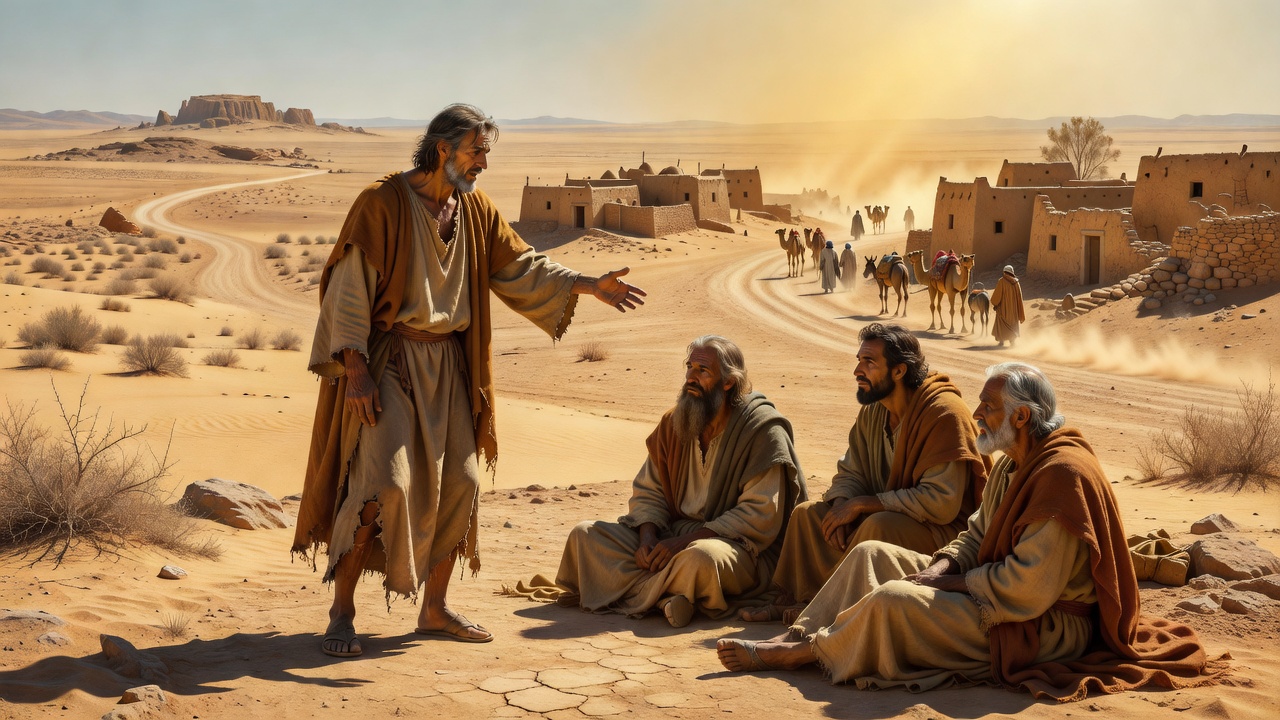
- Job challenges his friends' belief that the wicked always suffer in this life. He points out that many ungodly people grow old, increase in power, see their children flourish to the sound of lyres and flutes, and die in peaceful ease.Sources: the Bible text itself
- Confronting the idea that God reserves punishment for a person's children, Job argues that true accountability requires wrongdoers to experience retribution personally and taste the wrath of the Almighty during their own lives.Sources: the Bible text itself
- Job urges his companions to ask road travelers about common observations. He notes that whether an individual lives in vigorous prosperity or dies in bitter poverty, both ultimately share the same earthly end when they lie down together in the dust.Sources: the Bible text itself
Notes written with AI assistance from open sources (Theographic Bible Metadata, CC BY-SA 4.0; Easton’s Bible Dictionary, public domain) and reviewed before publishing.
Credits and license for this translation
LXX2012: Septuagint in British/International English 2012
The Septuagint with Apocrypha, translated from Greek to English by Sir Lancelot C. L. Brenton and published in 1885, with some language updates (British/International English)
Public Domain
Language: English
Dialect (if applicable): British
Language in English: English
Translation by: Sir Lancelot Charles Lee Breton
LXX2012: Septuagint in English 2012, British/International English Edition
This is a translation of the Old Testament and Apocrypha/Deuterocanon from Hebrew to Greek to 19th Century British English, with some updates of spelling and word usage to contemporary British/International English. The original English translation was done by Sir Lancelot Charles Lee Brenton and published by Samuel Bagster & Sons, Ltd., in London in 1851. It has entered the Public Domain due to the passage of sufficient time. In the process of scanning and typing the text, the original poetry and prose formatting, as well as peripheral material like introductions and notes, have been omitted.
This edition of the Septuagint has some language updates. Brenton's word order and punctuation has been mostly retained, meaning that quotation marks are not used, and sentences within quotes may not start with capital letters, as was standard usage in 1851. Names transliterated from Greek to those transliterated from Hebrew in the common English Bibles often differ. These language updates are dedicated to the Public Domain by the author of those edits, Michael Paul Johnson. Therefore this edition may be freely copied, published, etc.
Before considering making changes to the text of this work, I recommend that you consult with God, because this is really His Book.
If you find errors in the text, please report them so that we can correct them.
Donations to help with the expenses of operating this web site and thus help others have free access to the Word of God may be made to us, but are not required. Please see http://MLJohnson.org/partner/ for more about that.
Section headings adapted from the Berean Standard Bible (public domain); they are not part of this translation’s text.
Source: http://ebible.org/eng-uk-lxx2012/ · eBible.org