Jeremiah 25
LXX2012: Septuagint in British/International English 2012 · Tap a verse to see its cross-references.
Seventy Years of Captivity
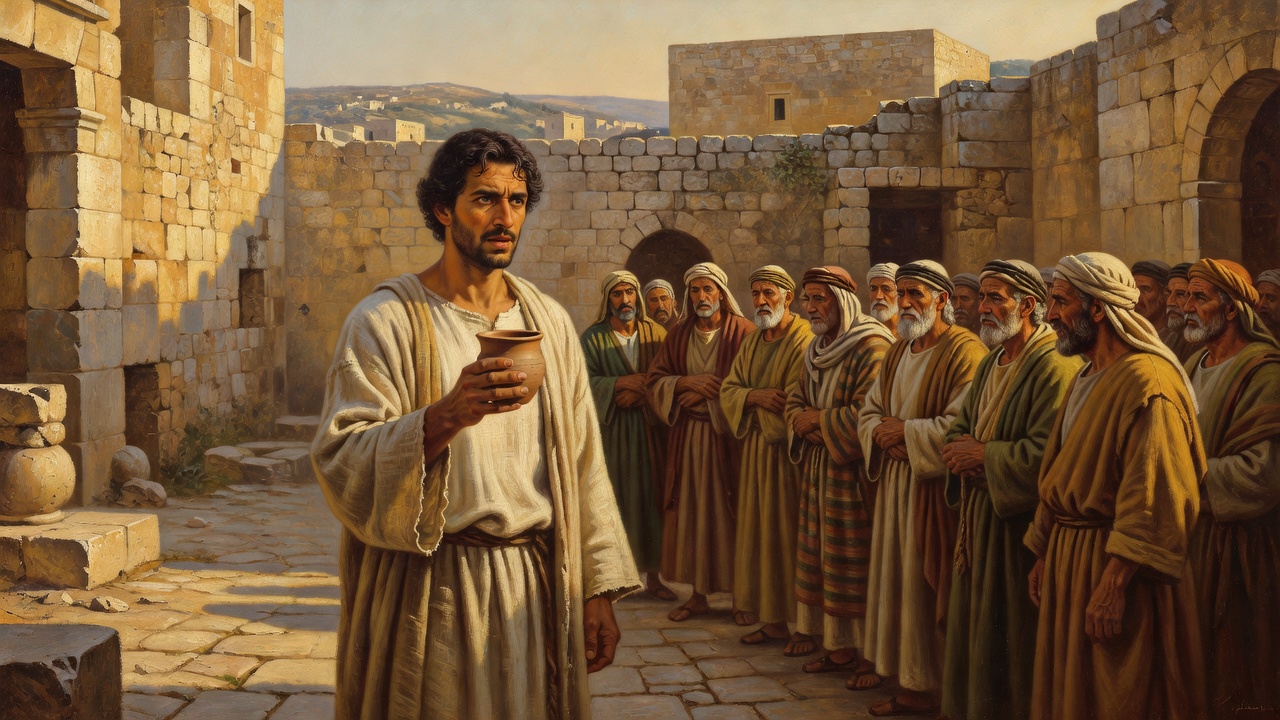
1THE WORD THAT CAME TO JEREMIAS concerning all the people of Juda in the fourth year of Joakim, son of Josias, king of Juda; 2which he spoke to all the people of Juda, and to the inhabitants of Jerusalem, saying, 3In the thirteenth year of Josias, son of Amos, king of Juda, even until this day for three and twenty years, I have both spoken to you, rising early and speaking, 4and I sent to you my servants the prophets, sending them early; (but you⌃ listened not, and listened not with your ears;) saying, 5Turn you⌃ every one from his evil way, and from your evil practices, and you⌃ shall dwell in the land which I gave to you and your fathers, of old and for ever. 6Go you⌃ not after strange gods, to serve them, and to worship them, that you⌃ provoke me not by the works of your hands, to do you hurt. 7But you⌃ listened not to me. 8Therefore thus says the Lord; Since you⌃ believed not my words, 9behold I will send and take a family from the north, and will bring them against this land, and against the inhabitants of it, and against all the nations round about it, and I will make them utterly waste, and make them a desolation, and a hissing, and an everlasting reproach. 10And I will destroy from amongst them the voice of joy, and the voice of gladness, the voice of the bridegroom, and the voice of the bride, the scent of ointment, and the light of a candle. 11And all the land shall be a desolation; and they shall serve amongst the Gentiles seventy years. 12And when the seventy years are fulfilled, I will take vengeance on that nation, and will make them a perpetual desolation. 13And I will bring upon that land all my words which I have spoken against it, even all things that are written in this book.
The Cry of the Shepherds
34THE PROPHECIES OF JEREMIAS AGAINST THE NATIONS OF AeLAM. 35Thus says the Lord, The bow of Aelam is broken, even the chief of their power. 36And I will bring upon Aelam the four winds from the four corners of heaven, and I will disperse them towards all these winds; and there shall be no nation to which they shall not come— even the outcasts of Aelam. 37And I will put them in fear before their enemies that seek their life; and I will bring evils upon them according to my great anger; and I will send forth my sword after them, until I have utterly destroyed them. 38And I will set my throne in Aelam, and will send forth thence king and rulers. 39But it shall come to pass at the end of days, that I will turn the captivity of Aelam, says the Lord.
Did you know?
Seventy Years of Exile and the Cup of Wrath
- The prophecy is specifically dated to the fourth year of King Jehoiakim of Judah, coinciding with the first year of Nebuchadnezzar king of Babylon. Jeremiah remarks that he had been persistently delivering God's warnings for twenty-three years, beginning in the thirteenth year of King Josiah.Sources: the Bible text itself · Jeremiah · Jehoiakim · Nebuchadnezzar
- This chapter introduces the prominent prophecy that Judah and neighboring nations would serve the king of Babylon for seventy years. The text also foretells that once those seventy years were completed, Babylon itself and the land of the Chaldeans would be punished and reduced to desolation.Sources: the Bible text itself · Babylon
- The judgment vision extends far beyond Judah through the symbol of a cup of wrath given to many surrounding peoples. These included Egypt, the Philistine cities of Ashkelon, Gaza, and Ashdod, as well as regional neighbors such as Edom and Moab.Sources: the Bible text itself · Ashdod · Ashkelon · Gaza
Notes written with AI assistance from open sources (Theographic Bible Metadata, CC BY-SA 4.0; Easton’s Bible Dictionary, public domain) and reviewed before publishing.
Places in this chapter
- Babylon · 32.543, 44.422 · verses 1, 9, 11, 12, 14
- Jerusalem · 31.777, 35.234 · verses 2, 18, 29
- Chaldea · 30.962, 46.104 · verse 12
- Egypt · 30.129, 31.308 · verses 19, 20
- Ashdod · Today: Tel Ashdod · 31.757, 34.658 · verse 20
- Ashkelon · Today: Tel Ashkelon · 31.664, 34.546 · verse 20
- Ekron · Today: Tel Miqne · 31.777, 34.852 · verse 20
- Gaza · Today: Tell Harube · 31.504, 34.464 · verse 20
- Ammon · 31.955, 35.934 · verse 21
- Edom · 30.746, 35.604 · verse 21
- Moab · Today: Moab 1 · 31.181, 35.701 · verse 21
- Sidon · Today: Sandikli archaeological site in Sidon · 33.561, 35.372 · verse 22
- Tyre · 33.271, 35.196 · verse 22
- Tema · Today: Tayma · 27.630, 38.552 · verse 23
- Arabia · Today: Arabian Peninsula · 23.000, 46.000 · verse 24
- Elam · 32.189, 48.258 · verse 25
- Media · 34.806, 48.516 · verse 25
- Sheshach · Today: Babylon · 32.543, 44.422 · verse 26
Only places identified with high confidence are shown (90% or more according to the scholarly sources compiled by OpenBible). Period map: DARE (Digital Atlas of the Roman Empire), CC BY 4.0; modern map: © OpenStreetMap contributors; places: OpenBible.info (CC BY 4.0).
Credits and license for this translation
LXX2012: Septuagint in British/International English 2012
The Septuagint with Apocrypha, translated from Greek to English by Sir Lancelot C. L. Brenton and published in 1885, with some language updates (British/International English)
Public Domain
Language: English
Dialect (if applicable): British
Language in English: English
Translation by: Sir Lancelot Charles Lee Breton
LXX2012: Septuagint in English 2012, British/International English Edition
This is a translation of the Old Testament and Apocrypha/Deuterocanon from Hebrew to Greek to 19th Century British English, with some updates of spelling and word usage to contemporary British/International English. The original English translation was done by Sir Lancelot Charles Lee Brenton and published by Samuel Bagster & Sons, Ltd., in London in 1851. It has entered the Public Domain due to the passage of sufficient time. In the process of scanning and typing the text, the original poetry and prose formatting, as well as peripheral material like introductions and notes, have been omitted.
This edition of the Septuagint has some language updates. Brenton's word order and punctuation has been mostly retained, meaning that quotation marks are not used, and sentences within quotes may not start with capital letters, as was standard usage in 1851. Names transliterated from Greek to those transliterated from Hebrew in the common English Bibles often differ. These language updates are dedicated to the Public Domain by the author of those edits, Michael Paul Johnson. Therefore this edition may be freely copied, published, etc.
Before considering making changes to the text of this work, I recommend that you consult with God, because this is really His Book.
If you find errors in the text, please report them so that we can correct them.
Donations to help with the expenses of operating this web site and thus help others have free access to the Word of God may be made to us, but are not required. Please see http://MLJohnson.org/partner/ for more about that.
Section headings adapted from the Berean Standard Bible (public domain); they are not part of this translation’s text.
Source: http://ebible.org/eng-uk-lxx2012/ · eBible.org