Isaiah 31
LXX2012: Septuagint in British/International English 2012 · Tap a verse to see its cross-references.
Woe to Those Who Rely on Egypt
1Woe to them that go down to Egypt for help, who trust in horses and chariots, for they are many; and in horses, which are a great multitude; and have not trusted in the Holy One of Israel, and have not sought the Lord. 2Therefore he has wisely brought evils upon them, and his word shall not be frustrated; and he shall rise up against the houses of wicked men, and against their vain hope, 3even an Egyptian, a man, and not God; the flesh of horses, and there is no help in them: but the Lord shall bring his hand upon them, and the helpers shall fail, and all shall perish together. 4For thus said the Lord to me, As a lion would roar, or a lion's whelp over prey which he has taken, and cry over it, until the mountains are filled with his voice, and the animals are awe-struck and tremble at the fierceness of his wrath: so the Lord of hosts shall descend to fight upon the mount Sion, even upon her mountains. 5As birds flying, so shall the Lord of hosts defend; he shall defend Jerusalem, and he shall rescue, and save and deliver. 6Turn, you⌃ children of Israel, who devise a deep and sinful counsel. 7For in that day men shall renounce their silver idols and their golden idols, which their hands made. 8And the Assyrian shall fall: not the sword of a great man, nor the sword of a mean man shall devour him; neither shall he flee from the face of the sword: but the young men shall be overthrown: 9for they shall be compassed with rocks as with a trench, and shall be worsted; and he that flees shall be taken. Thus says the Lord, Blessed is he that has a seed in Sion, and household friends in Jerusalem.
Did you know?
Warning Against Egyptian Alliances
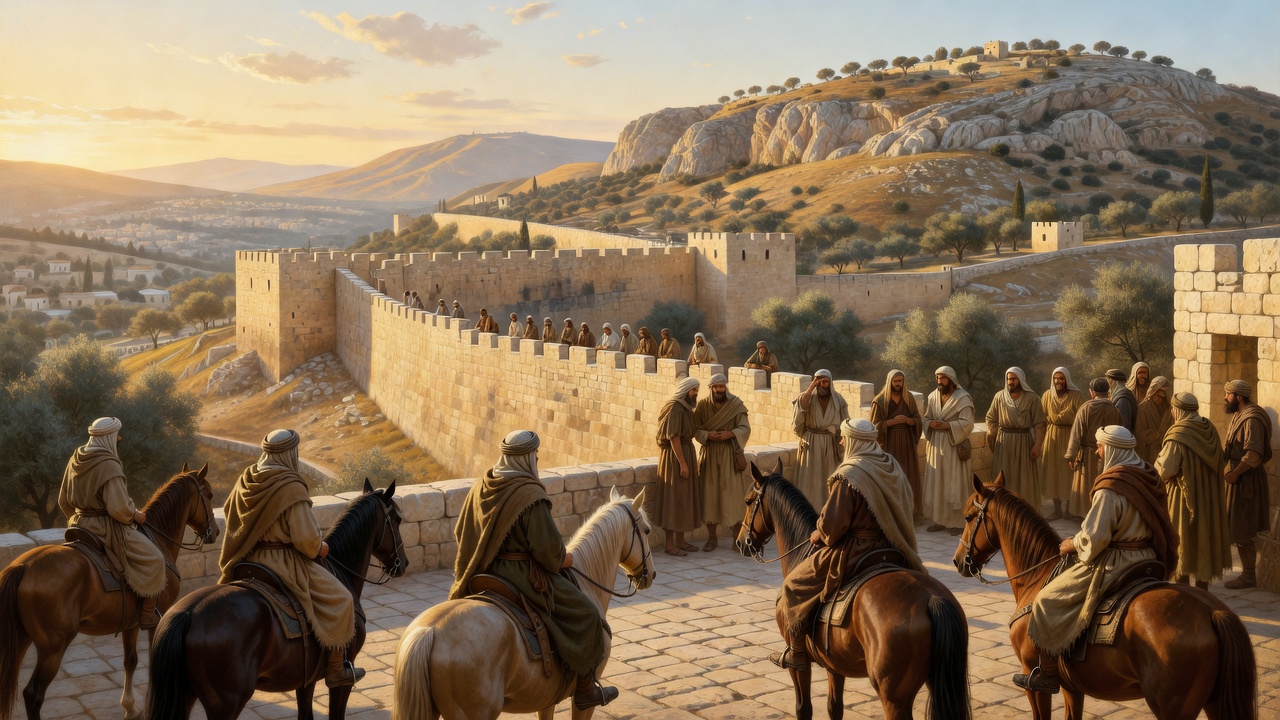
- Isaiah denounces Judah's reliance on Egypt for military strength, especially its multitude of horses and chariots. The prophet contrasts human and military resources with divine sovereignty, reminding the people that the Egyptians are merely mortal men and their warhorses are flesh rather than spirit.Sources: the Bible text itself · Egypt
- Mount Zion, a prominent fortified hill on which Jerusalem was built, is depicted as directly defended by God. Using the imagery of an undaunted lion and hovering birds, the passage promises that Jerusalem will be protected from Assyria by divine intervention rather than by mortal swords.Sources: the Bible text itself · Jerusalem · Mount Zion
Notes written with AI assistance from open sources (Theographic Bible Metadata, CC BY-SA 4.0; Easton’s Bible Dictionary, public domain) and reviewed before publishing.
Places in this chapter
- Egypt · 30.129, 31.308 · verse 1
- Mount Zion · 31.772, 35.229 · verse 4
- Jerusalem · 31.777, 35.234 · verses 5, 9
- Assyria · 36.359, 43.153 · verse 8
- Zion · Today: Jerusalem · 31.777, 35.234 · verse 9
Only places identified with high confidence are shown (90% or more according to the scholarly sources compiled by OpenBible). Period map: DARE (Digital Atlas of the Roman Empire), CC BY 4.0; modern map: © OpenStreetMap contributors; places: OpenBible.info (CC BY 4.0).
Credits and license for this translation
LXX2012: Septuagint in British/International English 2012
The Septuagint with Apocrypha, translated from Greek to English by Sir Lancelot C. L. Brenton and published in 1885, with some language updates (British/International English)
Public Domain
Language: English
Dialect (if applicable): British
Language in English: English
Translation by: Sir Lancelot Charles Lee Breton
LXX2012: Septuagint in English 2012, British/International English Edition
This is a translation of the Old Testament and Apocrypha/Deuterocanon from Hebrew to Greek to 19th Century British English, with some updates of spelling and word usage to contemporary British/International English. The original English translation was done by Sir Lancelot Charles Lee Brenton and published by Samuel Bagster & Sons, Ltd., in London in 1851. It has entered the Public Domain due to the passage of sufficient time. In the process of scanning and typing the text, the original poetry and prose formatting, as well as peripheral material like introductions and notes, have been omitted.
This edition of the Septuagint has some language updates. Brenton's word order and punctuation has been mostly retained, meaning that quotation marks are not used, and sentences within quotes may not start with capital letters, as was standard usage in 1851. Names transliterated from Greek to those transliterated from Hebrew in the common English Bibles often differ. These language updates are dedicated to the Public Domain by the author of those edits, Michael Paul Johnson. Therefore this edition may be freely copied, published, etc.
Before considering making changes to the text of this work, I recommend that you consult with God, because this is really His Book.
If you find errors in the text, please report them so that we can correct them.
Donations to help with the expenses of operating this web site and thus help others have free access to the Word of God may be made to us, but are not required. Please see http://MLJohnson.org/partner/ for more about that.
Section headings adapted from the Berean Standard Bible (public domain); they are not part of this translation’s text.
Source: http://ebible.org/eng-uk-lxx2012/ · eBible.org