Isaiah 20
LXX2012: Septuagint in British/International English 2012 · Tap a verse to see its cross-references.
A Sign against Egypt and Cush
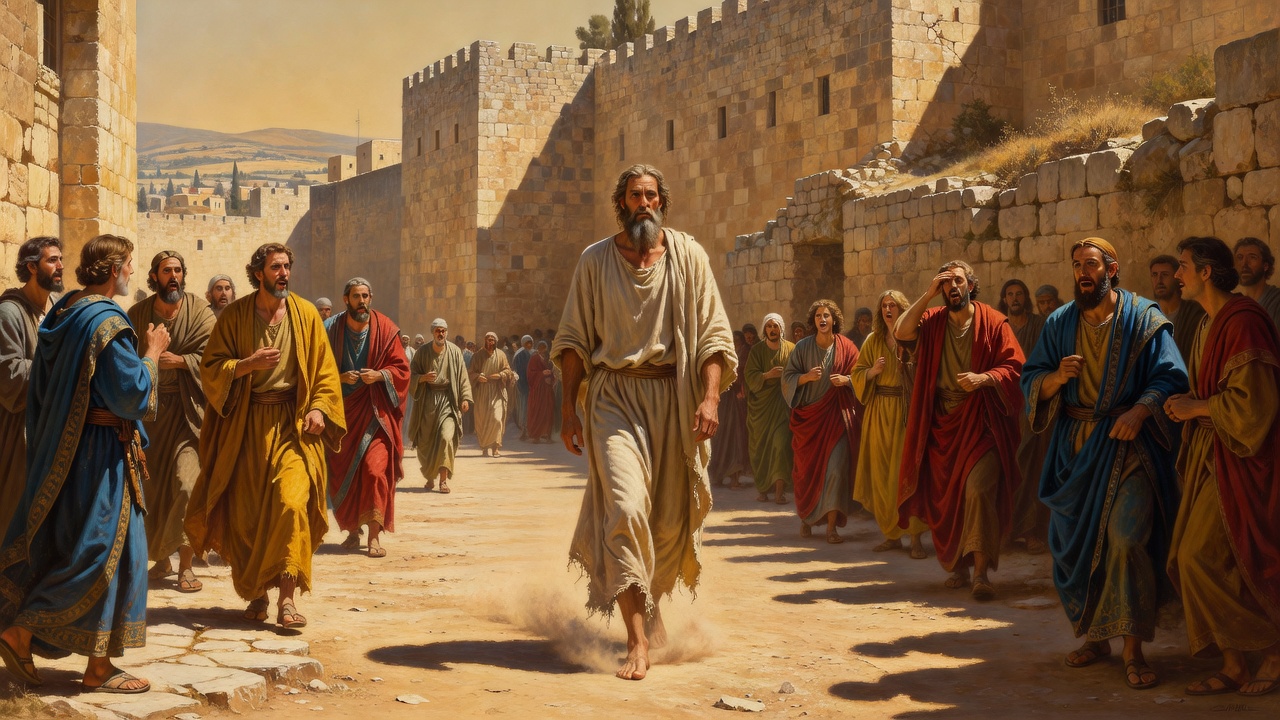
1In the year when Tanathan came to Azotus, when he was sent by Arna king of the Assyrians, and warred against Azotus, and took it; 2then the Lord spoke to Esaias the son of Amos, saying, Go and take the sackcloth off your loins, and loose your sandals from off your feet, and do thus, going naked and barefoot. 3And the Lord said, As my servant Esaias has walked naked and barefoot three years, there shall be three years for signs and wonders to the Egyptians and Ethiopians; 4for thus shall the king of the Assyrians lead the captivity of Egypt and the Ethiopians, young men and old, naked and barefoot, having the shame of Egypt exposed. 5And the Egyptians being defeated shall be ashamed of the Ethiopians, in whom they had trusted; for they were their glory. 6And they that dwell in this island shall say in that day, Behold, we trusted to flee to them for help, who could not save themselves from the king of the Assyrians: and how shall we be saved?
Did you know?
Prophetic Sign Against Egypt and Cush
- Ashdod was a heavily fortified Philistine city situated along the coastal highway linking Palestine with Egypt. The Assyrian king Sargon sent his commander to besiege and capture the city as the Assyrian Empire expanded southward.Sources: the Bible text itself · Ashdod
- God commanded Isaiah to take off his outer sackcloth and sandals, walking stripped and barefoot for three years. This dramatic prophetic act symbolized how Assyria would conquer and lead away the captives of Egypt and Cush in humiliation.Sources: the Bible text itself · Isaiah · Cush
Notes written with AI assistance from open sources (Theographic Bible Metadata, CC BY-SA 4.0; Easton’s Bible Dictionary, public domain) and reviewed before publishing.
Places in this chapter
- Ashdod · Today: Tel Ashdod · 31.757, 34.658 · verse 1
- Assyria · 36.359, 43.153 · verses 1, 4, 6
- Cush · Today: Cush 1 · 16.935, 33.751 · verses 3, 4, 5
- Egypt · 30.129, 31.308 · verses 3, 4, 5, 6
Only places identified with high confidence are shown (90% or more according to the scholarly sources compiled by OpenBible). Period map: DARE (Digital Atlas of the Roman Empire), CC BY 4.0; modern map: © OpenStreetMap contributors; places: OpenBible.info (CC BY 4.0).
Credits and license for this translation
LXX2012: Septuagint in British/International English 2012
The Septuagint with Apocrypha, translated from Greek to English by Sir Lancelot C. L. Brenton and published in 1885, with some language updates (British/International English)
Public Domain
Language: English
Dialect (if applicable): British
Language in English: English
Translation by: Sir Lancelot Charles Lee Breton
LXX2012: Septuagint in English 2012, British/International English Edition
This is a translation of the Old Testament and Apocrypha/Deuterocanon from Hebrew to Greek to 19th Century British English, with some updates of spelling and word usage to contemporary British/International English. The original English translation was done by Sir Lancelot Charles Lee Brenton and published by Samuel Bagster & Sons, Ltd., in London in 1851. It has entered the Public Domain due to the passage of sufficient time. In the process of scanning and typing the text, the original poetry and prose formatting, as well as peripheral material like introductions and notes, have been omitted.
This edition of the Septuagint has some language updates. Brenton's word order and punctuation has been mostly retained, meaning that quotation marks are not used, and sentences within quotes may not start with capital letters, as was standard usage in 1851. Names transliterated from Greek to those transliterated from Hebrew in the common English Bibles often differ. These language updates are dedicated to the Public Domain by the author of those edits, Michael Paul Johnson. Therefore this edition may be freely copied, published, etc.
Before considering making changes to the text of this work, I recommend that you consult with God, because this is really His Book.
If you find errors in the text, please report them so that we can correct them.
Donations to help with the expenses of operating this web site and thus help others have free access to the Word of God may be made to us, but are not required. Please see http://MLJohnson.org/partner/ for more about that.
Section headings adapted from the Berean Standard Bible (public domain); they are not part of this translation’s text.
Source: http://ebible.org/eng-uk-lxx2012/ · eBible.org